Wildlife of India
The world’s premier big cat destination
Tigers in the sal forests of Central India. Snow leopards on Ladakhi ridgelines. Rhinoceros on the Assam floodplain, and tigers that swim between mangrove islands in the Sunderbans. No other country offers this range in a single journey.
Begin Your India SafariReserves
Tigers (2022)
Species
Species
Parks
Why India
The only country on earth with four wild big cats
India holds three quarters of the world’s wild tigers, 3,167 across 54 reserves at the last census. Tiger, leopard, snow leopard and Asiatic lion can all be seen here, and nowhere else. Each demands a different landscape, a different season, and a different approach.
We work across four ecosystems: the central sal forests, the Assam floodplains, the Bengal mangroves and the high Himalaya. They are genuinely different journeys, not variations on one. Which of them belongs in your itinerary is the conversation we would like to have.
Central India
Seven reserves. The highest wild tiger density on earth.
Each has a distinct character, and zone selection within a reserve matters as much as the reserve itself. We know all seven, the guides, the zones, the individual tigers, the weeks that reward you.
Bandhavgarh
India’s tiger capitalThe highest known tiger density of any protected area on earth, beneath an ancient hill fort.
Explore Bandhavgarh →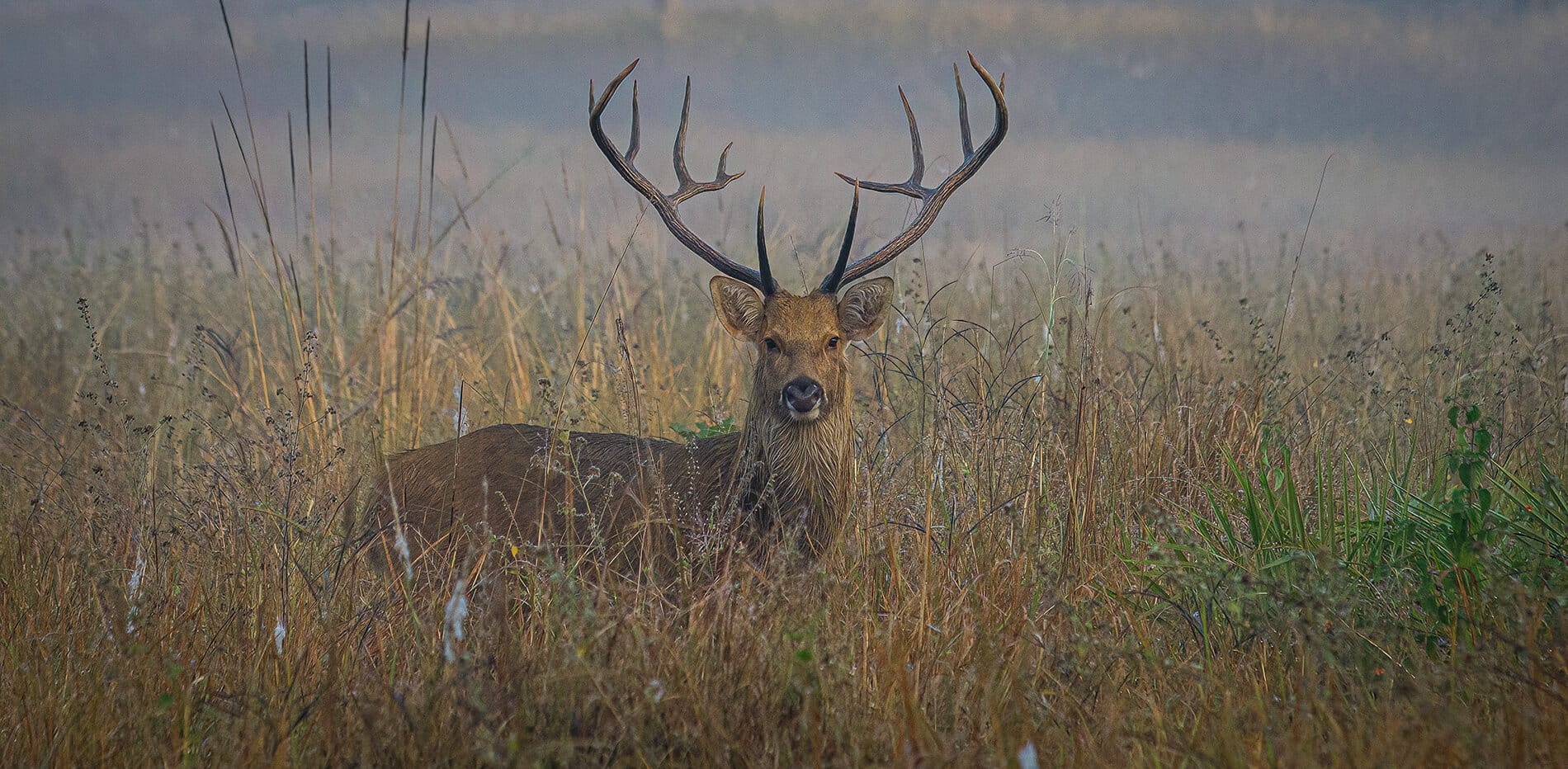
Kanha
Where the Jungle Book beginsCentral India’s largest contiguous habitat, and the only home of the recovered barasingha.
Explore Kanha →
Panna
The great comebackA tiger population rebuilt from zero, with boat safaris and gharial on the Ken.
Explore Panna →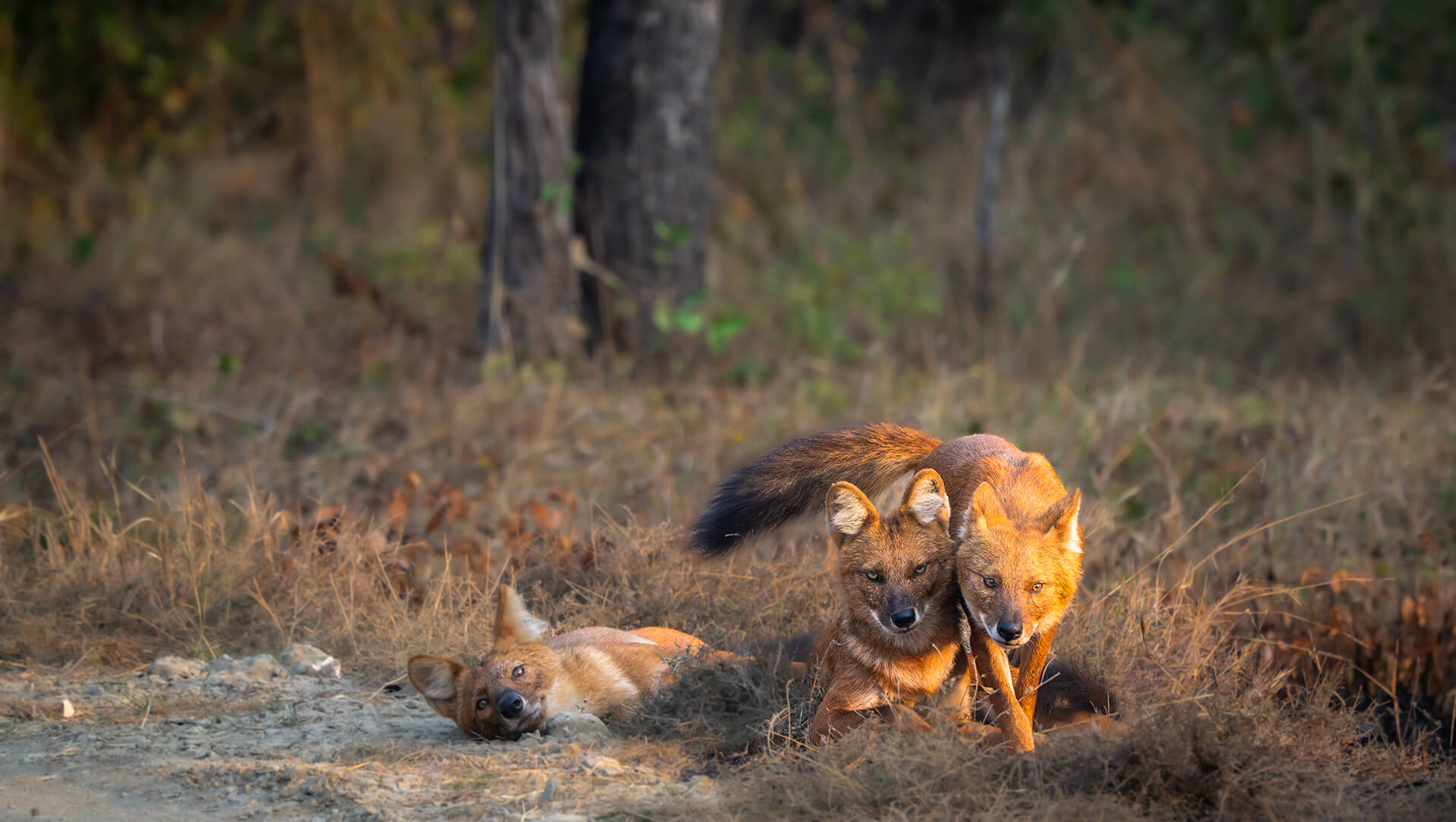
Pench
Kipling’s forestThe Seoni forests and the Waingunga river, the landscape he actually described.
Explore Pench →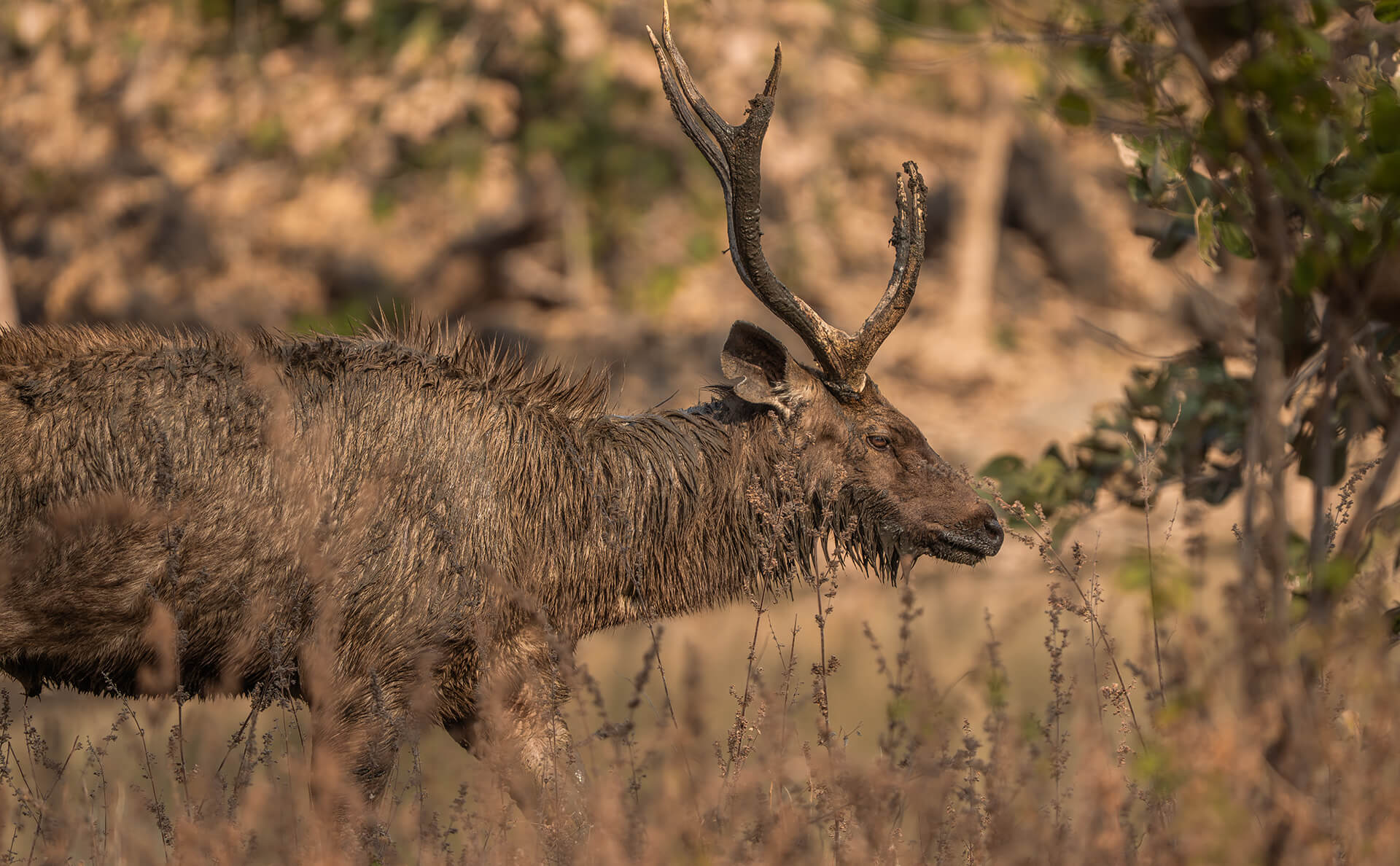
Satpura
Walk, paddle, driveWalking, canoe and night safaris: a philosophy no other Indian reserve shares.
Explore Satpura →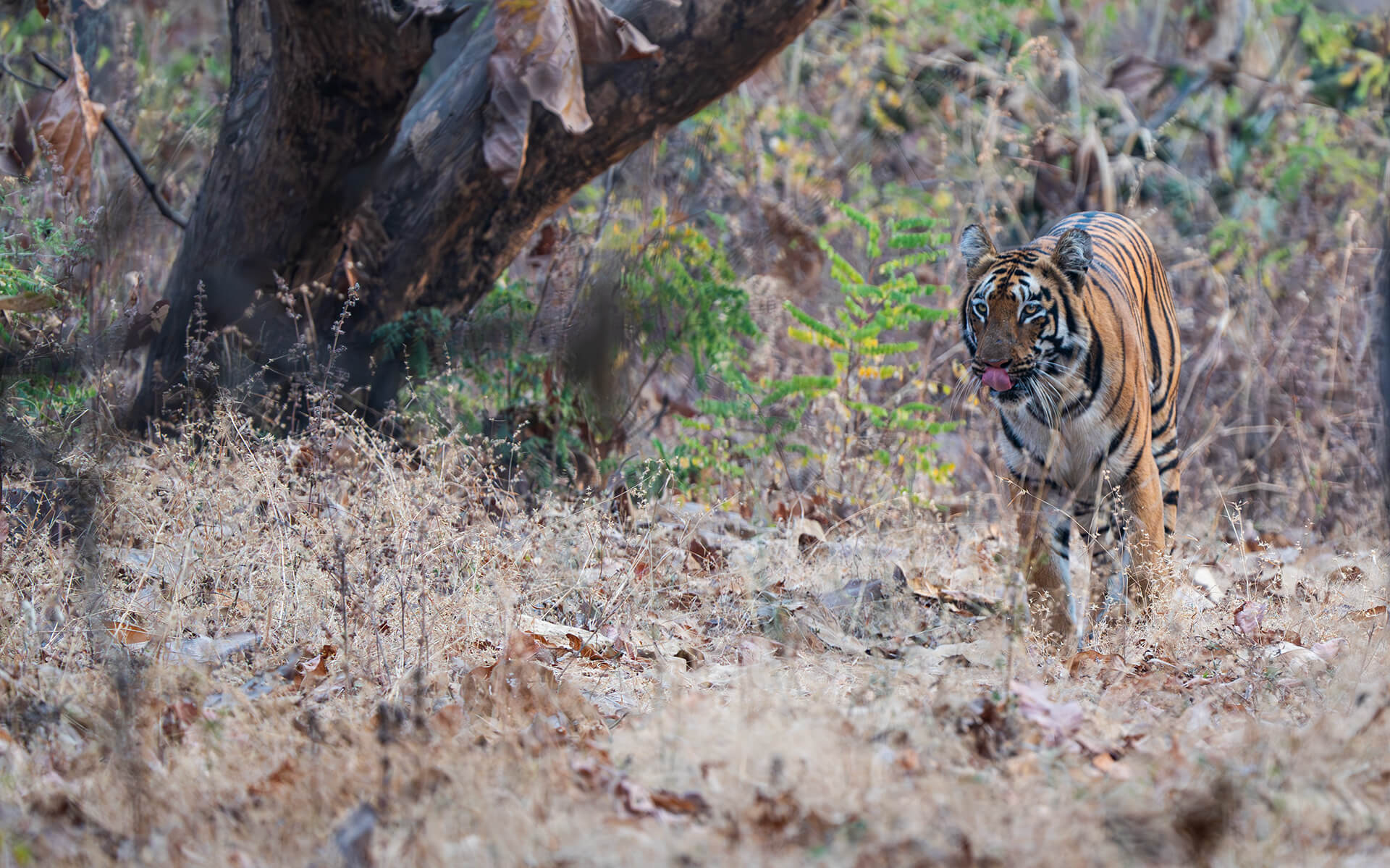
Tipeshwar
Beneath the radar148 km² at the meeting of four rivers, and almost no other vehicles.
Explore Tipeshwar →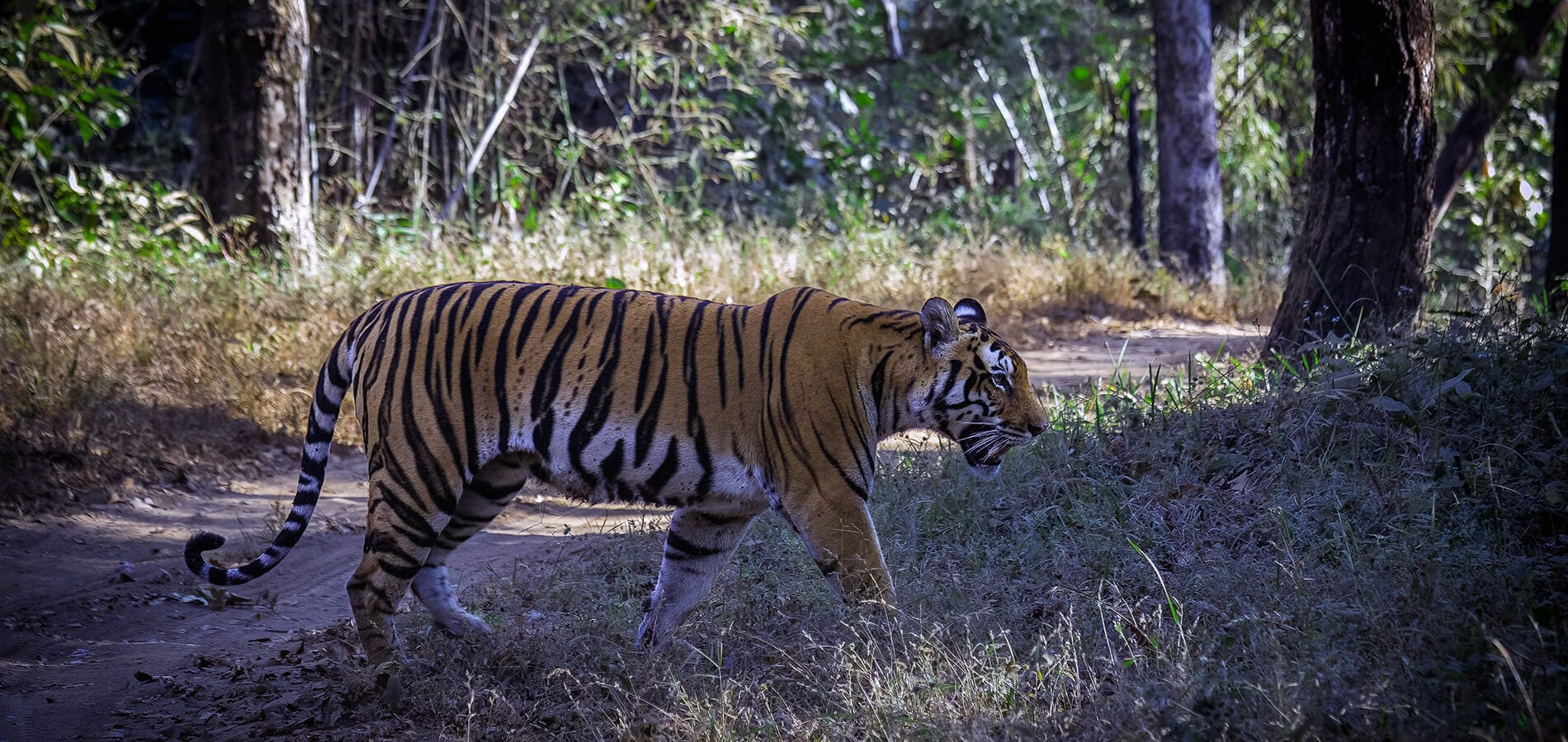
Tadoba
The jewel of VidarbhaIndia’s highest encounter rate per safari, around permanent lakes in open teak.
Explore Tadoba →Ladakh · High Himalaya
Hemis, in pursuit of the snow leopard
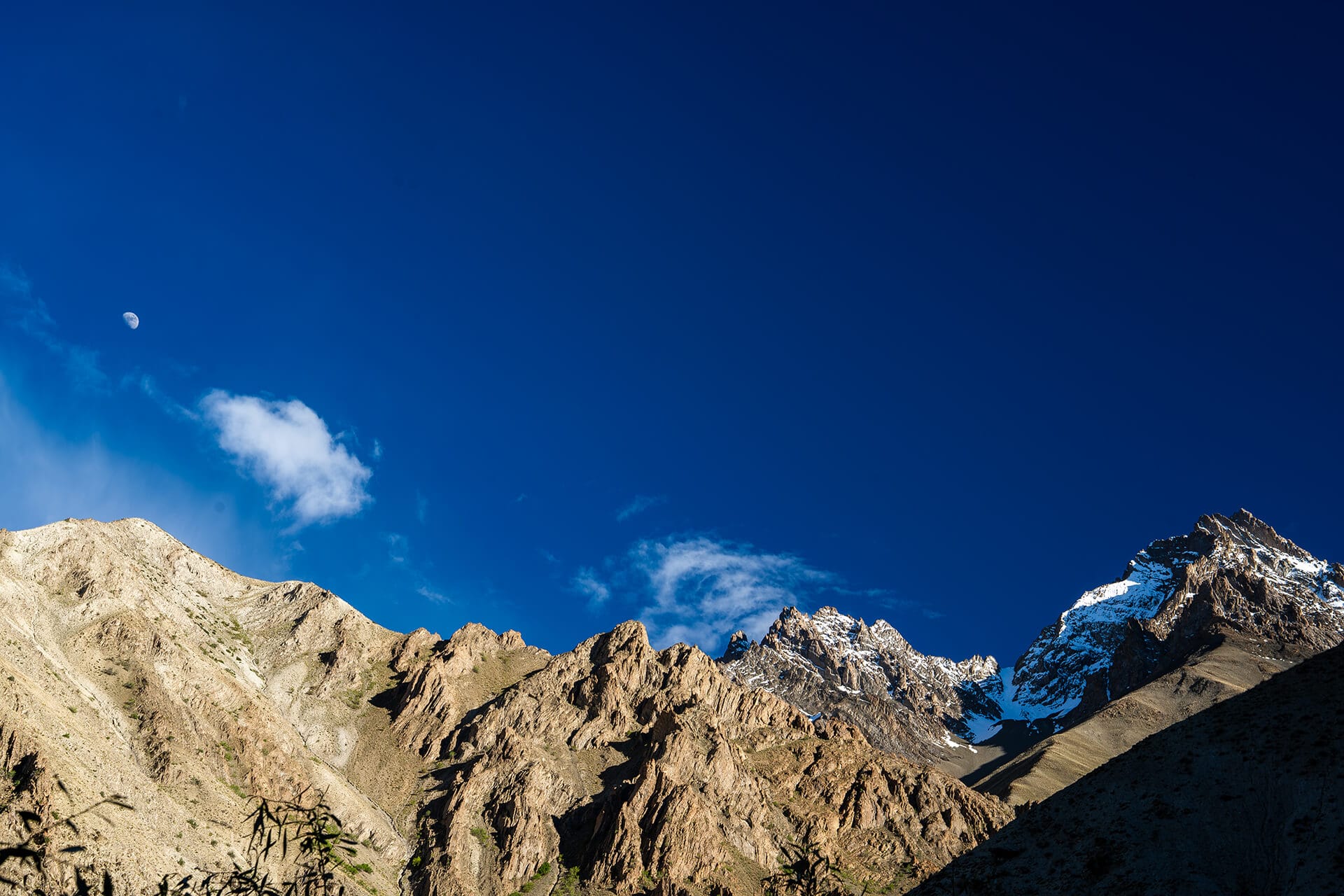
At 4,400 square kilometres, Hemis is the largest national park in South Asia and holds an estimated 60 to 80 snow leopards, the highest known concentration anywhere.
January to March is the window: the prey descends, and the cats follow. Our expeditions work from a fixed camp with spotters covering several ridgelines at once. It is cold, patient work, and few wildlife experiences repay stillness so completely.

The high ridgelines of Hemis, snow leopard country
West Bengal · Bay of Bengal
The Sunderbans, tigers of the mangrove
The world’s largest mangrove forest, threaded by tidal creeks its tigers cross by swimming. These are not animals habituated to vehicles and forest roads. They are wholly adapted to a landscape that belongs to them.
The safari is conducted by boat: silent through narrow channels, reading tracks on the mudbanks at low tide. Not the highest encounter rate in India, and not meant to be. This is for the guest who understands what a genuinely wild sighting costs.
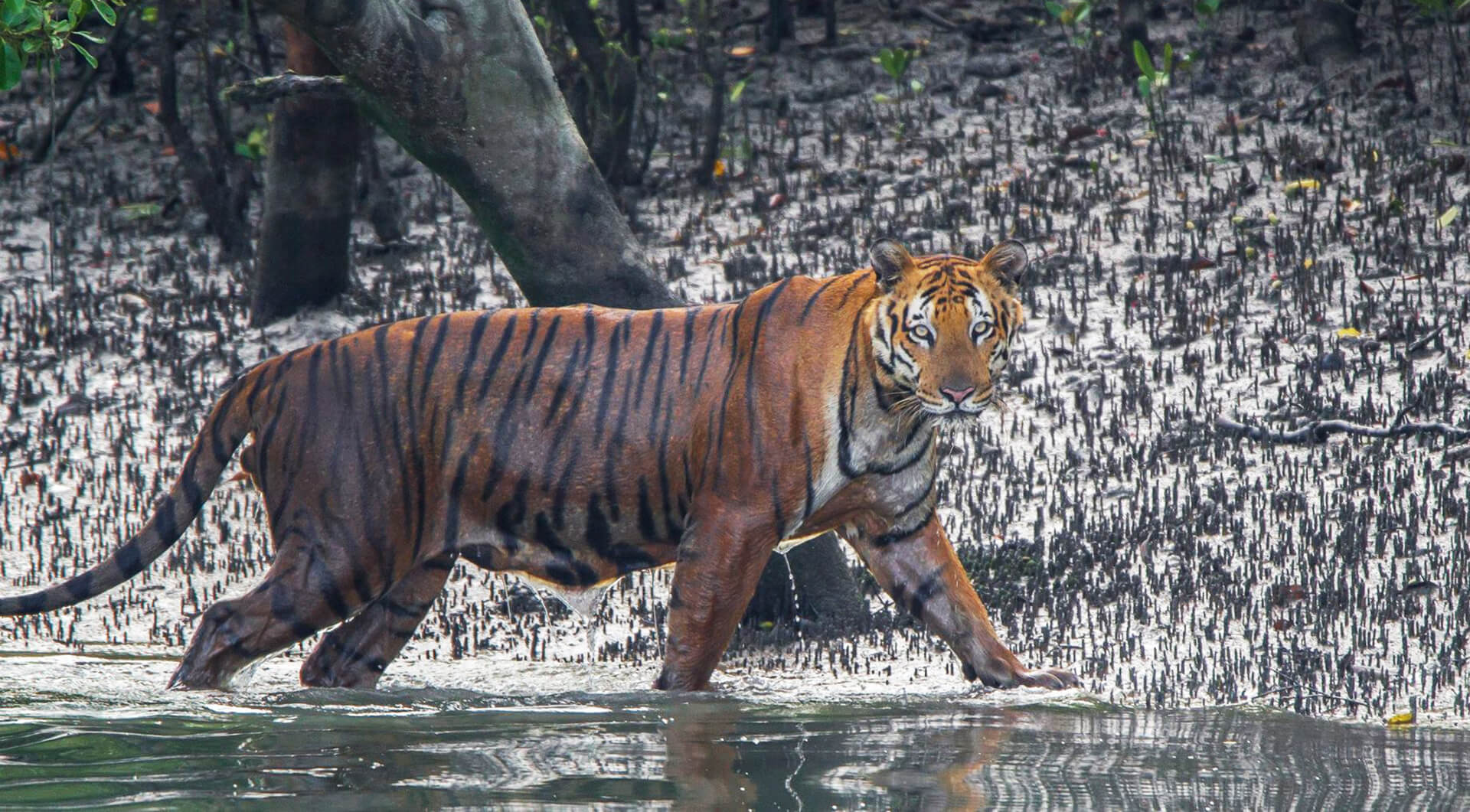
The only tiger on earth that swims between islands
Assam · Northeast India
Kaziranga, the Serengeti of the East
Two thirds of the world’s remaining one horned rhinoceros live here, in 430 square kilometres of Brahmaputra floodplain. A close rhino encounter is close to a certainty, a two tonne animal at short range in open country, not a silhouette in tall grass.
The same floodplain supports the densest tiger population in northeast India, wild buffalo, elephant herds and over 500 bird species. February and March are the finest weeks.
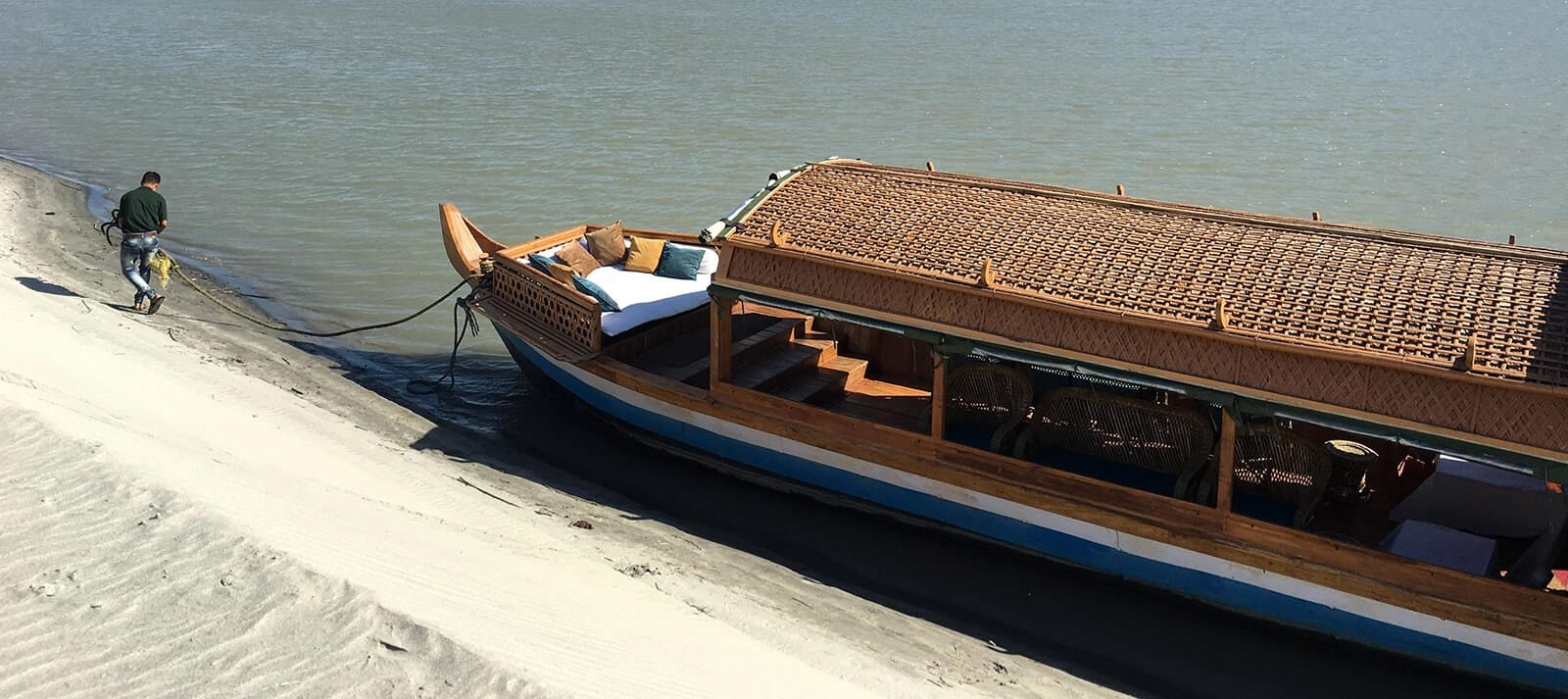
Two thirds of the world’s one horned rhinoceros, in a single park
Which India? Let us help you decide.
India’s iconic wildlife
Six species that define India’s standing as the richest large mammal destination in Asia.
Bengal Tiger
India holds three quarters of the world’s wild tigers, spread across 54 reserves at the last census. Central India offers the highest reproducible encounter probability of any large predator on earth, and Bandhavgarh alone carries the highest known tiger density of any protected area on the planet. Bandhavgarh, Tadoba and Kanha are where we send guests chasing a serious tiger count.
Snow Leopard
Hemis in Ladakh holds the densest known concentration anywhere, an estimated 60 to 80 individuals across 4,400 square kilometres. January to March is the only realistic window: the prey descends to lower ridgelines and the cats follow. Tracking is patient, cold work from a fixed camp, with spotting scopes covering several ridgelines at once.
One horned Rhinoceros
Two thirds of the world’s remaining population lives on 430 square kilometres of Brahmaputra floodplain. A close encounter with a two tonne animal at short range in open grassland is close to a certainty here, not a silhouette glimpsed in tall grass. February and March bring the clearest visibility across the plain.
Indian Leopard
Present across nearly the whole country, but rarely reliable. Khitauli in Bandhavgarh and Kolsa in Tadoba are the exceptions, where rocky, open ground opens the sightlines and a leopard sighting becomes a genuine daily possibility rather than a lucky bonus alongside the tiger.
Asiatic Lion
The last wild population outside Africa, confined entirely to the Gir forest in Gujarat. It is the fourth big cat and the one that completes India’s set, a short, worthwhile detour for guests building a serious big cat itinerary rather than a standalone destination.
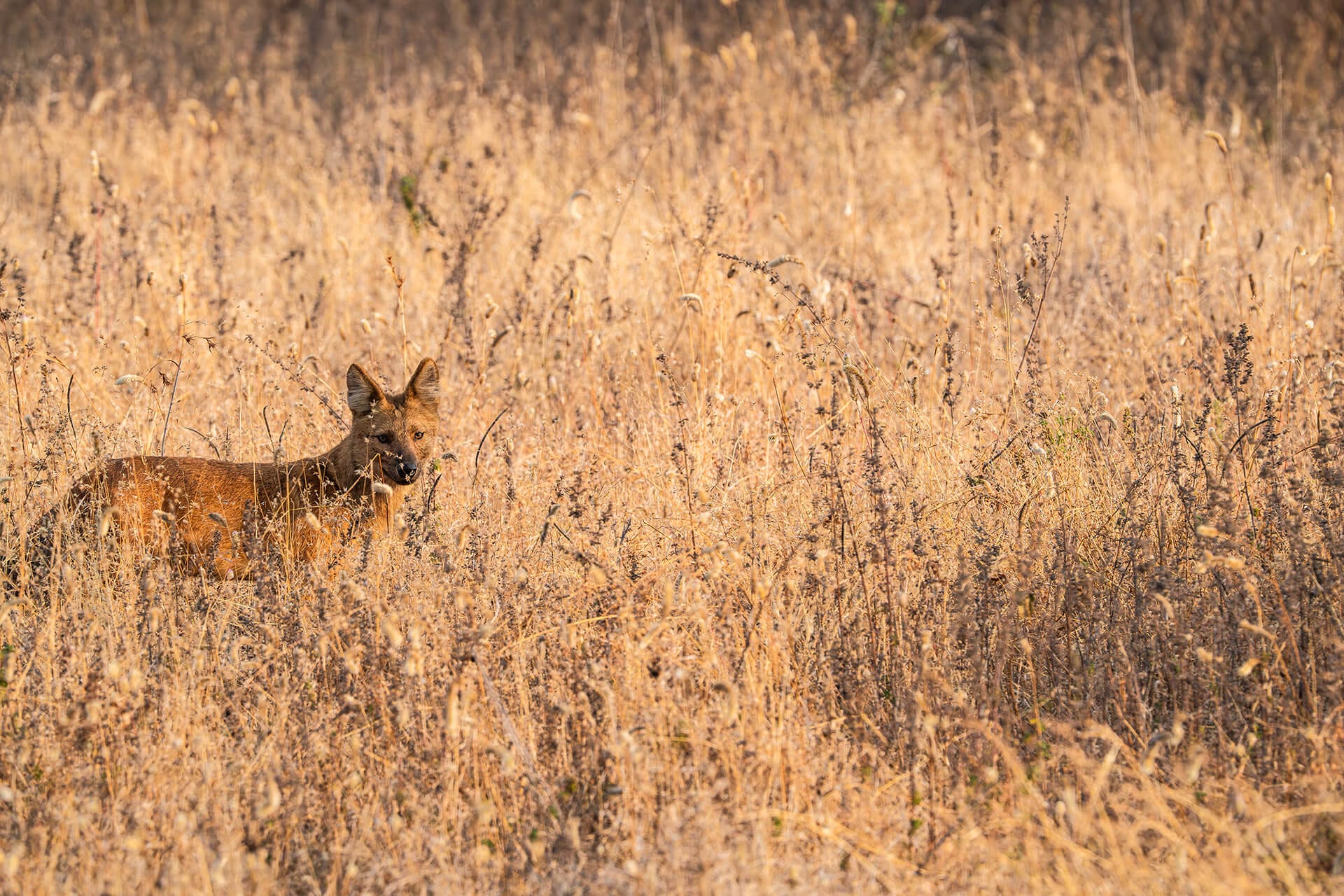
Dhole
India’s endangered wild dog, hunting in coordinated packs. A pack running down prey in the open at Kanha or Satpura is among the most charged sequences in Indian wildlife, over in minutes and rarely witnessed in full. Guides who know a resident pack’s territory are the difference between hearing about it and seeing it.
When to Visit
India by season and region
The right window depends entirely on the ecosystem. Central India, Assam and the Sunderbans follow the monsoon. Ladakh runs on the opposite calendar, winter is the snow leopard season.
Prime from December to February: cool air, thin cover, peak encounter probability. March brings the Palash flowering at Tadoba and the year’s best dry season concentration. Closed July to September.
February and March are the finest weeks for elephant herds and visibility across the floodplain. Late season concentrates rhinoceros around water, hotter, but exceptional density. Closed for flooding May to October.
The mangroves never close. November to February gives the most comfortable boat conditions and clearest creek visibility. Avoid the pre monsoon heat and the cyclone risk from April to September.
Deep winter is snow leopard season: the prey descends and the cats follow. We also run a considered Slow Safari Summer in Ladakh for guests drawn to the high valleys rather than the cat.
Handpicked Accommodation
Safari Lodges of India
Chosen on field knowledge rather than brochures, assessed for guiding, zone access, position within the habitat, and conservation practice.

Denwa Backwater Escape
On the Denwa backwaters at Satpura’s edge, walking, canoe, jeep and night safari all from one base.
View Lodge →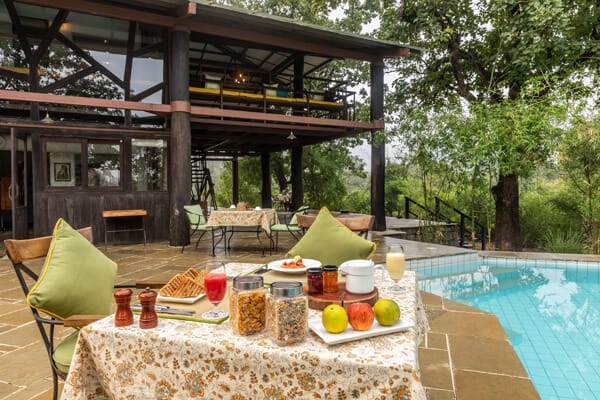
Pench Tree Lodge
Treehouse architecture in the buffer forest, with private plunge pools and access to the Turia and Karmajhiri zones.
View Lodge →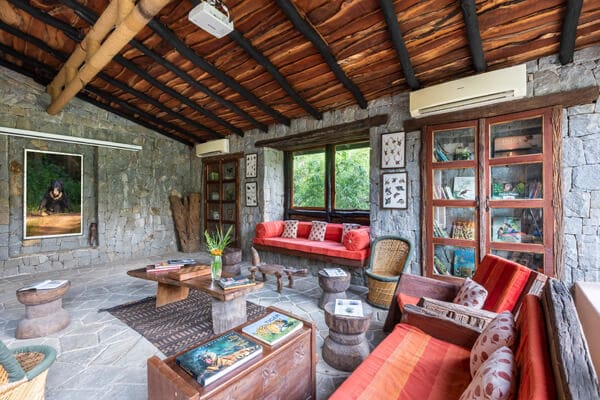
Kanha Earth Lodge
Solar powered and locally built, near the Mukki gate, one of Kanha’s most productive entries for tiger and barasingha.
View Lodge →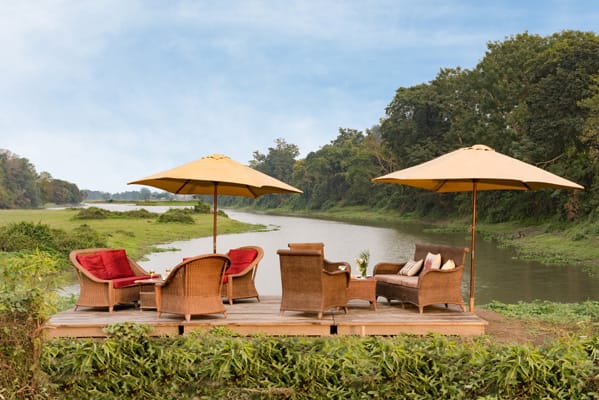
Diphlu River Lodge
On the Diphlu overlooking the Kaziranga buffer, with private viewing machans and direct morning safari access.
View Lodge →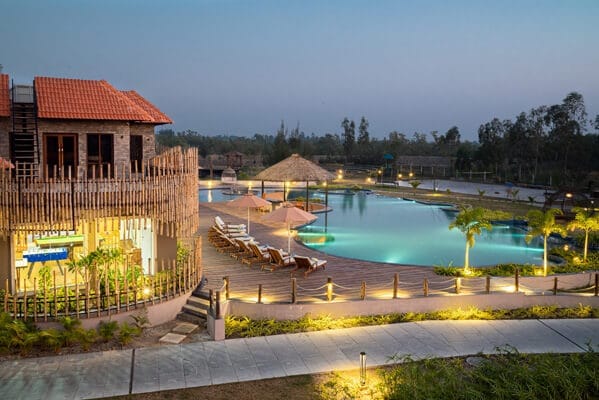
Hotel Sonar Bangla
A comfortable base at the gateway to the mangroves, connected to the boat operators who know the creek network best.
View Lodge →
Glenburn Penthouse
A boutique penthouse in central Kolkata, the right opening or closing chapter for a Sunderbans journey.
View Lodge →Safari Formats
How India is experienced
India permits a wider range of safari formats than anywhere else in Asia. Matching the format to the reserve is the part that separates a specialist from a booking agent.
Jeep Safari
Open 4×4 with a driver guide team. Private vehicle booking removes the convoy entirely, and changes the quality of every encounter.
Walking Safari
Permitted at Satpura, Pench and Kanha. Track, sign and alarm call become the instruments, a different order of engagement to any drive.
Canoe & Boat
The Ken at Panna, the Denwa at Satpura, the tidal creeks of the Sunderbans. Gharial, dolphin and swimming tiger are river species, unreachable from the road.
Night Safari
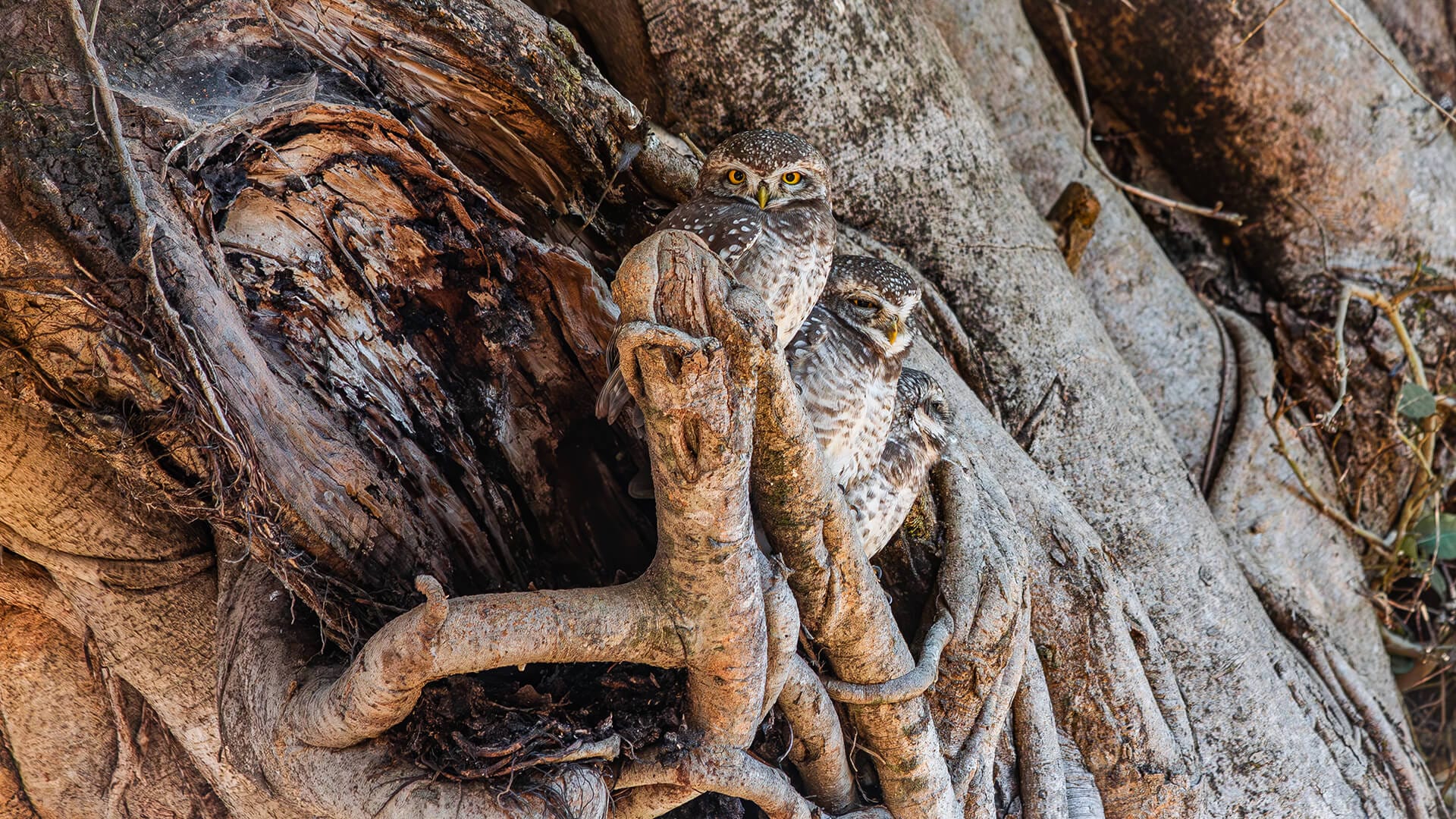
In the buffer zones at Satpura and Tadoba. Striped hyena, leopard cat and the owls that daylight never shows you.
Snow Leopard Tracking
Ten to fourteen days from a fixed Ladakh base, spotting scopes across several ridgelines at once, January through March.
Birding
Over 1,300 species, more than the whole of Europe. Dedicated mornings with a specialist guide, separate from the main programme.
Beyond the Safari
India without the wildlife would still be worth the journey
Forty UNESCO World Heritage Sites and five thousand years of continuous civilisation. India is not a wildlife destination with culture attached: it is a civilisational destination that also happens to hold the world’s finest tiger safari.
The two circuits interlock unusually well. Khajuraho sits twenty five kilometres from Panna. Varanasi is four hours from Bandhavgarh. The Golden Triangle makes a natural opening chapter before flying south to the forests. We plan for both, or for either.
Safari Intelligence
Questions we are asked first
Answered with the specificity that generic travel advice rarely offers.
Planning
Which parks suit a first visit?
Bandhavgarh and Kanha give the most reliable tigers and the most varied landscape. Add Satpura if walking matters to you. Bandhavgarh, Kanha and Pench together cover the full range of Central India without punishing transfers.
How far ahead should we book?
Six to nine months for December through February. Eight to twelve for the Palash window at Tadoba in late February and March. Private zone permits and the best rooms at the lodges we favour go early.
How long should we allow?
Seven to ten days for a proper two park programme with morning and evening drives at each; twelve to fourteen for three parks. Safari session count is the single strongest influence on what you see.
Can India combine with other countries?
Central India pairs well with Nepal for tiger and rhinoceros. Kaziranga sits naturally alongside Bhutan. Ladakh can precede a Himalayan trek. A multi country big cat circuit through India, Nepal and Borneo is a serious itinerary and one we build often.
In the Field
Is a tiger sighting guaranteed?
No, and anyone promising otherwise is selling something. What changes is the probability. Bandhavgarh and Tadoba carry the highest per safari rates in India, and a private vehicle with correct zone selection and an experienced guide shifts the odds substantially over a shared booking.
Which reserve is best for photography?
Tadoba for open teak, lake settings and tigers whose movements are known individually. Bandhavgarh’s Tala zone for the classic open maidan portrait. Pench for the teak framed composition. Three different photographs.
What does a private vehicle change?
Everything about the pace. The jeep carries only your party, so timings, patience at a sighting and the decision to wait rather than move on are yours. It is the single most worthwhile upgrade in Indian wildlife travel.
What should we pack?
Neutral colours, khaki, olive, beige; no white, no bright shades. Layers for cold December and January mornings. Binoculars at 8×42 or 10×42, and 400mm or longer if you are photographing. Lodges launder daily, so pack light.
India awaits.
Tell us what you want from it.
We run no group departures to India. Every programme is private, parks, lodges, zones and species priorities built around one conversation about what you are hoping to find.