Kenya
Private Conservancies · Big Five · Great Migration
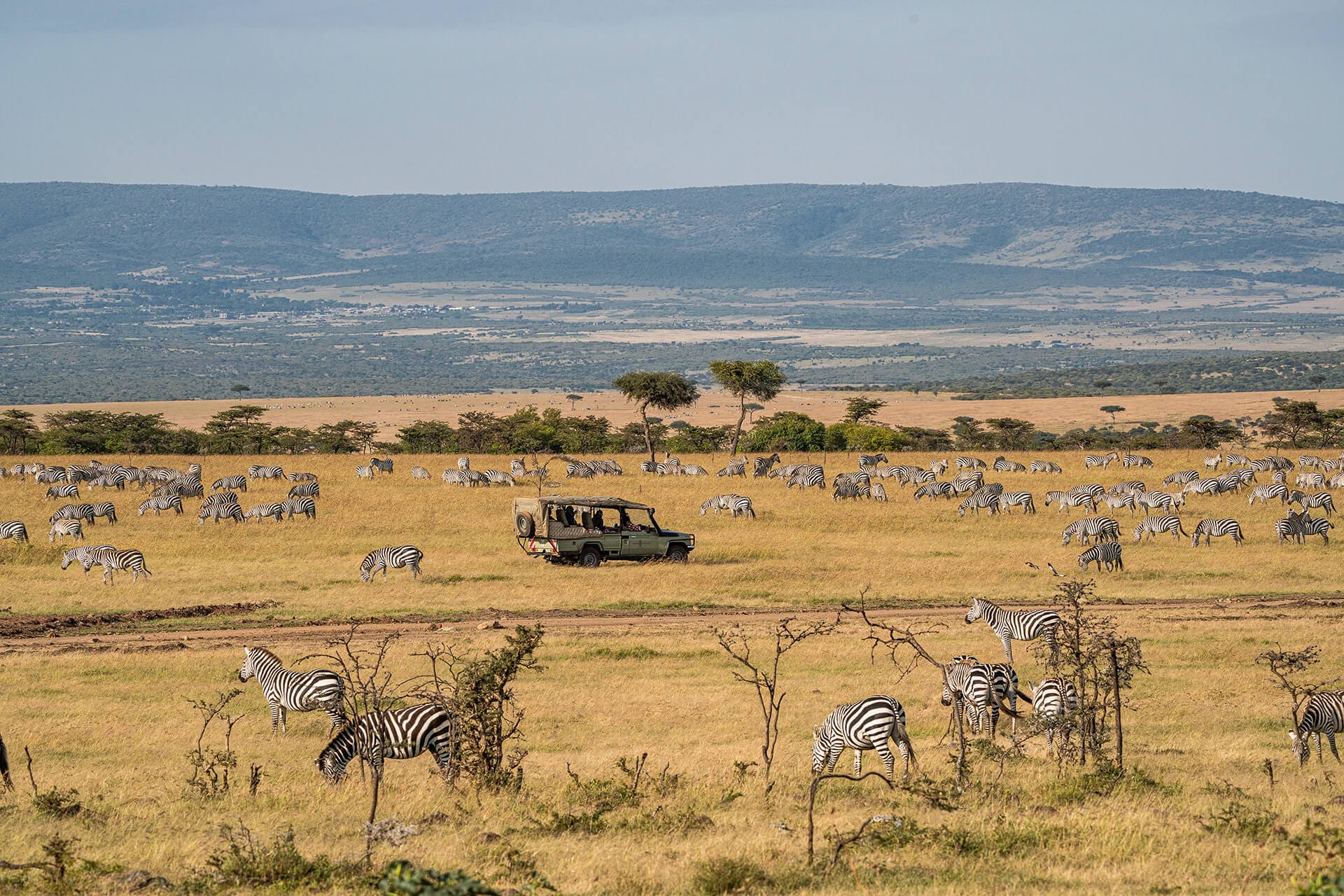
We do not encourage guests going into the crowded Masai Mara National Reserve during peak season. Instead, every Safari Acacia Kenya programme is built around the private conservancies, where vehicle limits, night drives, off road tracking, and walking safaris produce an encounter quality that the national reserve, at its visitor volumes, cannot match.
Begin Your Kenya SafariAnnual Migration
Year Round
Conservancies
Species
Round
Season
Kenya without the convoy
The Masai Mara is the most famous wildlife destination on earth, and in peak migration season, it shows. Popular sightings attract thirty vehicles. Off road driving is prohibited. Night drives are not permitted. The experience, at its most visited, is a queue for wildlife rather than an encounter with it.
The private conservancies surrounding the reserve operate on an entirely different model. Land leased from Maasai communities, strict caps on vehicle numbers, off road tracking, night drives, walking safaris with armed rangers, all of it available within 15 minutes of territory that receives a fraction of the main reserve’s visitor load. Wildlife crosses freely between reserve and conservancy. The animals do not know where the boundary is. The experience does not have to replicate it.
We work exclusively with the conservancies and select lodges whose guide quality, habitat position, and conservation practice align with what a guest paying premium rates should actually receive. Our guests can and do enter the national reserve for targeted migration crossing sessions. They sleep, eat, and spend the majority of their drive time in private.
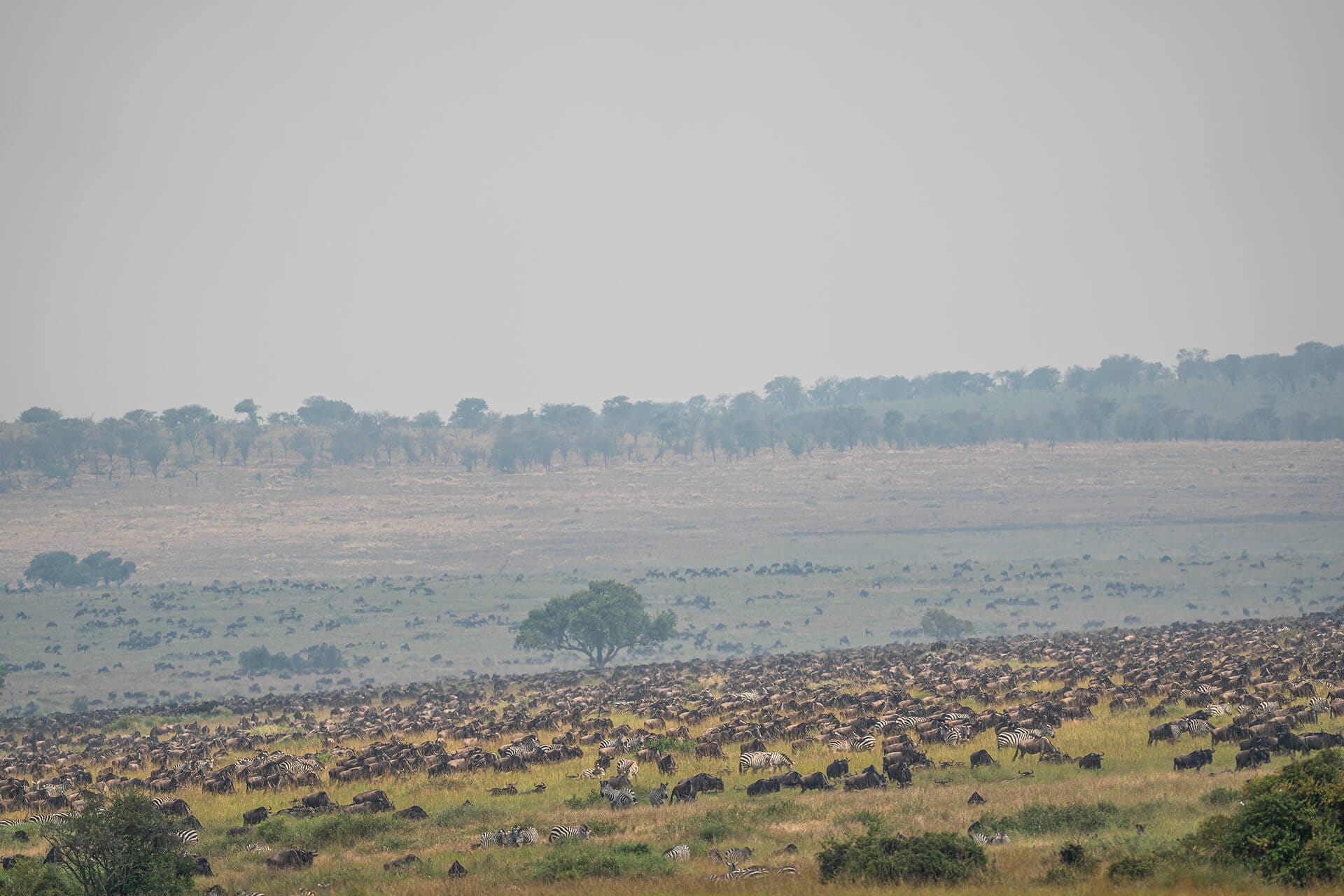
The Great Migration, one and a half million animals in motion
The wildebeest migration is not an event. It is a continuous, year round cycle of movement between Tanzania’s Serengeti and Kenya’s Masai Mara, driven by rainfall, grass growth, and the ancient instinct to follow the food. Understanding its rhythm is the most important planning task in any Kenya itinerary.
The famous river crossings, where wildebeest plunge into the Mara River through crocodile filled water in scenes of extraordinary chaos, occur primarily in Kenya between July and October. But the crossings are not daily, not predictable, and not confined to a single spot. Position and patience are everything. A conservancy base with the flexibility to move rapidly when intelligence arrives is worth more than any fixed point lodge reservation.
Resident wildlife & the green season
The wildebeest are in the Serengeti/Ndutu calving (January to February) and the Mara holds its year round resident herbivore population and the lion, leopard, cheetah, elephant, buffalo. The green season brings extraordinary bird life and the landscape at its most visually dramatic. Lodges are quieter, rates lower, encounters more intimate. February calving in the Serengeti is a compelling addition for those whose itinerary extends to Tanzania.
River crossings & the peak spectacle
The wildebeest arrive in the Mara from June, with river crossings beginning in July and reaching their chaotic peak through August and September. A crossing cannot be predicted: it is triggered by the herd’s mood, the water level, and the crocodile activity. Position matters enormously. Our guests stay in conservancies with the flexibility to move to the river at a crossing.
Conservancy base, reserve crossing visits
The optimal approach: base yourself in a private conservancy for the full depth of the safari experience, night drives, off road tracking, walking, intimate sightings. Make targeted visits into the national reserve or to the Mara River specifically for crossing sessions when intelligence warrants it. This is how experienced Kenya travellers design their itineraries, and how Safari Acacia programmes all its Kenya guests.
The Mara Triangle, the reserve’s finest quarter
The Mara Triangle is the western section of the Masai Mara National Reserve, separated from the main reserve by the Mara River and managed not by the county government but by the Mara Conservancy, a private NGO with a fundamentally different approach to vehicle management, anti poaching, and habitat preservation.
The result is the best managed section of the national reserve, with significantly lower vehicle density than the main Mara and direct access to the river crossing points where the most dramatic wildebeest spectacles unfold. The Triangle’s open plains, Oloololo Escarpment backdrop, and the Mara River meandering through its centre create the landscape most associated with the iconic Mara image.
Staying at a lodge on the Triangle border, where you can be at the river within minutes of a crossing call, is fundamentally different from being based in the main reserve or a distant conservancy. The Triangle camp is the premium position for the crossing focused guest.
The private conservancies, a different category of safari
The Mara conservancies are community managed private areas bordering the national reserve. Land is leased from Maasai landowners who receive a per acre annual fee, creating a direct economic incentive for conservation. The tourism model is low impact by design, a single conservancy of 30,000 acres may host fewer than 60 guests simultaneously. Compare that to the thousands entering the national reserve on peak days.
Animals cross freely between reserve and conservancy. A lion tracked on a conservancy night drive may be photographed in the reserve the following morning. The animals are the same. The experience is not.
Mara North Conservancy
74,000 acres bordering the northern Masai Mara. Some of the highest predator density of any conservancy, the lion prides and cheetah coalitions of Mara North are among the most photographed in East Africa. Night drives, off road tracking, and walking safaris all permitted.
Naboisho Conservancy
50,000 acres with a limited number of camps and guests permitted. One of the most exclusive conservancies in the greater Mara, the resident lion population here has been studied by researchers for over a decade, producing the most thoroughly documented lion behaviour data of any African ecosystem.
Olare Motorogi
35,000 acres of pristine savannah with one of the Mara’s most consistent leopard populations. The eastern boundary gives direct access to the main reserve for migration sessions. Four camps only, all ultra luxury.
Lemek Conservancy
On the northern Mara boundary with a different landscape character, more wooded, and with exceptional elephant herds moving through from the Mau Forest. For the guest who has done the more famous conservancies and wants a quieter, wilder alternative with outstanding nocturnal wildlife.
National Reserve
Masai MaraPrivate Conservancy
Mara North · Naboisho · LemekThe reserve is not obsolete, but it is not where you should stay
The national reserve still holds the river crossings and the deepest resident predator population in East Africa, and no conservancy replaces that. But for everything else, pace, privacy, night drives, walking, off road access, the private conservancies are simply the better version of the same experience.
This is why every Safari Acacia Kenya itinerary is built around a conservancy base, with entries into the reserve itself timed specifically for the crossings.
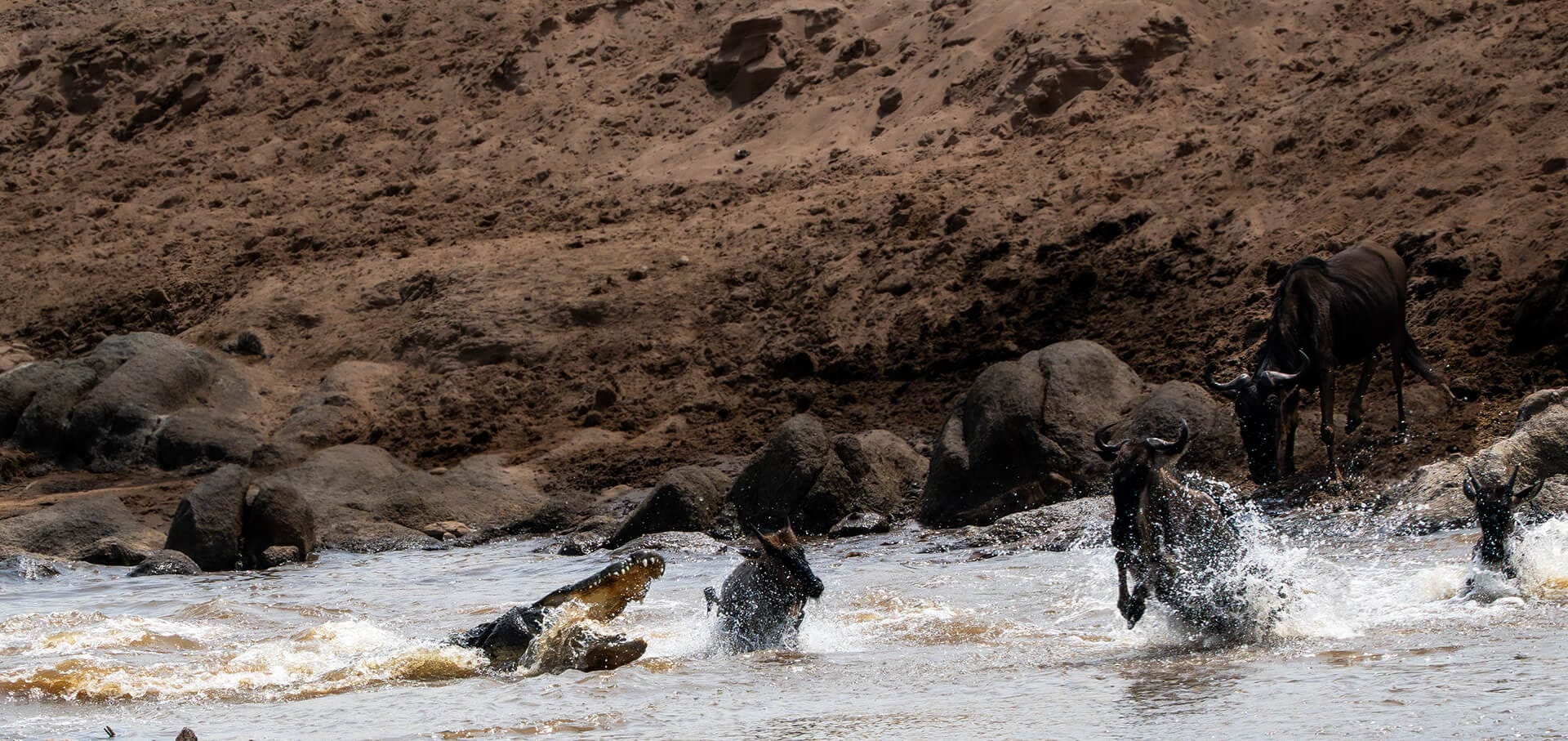
Chaos, current, crossing.
Elephants against Kilimanjaro, Africa’s most iconic backdrop
Amboseli National Park sits at the foot of Mount Kilimanjaro at 1,200 metres elevation in Kenya’s southern Rift Valley, 392 square kilometres of dry season lake bed, open plains, swampland fed by Kilimanjaro’s underground meltwater, and acacia woodland sheltering one of the most well studied elephant populations on earth.
The super tuskers, elephants whose tusks almost touch the ground, are one of the main attractions. The elephant families of Amboseli have been continuously observed by researchers since 1972, making this the longest running elephant study in the world. An Amboseli encounter is not a sighting of a generic large mammal. It is an encounter with a documented individual whose mother, grandmother, and calves are all known by name.
When Kilimanjaro is clear, most reliably at dawn before cloud builds, the combination of elephant silhouette against the snow capped peak is the defining African wildlife image. Amboseli pairs naturally as a two night addition to a Mara centred programme, reached by a direct 45 minute charter flight.
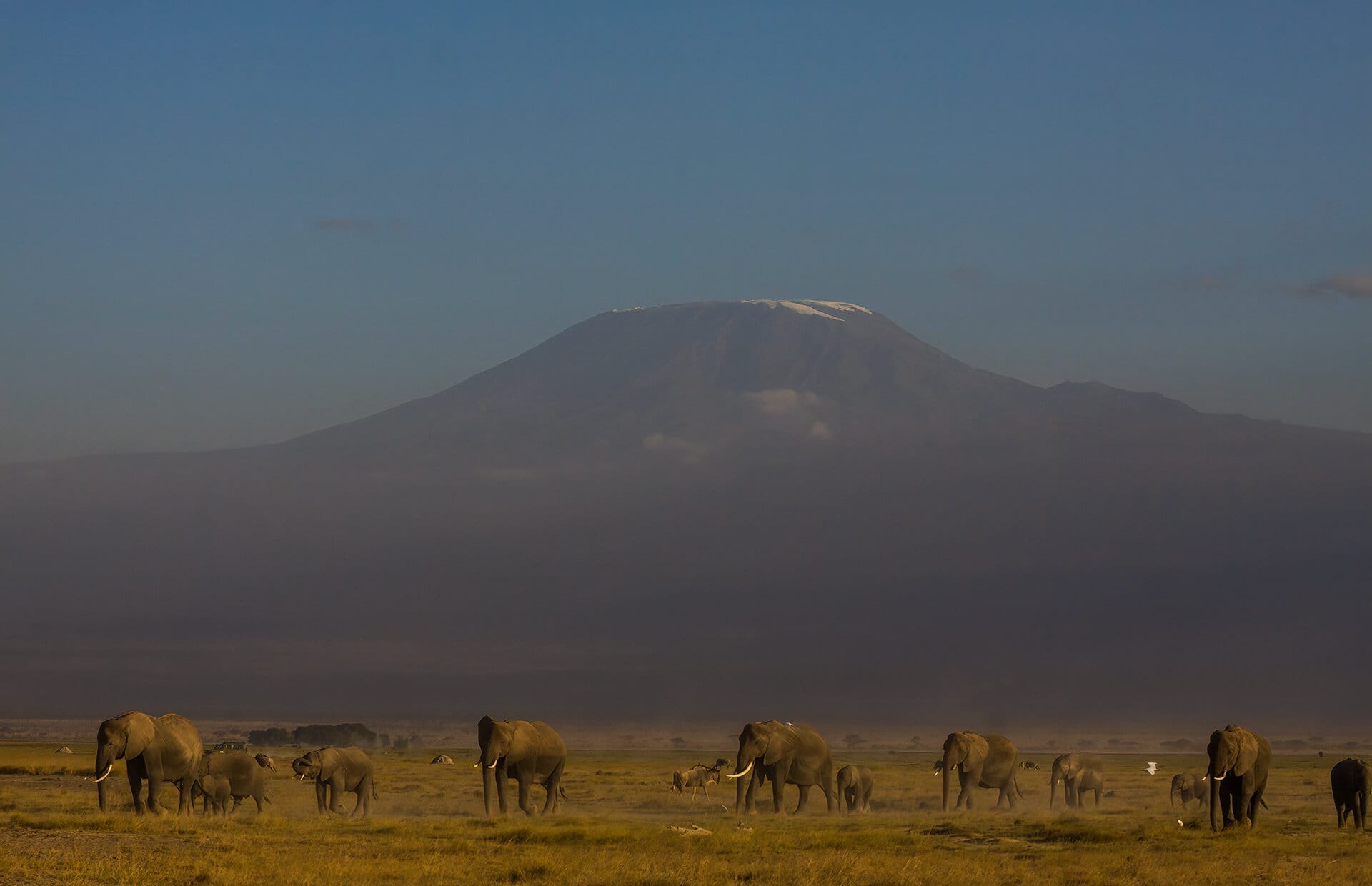
The elephant families of Amboseli have been individually studied for over 50 years
The Samburu Special Five, species found nowhere else in Kenya
Samburu is not a Mara substitute. It is a categorically different ecosystem, semi arid acacia scrubland in northern Kenya fed by the Ewaso Ng’iro River, holding five species not found in the Mara: the reticulated giraffe, Grevy’s zebra (the world’s largest and most endangered zebra), the Somali ostrich, the beisa oryx, and the gerenuk, the long necked antelope that feeds standing upright on acacia branches in a posture no other African antelope manages.
The predator list is equally compelling: lion, leopard, cheetah, and wild dog all present. But Samburu’s specific appeal to the experienced Kenya traveller is the cultural dimension, the Samburu people are distinct from the Maasai in dress, traditions, and relationship to wildlife.
Samburu pairs ideally with a Laikipia conservancy extension, a third Kenya ecosystem, with rhino conservancies and Grevy’s zebra protection programmes.
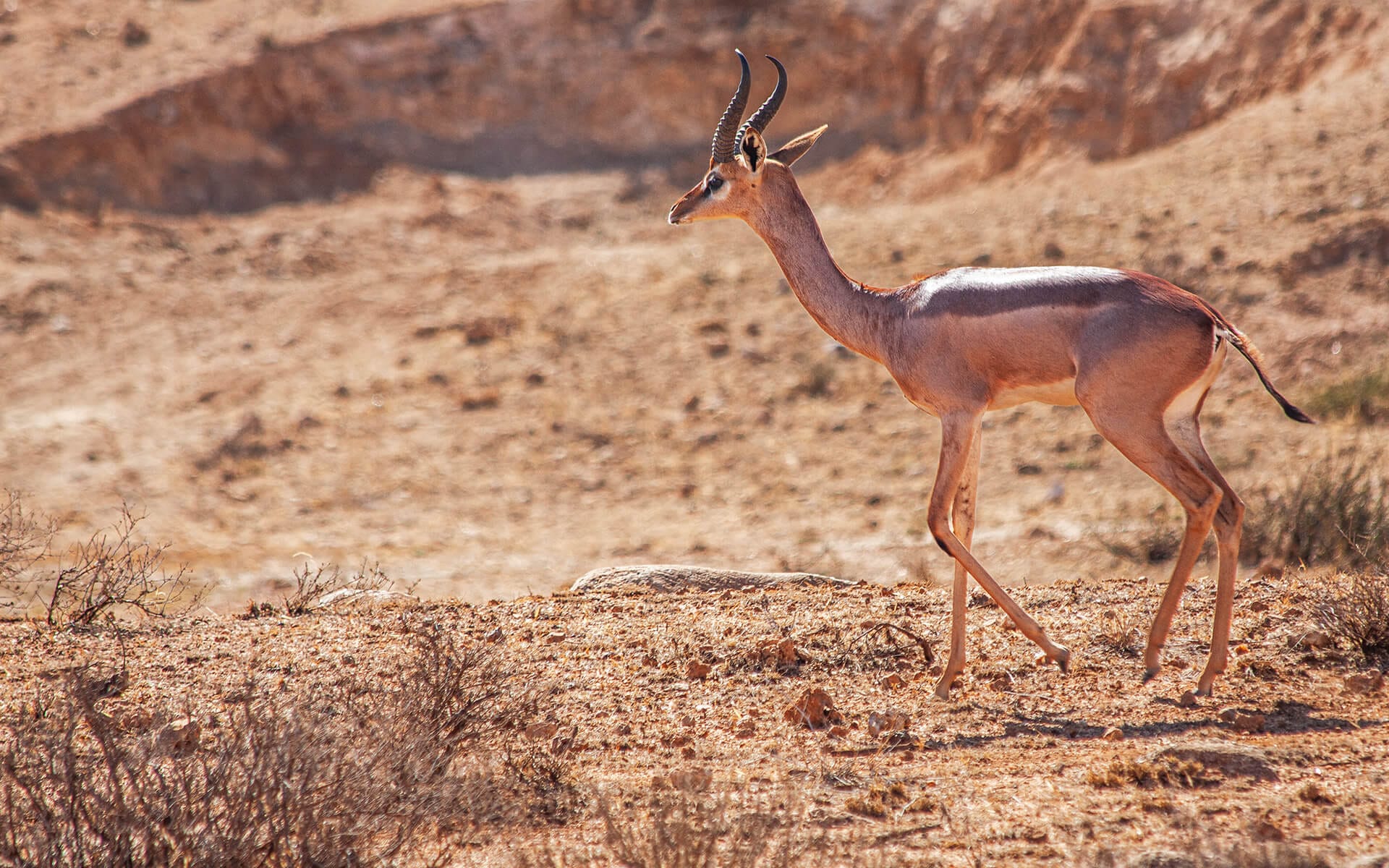
The Samburu Special Five, found in this northern ecosystem and nowhere else in Kenya
The Rift Valley lakes, flamingos, rhino, and freshwater drama
The Great Rift Valley lakes of central Kenya provide a different ecosystem for itineraries that extend beyond the Mara. Lake Nakuru National Park holds both eastern black rhino and southern white rhino in significant numbers, one of the highest combined rhino densities in Kenya. Rothschild’s giraffe and the colobus monkey add specialist interest.
Lesser flamingos gather on the alkaline lake in concentrations that can reach two million individuals, creating the pink shore phenomenon so associated with the Kenyan Rift Valley. Numbers vary with water levels and algae blooms, but the lake’s wider biodiversity, lion, leopard, 56 raptor species, waterbird assemblages, makes it rewarding regardless.
Lake Naivasha, 40km south, provides a freshwater contrast: boat safaris watching hippo pods at close range, the Crater Lake Sanctuary for walking and colobus, and Hell’s Gate National Park, where cycling through gorge terrain alongside giraffe, zebra, and buffalo is one of Kenya’s most unusual active experiences.
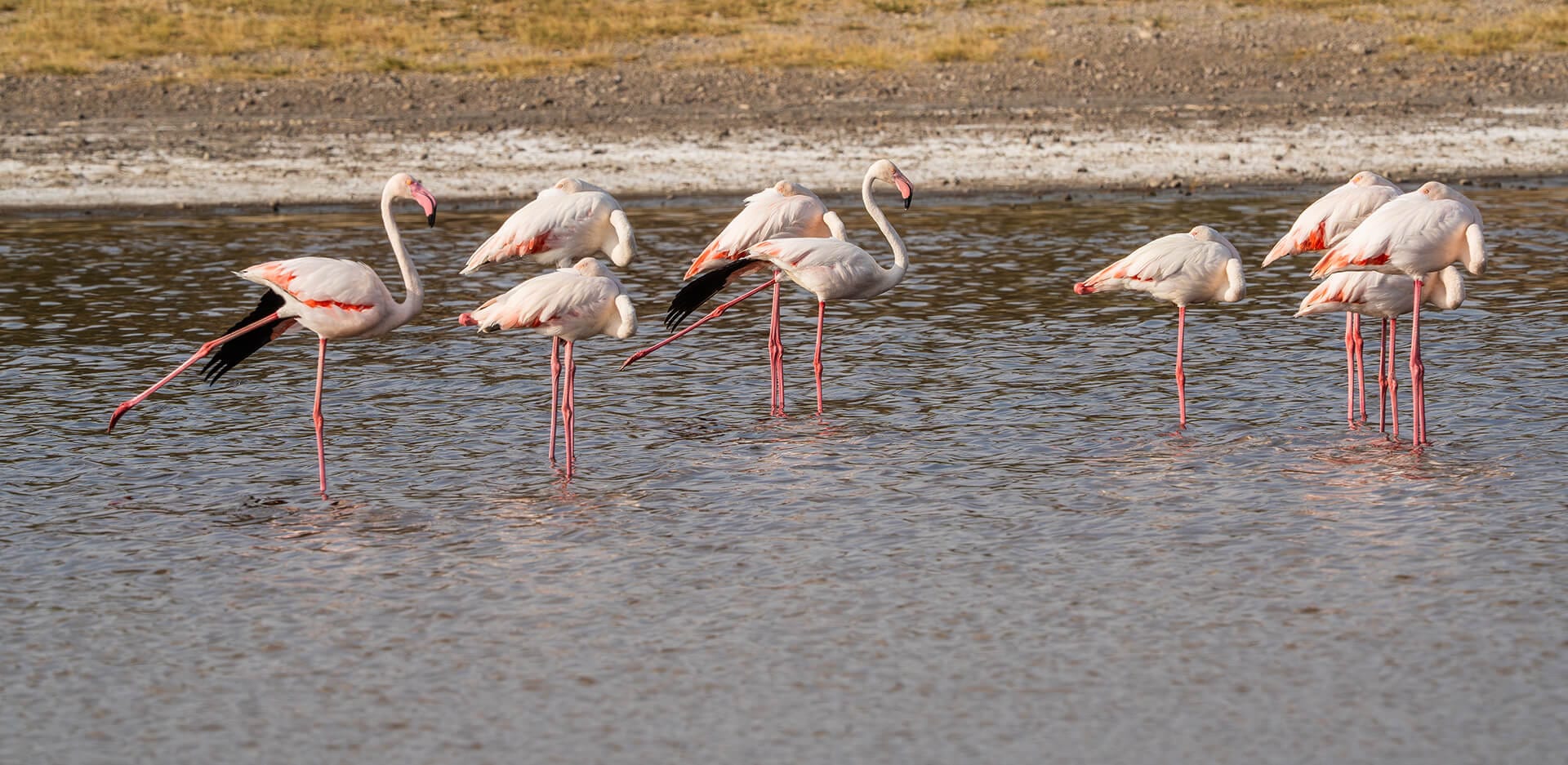
The soda lake of Nakuru turns pink with lesser flamingo, one of Africa’s most astonishing aggregations
Where in Kenya? We have a specific answer.
The balloon and the charter, above the Mara
Two aerial experiences define the Kenya safari at its most elevated, one at dawn above the migration, one between destinations at altitude over the Rift Valley. Both are worth understanding as planning decisions rather than add ons.
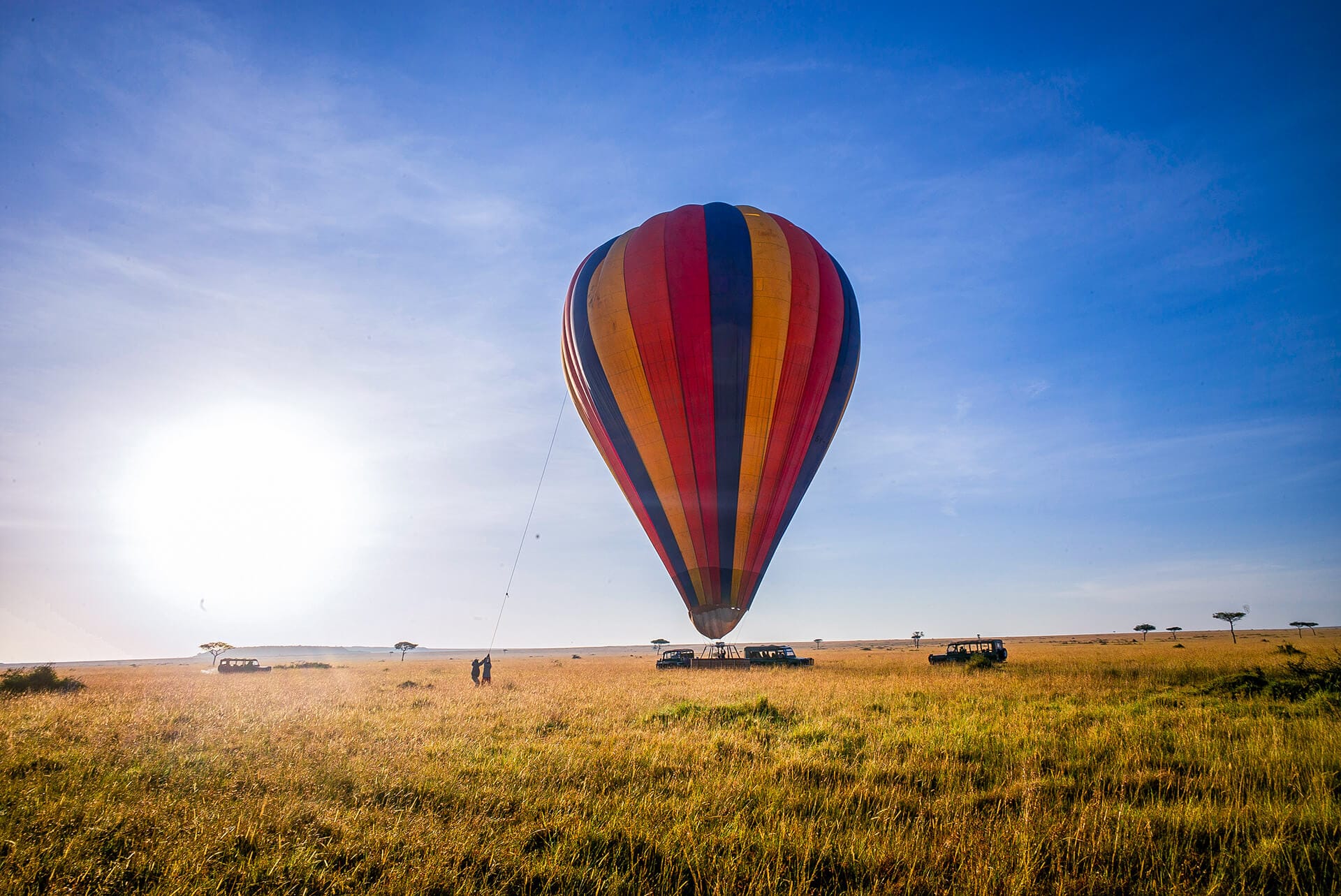
Hot Air Balloon Safari
The dawn balloon flight over the Mara is among the most distinctive wildlife experiences available anywhere in Africa. Flights depart before sunrise and drift with the wind over the plains for approximately one hour. In migration season, the bird’s eye view of wildebeest herds moving across the savannah is unlike any ground level encounter.
Flights land in the bush, where a champagne breakfast is served on the plain before the return drive. The combination of balloon safari at dawn and an afternoon game drive extended to sundowner and exclusive night drive through the conservancy makes for an extraordinary single day.
Dawn departure · Champagne breakfast · We book on request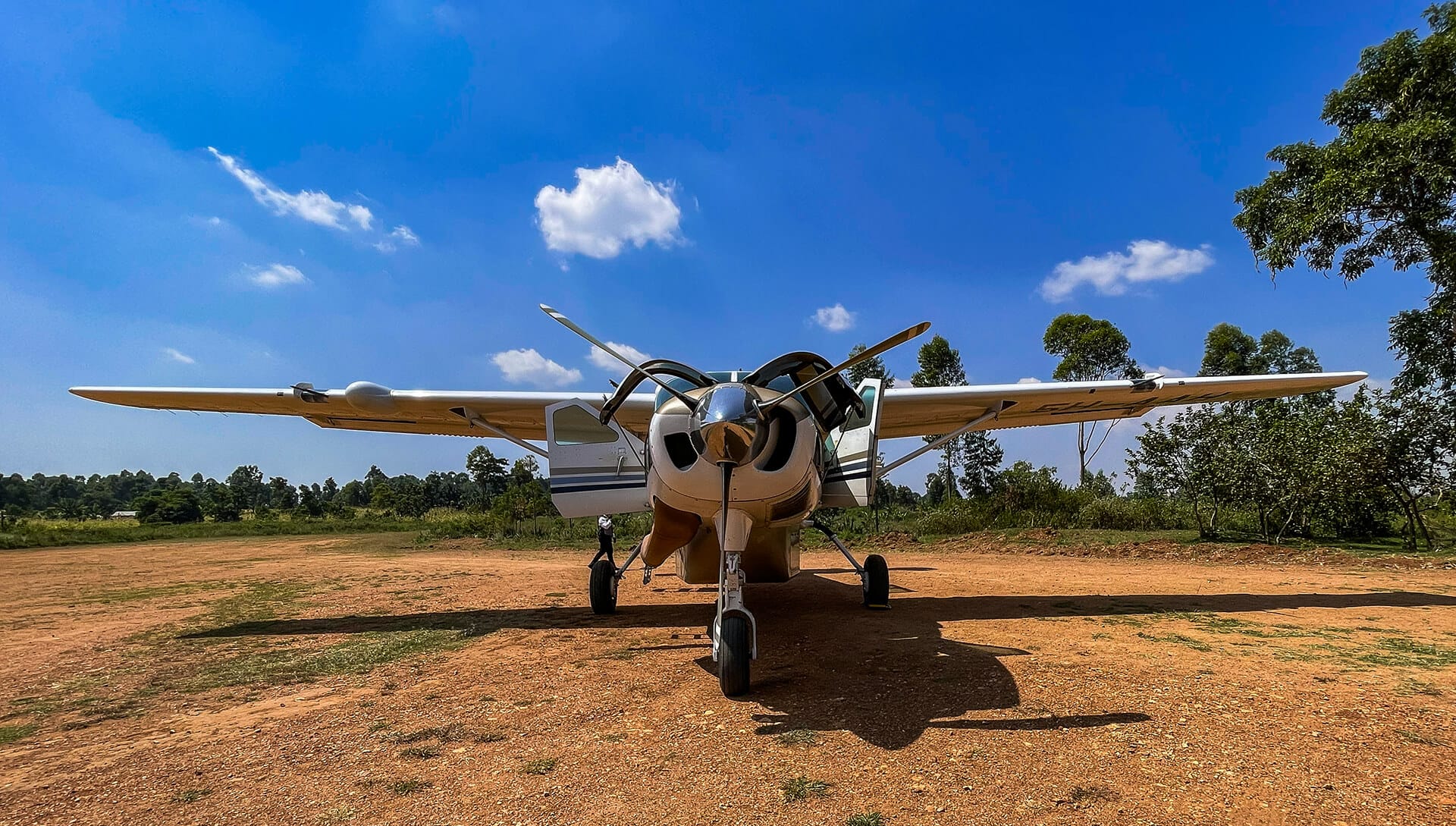
Charter Safari Plane
Kenya’s bush airstrip network makes multi destination programmes viable in a way that road travel cannot, and turns the journey between locations into an experience in its own right. Nairobi Wilson to the Mara takes 45 minutes and overflies the Rift Valley escarpment. Amboseli to the Mara takes 55 minutes with Kilimanjaro visible behind you.
We use single and twin engine charter aircraft operated by Kenya’s most experienced bush flight operators. This eliminates the overland transfer of typically 5 to 7 hours by road that exhausts guests before their first safari drive.
45 to 90 min between destinations · Grass airstrips · Private charter availableKenya & Tanzania, the complete migration circuit
The Great Migration does not begin in Kenya. It begins in Tanzania’s Serengeti, where 1.5 million wildebeest calve on the southern plains in January and February, then spend months moving north, driven by the rainfall that greens the grass ahead of them.
A combined programme captures the full year round cycle, the calving, the northward movement, the river crossings in Kenya, the return south in November. A 12 to 16 day circuit through Serengeti, Ngorongoro, the Mara and an optional Amboseli extension is the most complete East Africa itinerary available.
Serengeti, Tanzania
3 to 4 nights · Calving (Jan to Feb) or migration corridor (Jun to Jul) · Central or northern Serengeti depending on season.
Ngorongoro Crater, Tanzania
1 to 2 nights · The world’s highest Big Five density · Black rhino, lion and elephant in a 260km² volcanic caldera.
Masai Mara Conservancy, Kenya
3 to 4 nights · Private conservancy base · River crossing visits (Jul to Oct) or resident predator programme year round.
Amboseli or Samburu, Kenya
2 nights optional · Elephant under Kilimanjaro, or the Samburu Special Five, a third ecosystem that extends the wildlife range.
Ngorongoro Crater
A UNESCO World Heritage Site and the world’s largest intact volcanic caldera, 260km² at 2,200 metres. An estimated 25,000 large mammals including one of the region’s most concentrated black rhino populations, and lion prides documented for 60 years.
Serengeti National Park
15,000km² and the source of the migration. The Serengeti’s cheetah population is the most studied on earth, and the remote northern sector provides river crossing access before the herds cross into the Mara.
Ruaha & the Remote South
10,000km² in Tanzania’s southern highlands, elephant concentrations that rival anything in East Africa, lion prides that hunt buffalo on the Great Ruaha River, and some of the most reliably encountered wild dog in Africa. For the guest who has done the northern circuit.
Kenya Safari Lodges & Camps
Every property in our Kenya portfolio has been assessed on guide quality, habitat position, conservation practice, and the specific activities available. All are in private conservancies or on the Mara Triangle border, none are in the main reserve during peak season.
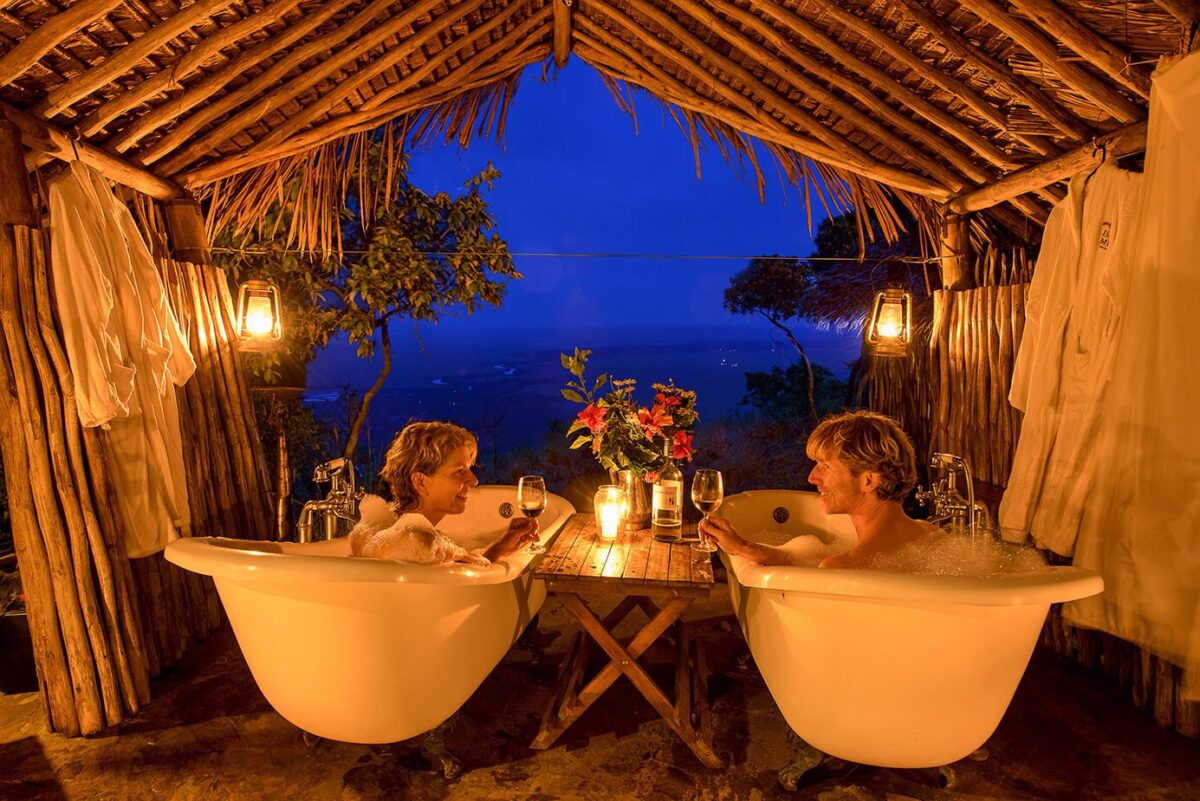
Kilima Camp
A private tented camp with its own airstrip on a pristine edge of the Masai Mara ecosystem. Positioned on the boundary of the Mara Triangle, with direct access to the river crossing points.
View Lodge →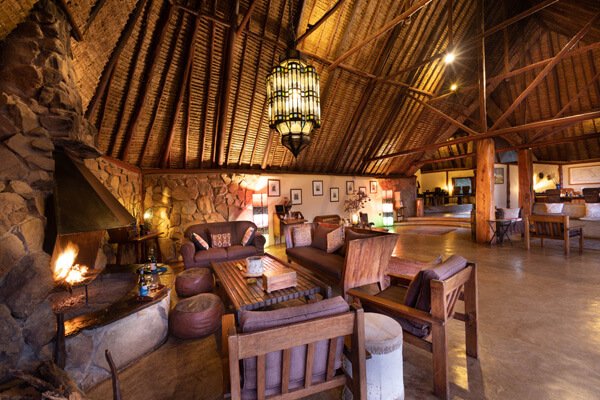
Saruni Mara North
An exclusive camp beyond the crowds, with expert Maasai naturalists delivering a private, unhurried programme across 74,000 acres of conservancy.
View Lodge →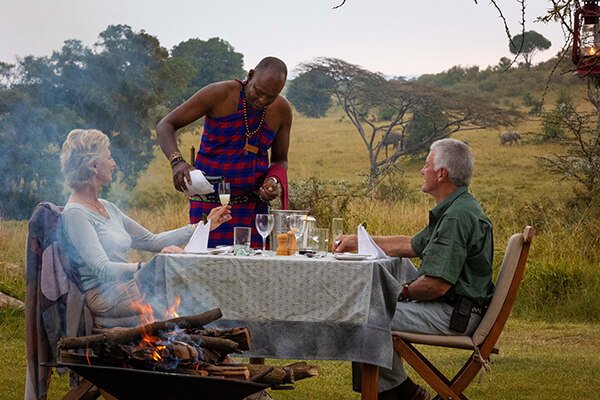
Kicheche Mara Camp
A gold eco rated camp in the heart of Mara North with a guide to guest ratio that produces the most intensive predator tracking programme in the conservancy.
View Lodge →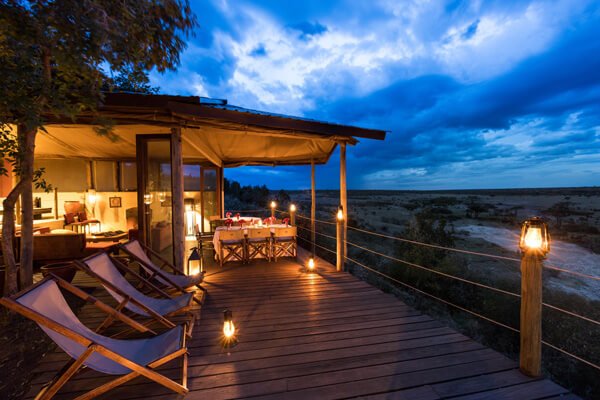
Saruni Eagle View
Sky high panoramas over the Rift Valley, six tents positioned for a perspective no ground level camp can match.
View Lodge →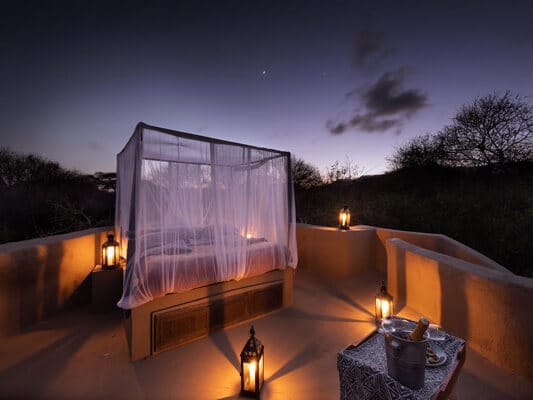
Ol Donyo Lodge
The iconic Chyulu Hills lodge, rooftop star beds beneath an infinite sky, with Kilimanjaro visible on clear mornings across ten thoughtfully spaced rooms.
View Lodge →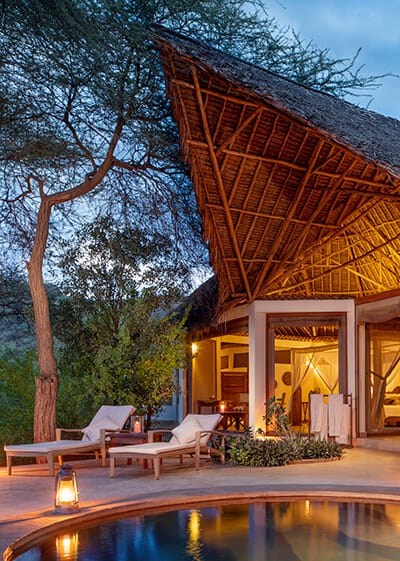
Lentorre Lodge
A remote sanctuary with exclusive in ground photography hides, for the guest whose interest extends beyond the classic Mara circuit into genuinely specialist terrain.
View Lodge →Frequently Asked Questions
The questions asked most often when planning a Kenya safari, answered with the specificity that generic travel resources rarely provide.
Planning & Migration
When exactly do river crossings happen?
They cannot be predicted with precision: this is what makes them extraordinary. Crossings are triggered by the collective decision of the wildebeest, influenced by the pressure of the herd behind, water levels, crocodile presence, and factors no guide fully understands. The strategic advantage of a conservancy base is rapid mobility: when a crossing call comes through the guide radio network, you can be at the river in minutes.
Should I stay in the reserve or a conservancy?
For the discerning traveller the answer is unambiguously the conservancy, with targeted reserve visits for river crossings and specific sightings. The conservancy gives you night drives, off road tracking, walking safaris, and intimate encounters with restricted vehicle counts that the reserve cannot offer at any price.
How far in advance should I book?
For July through September migration, book 10 to 12 months in advance for the best conservancy lodges. Kicheche, Saruni Naboisho, and Great Plains properties fill quickly. Off peak (January to February, November to December) has more flexibility but still benefits from 4 to 6 months lead time for the best camp configurations and private vehicle arrangements.
Is Kenya or Tanzania better for the migration?
The river crossings are in Kenya (July to October). The calving is in Tanzania (January to February). The migration as an annual cycle spans both. The most complete programme is a combined itinerary, Serengeti for the northern corridor movement in June and July, then crossing into the Mara for the river crossing peak from late July.
How do we book a hot air balloon?
Balloon flights can be booked with us in advance, availability is limited. This includes pick up from your lodge to the launch site, and a champagne bush breakfast after landing.
Logistics & Safari
What vehicles are used on Kenya safaris?
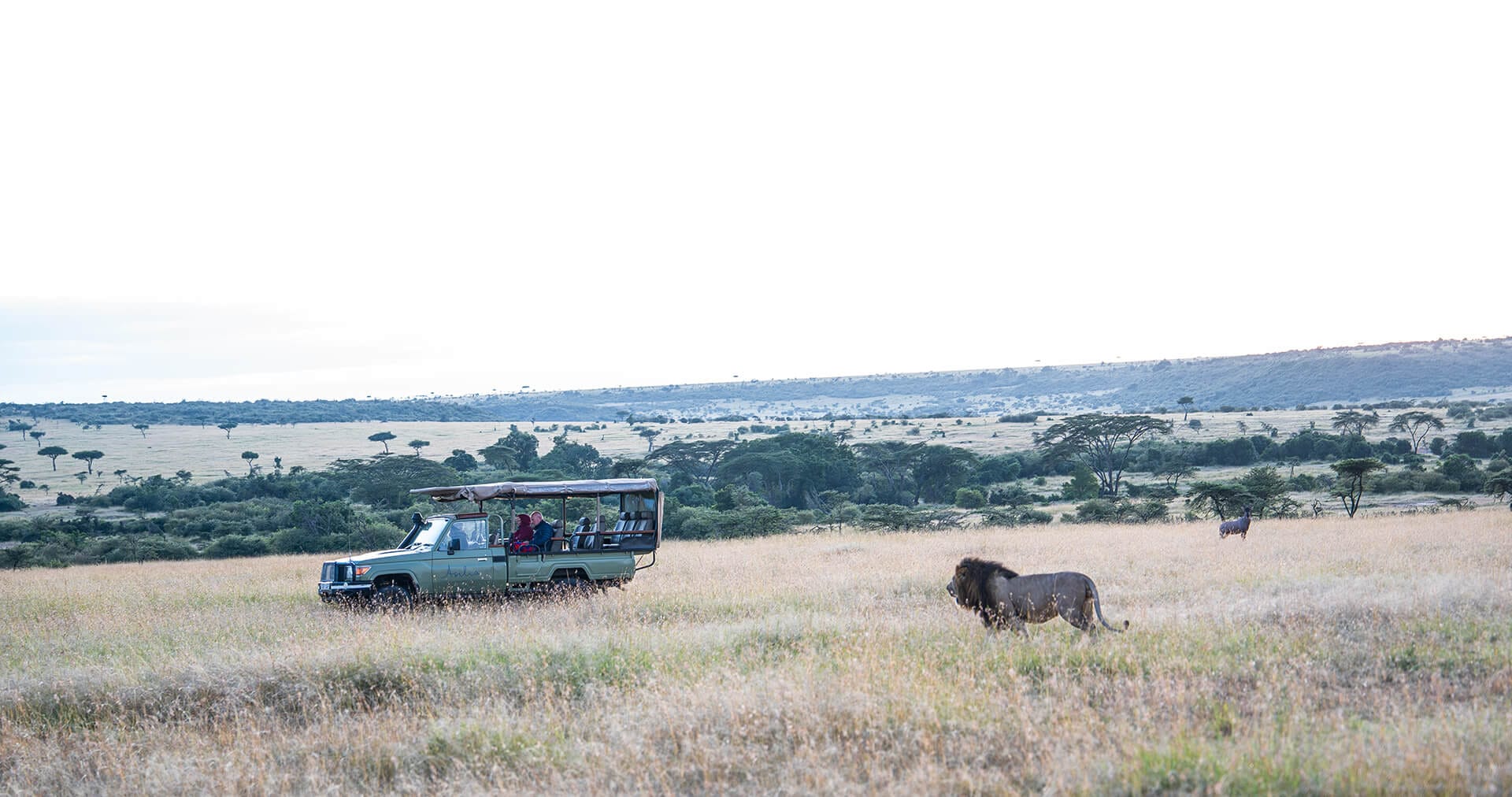
In the conservancies, most camps use customised open sided Land Cruisers with raised seating for unobstructed viewing. Off road access means guides can position the vehicle optimally rather than staying on tracks. We recommend requesting a private vehicle, which transforms the experience by giving you sole use of the vehicle and guide.
Can children come on safari in Kenya?
Yes. Kenya’s conservancies are generally highly family friendly. Most camps accept children from age 5 (some from age 3 with a private vehicle). Walking safaris typically require guests to be 12 or older. We plan family programmes with child friendly guides, shorter drives, and supplementary activities for younger guests.
Are charter flights necessary?
Not necessary, but strongly recommended for any multi destination programme. Nairobi to the Mara by road takes 5 to 7 hours on variable roads; the charter takes 45 minutes and overflies the Rift Valley escarpment. For Amboseli to the Mara, the charter is the only practical option that doesn’t consume a full day. We include charter planning in all multi destination Kenya itineraries.
What should I pack for a Kenya safari?
Light, neutral coloured clothing, khaki, olive, sand; avoid blue and black, which attract tsetse flies in some areas. Layers for cold early mornings in the conservancies: temperatures at a 0545 balloon departure can be 10°C. Quality binoculars (8×42), a camera with at least a 400mm telephoto, sunscreen, and a headtorch. Most luxury camps launder daily, pack lighter than you think you need to.
Is malaria a concern in the Mara?
Yes. The Masai Mara is technically in a malaria risk area. Consult a travel medicine specialist before travel and take antimalarial prophylaxis as recommended, having discussed the side effects with them.
 Begin Your Journey
Kenya without the convoy.
The Mara the way it should be.
Every Safari Acacia Kenya programme is a private itinerary, conservancy selection, vehicle configuration, guide briefing, migration intelligence, and aerial logistics built around a single conversation about what you specifically want from Africa.