
Tanzania
The endless plain - and the greatest wildlife movement on earth
The Serengeti is the source of the Great Migration - 1.5 million wildebeest moving in a continuous clockwise circuit through one of the most complete ecosystems left on the planet. We position our guests precisely: the calving plains of Ndutu, the river crossings of the north, and the remote wilderness of Ruaha in the south, away from the central Serengeti crowds.
Begin Your Tanzania SafariMigration
National Park
Species
Resident
Round
Circuit
We avoid the central Serengeti crowds. Deliberately.
Most Tanzania itineraries deposit their guests in the central Serengeti around Seronera - the most accessible and therefore the most crowded sector of the park, where a single lion sighting can attract twenty vehicles. We take a different approach.
We follow the migration to wherever it actually is - the Ndutu calving plains in the green season, the northern Serengeti's Kogatende sector for the river crossings, the western corridor for the Grumeti crossings. We use premium mobile tented properties that move with the herds, positioning our guests at the heart of the spectacle without the congestion that defines the central park.
And after the Serengeti, we send our guests south - to Ruaha, Tanzania's vast and genuinely remote southern wilderness, where the safari character recalls South Luangwa more than the northern circuit, and where most guests will not see another vehicle all day.
The Great Migration
Six phases. One continuous circuit.
1.5 million wildebeest, 200,000 zebra and 500,000 gazelle move through the Serengeti Mara ecosystem without pause. The only question that matters when planning a Tanzania safari is where they are the week you travel, and where we place you to meet them.
Ndutu, and half a million births
On the short grass plains between the southern Serengeti and the Ngorongoro Conservation Area, roughly half a million calves are born in a window of a few weeks. The synchrony is a defence, more newborns than the predators can possibly take. For the traveller, the consequence is the most concentrated predator activity of the entire year: cheetah hunting in the open, prides gorging, everything visible across ground with almost no cover.
Northwest through the central plains
As the southern grass dries, the herds begin moving northwest through the Seronera valley in columns that stretch for kilometres. These are the long rains: some camps close, roads soften, and the park empties of visitors. What remains is dramatic light, deep green country and rates well below peak, a deliberate choice for photographers rather than a compromise.
The Grumeti, and the first crossings
The herds reach the western corridor and the year's first major river crossings, where the Grumeti's resident crocodiles, some of the largest in Africa, are waiting. It is the same drama as the Mara crossings on a more intimate scale, watched by a fraction of the vehicles. For guests who want the spectacle without the season, June is the quiet answer.
Massing on the southern bank
The herds arrive around Kogatende and gather along the southern bank of the Mara River, sometimes for days, before committing. This is when the mobile camps take up their crossing season positions. The northern Serengeti receives a small fraction of the central park's visitors, which means the wait, often the most charged part of the whole spectacle, is yours alone.
The Mara River crossings
The defining spectacle, and the most misunderstood. The herds cross back and forth between the northern Serengeti and the Masai Mara repeatedly through these months, and most crossings happen on the Tanzanian side, not the Kenyan one. A northern Serengeti base gives you the same river, the same herds and the same chaos, with a fraction of the vehicles that gather on the Kenyan bank.
South again, and the circle closes
The short rains arrive and the herds turn south through the eastern Serengeti, drawn back toward the Ndutu plains for the next calving. November is a month of movement rather than set piece drama, with low visitor numbers and green, photogenic country, well suited to guests whose dates are flexible and whose interest runs beyond the single famous sighting.
Select a phase, or a point on the map
North Serengeti, the crossings, without the crowds
The northern Serengeti, centred on the Kogatende area along the Mara River, is where the most dramatic act of the Great Migration unfolds between July and October. Here the herds mass on the southern bank of the river, hesitate, and then plunge across in the chaotic, crocodile punctuated crossings that have become the defining image of African wildlife.
What most travellers do not realise is that the majority of these crossings happen on the Tanzanian side of the border, in the northern Serengeti, not in Kenya's Masai Mara. And the northern Serengeti receives a fraction of the Mara's visitor numbers. A well positioned mobile camp at Kogatende places you at the crossing points with very few other vehicles present, in contrast to the Kenyan side where a single crossing may draw a hundred vehicles.
This is the Safari Acacia strategy in its purest form: the same spectacle, the same herds, the same river, experienced in near solitude. Our mobile camps move with the migration, so the camp is never more than a short drive from wherever the herds have massed. For the river crossing season, the northern Serengeti is simply the superior position.
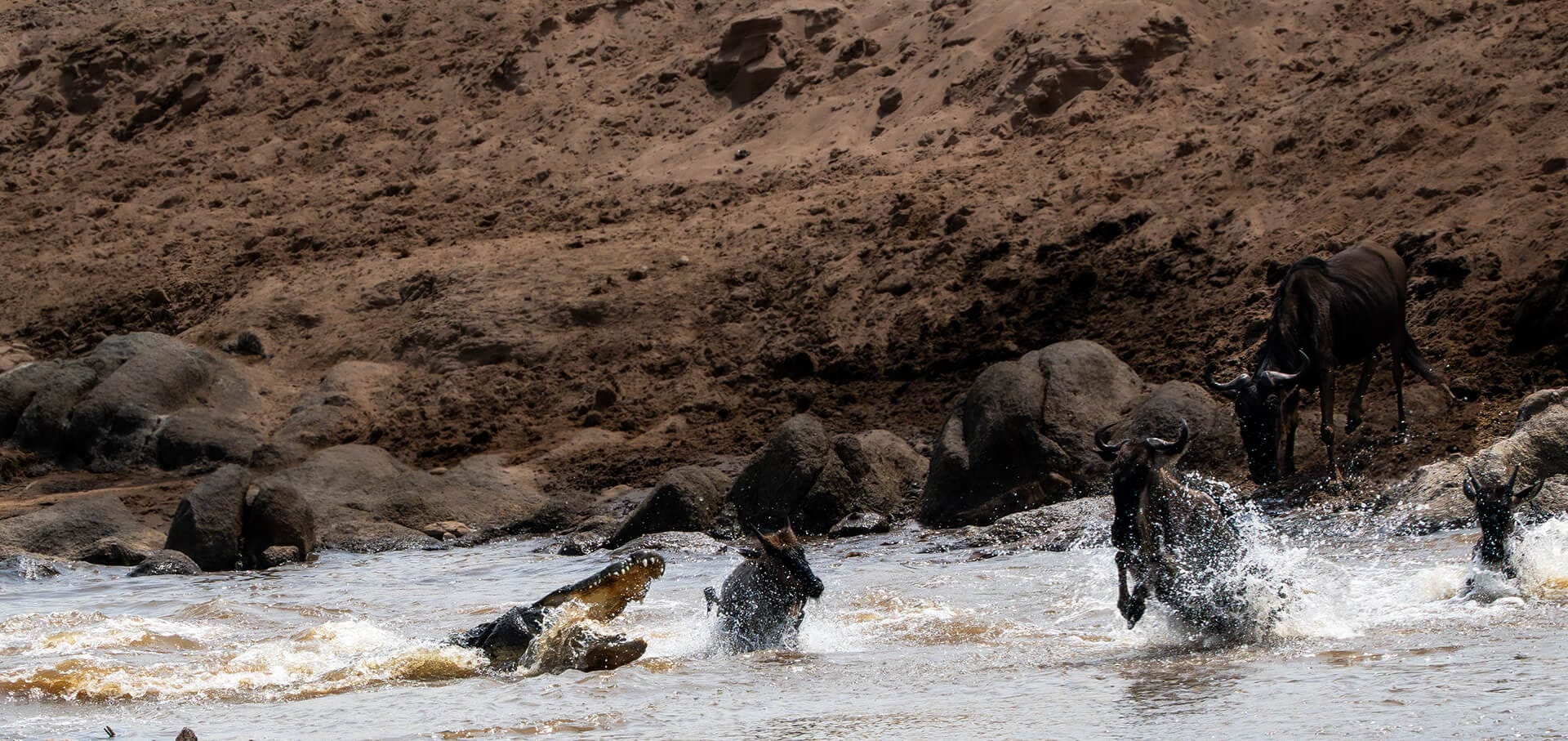
The Mara River crossings, most happen on the Tanzanian side, with a fraction of the crowds
Ndutu, half a million births and the predators that follow
Ndutu sits on the boundary between the southern Serengeti and the Ngorongoro Conservation Area, on the short grass plains where the Great Migration begins and ends each year. Between December and March, the herds gather here to calve, and in a compressed window of just a few weeks, approximately half a million wildebeest calves are born.
The biological logic of this synchronised birthing is to overwhelm the predators: so many calves appear at once that the lions, cheetahs, and hyenas cannot possibly take them all. But for the wildlife traveller, the consequence is the most intense concentration of predator activity of the entire migration cycle. Cheetah hunt in the open short grass. Lion prides gorge. The drama of life and death plays out in full view across the plains.
Ndutu is the connoisseur's migration season, less famous than the river crossings, but arguably richer in actual wildlife action. The short grass plains offer extraordinary visibility and photographic light, and the calving season predator encounters are, for many experienced safari goers, the finest of any time or place in East Africa.
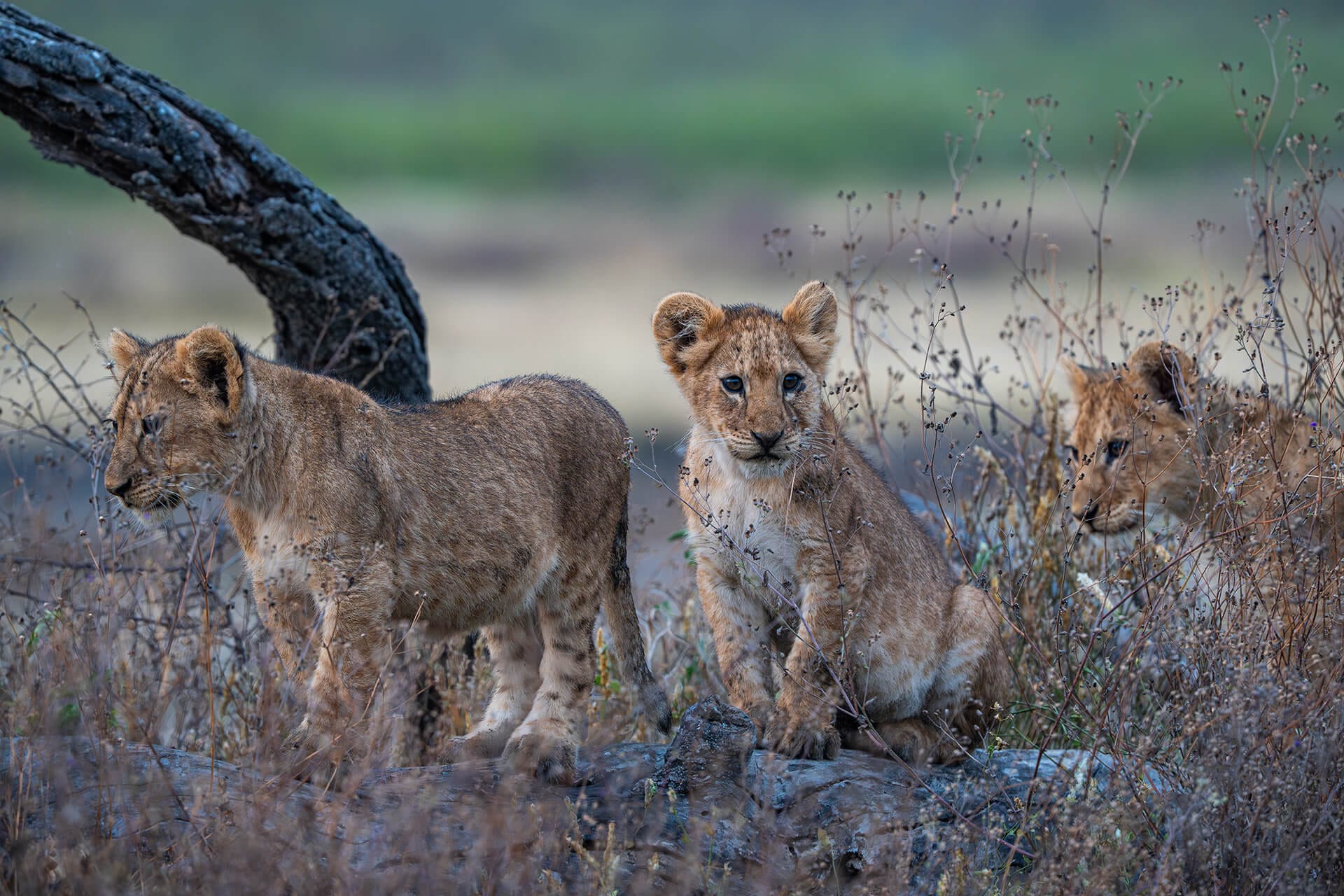
Ndutu in calving season, the most intense predator activity of the entire migration cycle
Seronera, the central Serengeti's big cat heartland
Seronera, in the central Serengeti, is the park's most accessible and wildlife rich permanent sector, and its most visited. The Seronera valley's permanent water and the kopjes (granite outcrops) that punctuate the plains create a year round resident wildlife population that does not depend on the migration: some of the highest lion and cheetah densities in the Serengeti, plus the leopards that drape themselves in the riverine sausage trees along the Seronera River.
We are candid with our guests about Seronera: its wildlife is exceptional, but its central location and ease of access mean it carries the heaviest vehicle traffic in the park. For guests who want the guaranteed big cat encounters that Seronera reliably delivers, we plan early morning and late afternoon drives that work around the peak congestion, and we favour the quieter pockets of the central region over the busiest circuits.
Seronera works best as a component rather than a centrepiece, a reliable big cat anchor at the start or end of an itinerary that has its emotional heart in the quieter northern or southern sectors. Its year round accessibility also makes it the fallback when migration timing is uncertain.

Seronera, the central Serengeti's reliable big cat heartland, best as a component not a centrepiece
Lake Manyara, tree climbing lions beneath the Rift escarpment
Lake Manyara National Park is where many of our Tanzania itineraries come to rest. A compact, astonishingly diverse park at the base of the Great Rift Valley escarpment, Manyara compresses an extraordinary range of habitats into a small area, groundwater forest, acacia woodland, the alkaline lake itself, and the dramatic 600 metre rust red escarpment rising behind it all.
Manyara is famous for two things. The first is its tree climbing lions, an unusual behaviour, seen in only a handful of places in Africa, where the lions rest draped along the branches of acacia and mahogany trees during the heat of the day. The second is the flamingos: in the right season, the alkaline lake hosts vast pink flocks of lesser and greater flamingo, alongside pelicans, storks, and over 400 recorded bird species.
Our partner property here sits beneath a waterfall and is regularly visited by wild elephants drawn to the water, a secluded, atmospheric finale to a Tanzania circuit. After the intensity of the Serengeti migration, Manyara offers a gentler register: forest, water, birdsong, and the Rift Valley light. It is the ideal place to decompress before the journey home.

Lake Manyara, tree climbing lions, flamingo flocks, and a waterfall lodge beneath the Rift escarpment
The migration moves. Your itinerary should follow.
Masai Mara vs Serengeti - the differences, and the truth
The most common question in East African safari planning. The honest answer begins with a fact that surprises most travellers: they are the same ecosystem. The border between them is a political line, not an ecological one.
Serengeti
TanzaniaMasai Mara
KenyaOne Ecosystem
The Serengeti and the Masai Mara are not two destinations: they are two halves of a single 30,000 square kilometre ecosystem, divided only by the Kenya Tanzania border. The wildebeest do not carry passports. The same herds that cross the Mara River in the northern Serengeti in August are in the Kenyan Masai Mara in September. The lions, the cheetahs, and the leopards move freely across a boundary that exists only on maps.
This is why the most complete migration experience is not a choice between them: it is a combination of both. A northern Serengeti base for the Tanzanian crossings, then a hop across the border to a Mara conservancy, captures the full spectacle from both sides. We plan exactly this combined circuit for guests who want the migration in its entirety.
The four Tanzania sectors compared
Each sector offers a distinct experience, season, and character. Most well planned itineraries combine two or three. Here is how they compare at a glance.
| Sector | Best Months | The Draw | Crowd Level | Best For |
|---|---|---|---|---|
| North Serengeti | Jul to Oct | Mara River crossings; mobile camps at Kogatende | Low to Moderate | The river crossing spectacle without the Kenyan side crowds |
| Ndutu | Dec to Mar | Calving season; the most intense predator action of the year | Low to Moderate | Predator drama, photography, the connoisseur's migration |
| Seronera | Year round | Reliable resident big cats; leopards in sausage trees | High | Guaranteed big cat sightings; a reliable itinerary anchor |
| Lake Manyara | Year round | Tree climbing lions, flamingos, Rift escarpment, waterfall lodge | Low to Moderate | A gentle, scenic finale to decompress at the journey's end |

Ruaha, Tanzania's wild secret
Our most popular extension takes guests in an entirely different direction, south, to Ruaha National Park, one of the most remote and genuinely wild safari destinations on the continent.
Ruaha holds the most reliably encountered wild dog packs in East Africa, vast elephant herds drawn to the Great Ruaha River, and a transitional flora where the baobab studded landscapes of East Africa meet the miombo woodland of the south. The character recalls Zambia's South Luangwa far more than it does the Serengeti: river centred, intimate, and almost entirely free of other vehicles. Night safari and walking safari are the highlights.
Ruaha receives a tiny fraction of the northern circuit's visitors. A sighting here is private by default. For the seasoned guest who has done the Serengeti and wants the wildest corner of Tanzania, Ruaha is the answer.
Tanzania Safari Camps & Lodges
From mobile tented camps that follow the migration to permanent lodges beneath the Rift escarpment, every property selected on guiding quality, sector position, and the specific season it serves best.
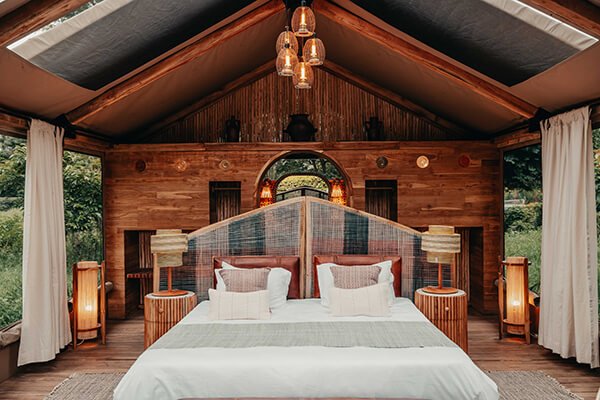
Lake Manyara Green Camp
Eight canvas tents beneath the Endabash Waterfall, one of only two camps permitted inside Lake Manyara National Park itself, each bed fitted with a retractable roof for sleeping under the stars. A natural stop on the northern circuit, minutes from the park's tree climbing lions and dense elephant herds.
View Lodge →
Ndutu Safari Lodge
Tanzania's oldest photographic safari lodge, founded in 1967, on the boundary of the Southern Serengeti plains where up to eight thousand wildebeest calves are born every day each February. Off-road driving and night drives here, unlike inside the national park itself.
View Lodge →Tanzania, timed to the migration
Tanzania is a year round destination, but the migration's position shifts month by month. The dry season (late June to October) is peak for river crossings; the green season (December to March) is calving. Both are exceptional: they are simply different.
The herds are on the southern plains around Ndutu. Calving peaks in February. The most intense predator action of the year, exceptional photographic conditions, and fewer crowds than the river crossing season. The connoisseur's choice, and ideal for combining with the Ngorongoro Crater.
The long rains. The herds move north through the central Serengeti. Some camps close; access can be limited. But the landscape is lush, the light dramatic, visitor numbers low, and rates significantly reduced. A deliberate choice for the photographer and the budget conscious traveller willing to accept some weather.
The dry season begins. The herds reach the western corridor and the first Grumeti River crossings take place. A quieter alternative to the famous Mara crossings, with drama on a more intimate scale. Excellent conditions across the park as vegetation thins and wildlife concentrates.
The Serengeti at its most celebrated. The herds reach the northern Serengeti and the Mara River crossings begin, the defining spectacle of the African safari. Our mobile camps position at Kogatende. Book 9 to 12 months in advance; this is the most in demand window in East Africa. Also peak season for Ruaha in the south.
Frequently Asked Questions
The questions most frequently asked when planning a Tanzania safari, answered with specifics.
The Migration
When is the best time to see the river crossings?
July through October, in the northern Serengeti around Kogatende. August and September are statistically the most active months for Mara River crossings. Remember that crossings cannot be precisely predicted: they depend on the herd's mood, water levels, and rainfall. A mobile camp positioned in the north, able to move to the active crossing points, gives the best odds.
Where do most river crossings actually happen?
Most crossings happen on the Tanzanian side of the border, in the northern Serengeti, not in Kenya's Masai Mara, as is commonly assumed. The northern Serengeti also receives far fewer visitors than the Kenyan side, so a north Serengeti base offers the crossing spectacle with a fraction of the vehicle congestion.
Is the calving season worth visiting over the crossings?
For many experienced safari goers, yes. The Ndutu calving season (December to March) produces the most intense predator activity of the entire year, cheetah hunting on open plains, lion prides gorging, the full drama of life and death. It is less famous and less crowded than the crossings, with superb photographic conditions. We often recommend it for repeat visitors.
Can I combine Tanzania with Kenya for the full migration?
Yes, and it is the most complete migration experience. The Serengeti and Masai Mara are a single ecosystem divided only by a border. A northern Serengeti base for the Tanzanian crossings, then a short hop to a Mara conservancy, captures the spectacle from both sides. Our partner Safari Airlines transfers guests between the two countries daily in a matter of hours.
Logistics & Planning
Why do you avoid the central Serengeti?
The central Serengeti around Seronera is the most accessible and therefore the most crowded sector, a single lion sighting can attract twenty vehicles. Its wildlife is genuinely exceptional, so we use it selectively as an itinerary anchor, but we build the heart of our itineraries around the quieter northern, western, and southern sectors where the experience is far more exclusive.
Should I do a fly in or overland safari?
Both have merits, and we often combine them. Fly in safaris (using small Safari Airlines aircraft) dramatically reduce transfer times and are essential for reaching remote areas like Ruaha and the northern Serengeti efficiently. Overland tours offer a more gradual immersion and are scenic in their own right. For multi sector itineraries spanning north and south, fly in is strongly recommended.
Is Tanzania suitable for families with children?
Tanzania suits older families better than very young ones, given the isolated locations, long travel distances, and minimum age limits at some camps. That said, we regularly design family safaris with appropriate camps, child friendly guiding, and shorter drives. Consult us with your family's ages and we will design accordingly.
Can I add a hot air balloon over the Serengeti?
Yes, a dawn balloon flight over the Serengeti plains is highly recommended and can be arranged with pick up and drop off from your camp, typically followed by a champagne bush breakfast. It is one of the most memorable experiences available in Tanzania, particularly over the migration herds. We arrange this on request as part of the itinerary.
The endless plain awaits.
Let us position you precisely.
Every Safari Acacia Tanzania programme is a private itinerary, sector selection timed to the migration, mobile camps that follow the herds, the remote south of Ruaha, and the gentle finale of Lake Manyara, built around a single conversation about what you want from Africa.