Lion Behaviour Guide
Mating Rituals of Lions: Courtship, Consortship and What Happens Next
How lions court, how often they mate, why lionesses choose the males they do, and where in Africa you can watch it happen with a guide who understands what you are seeing
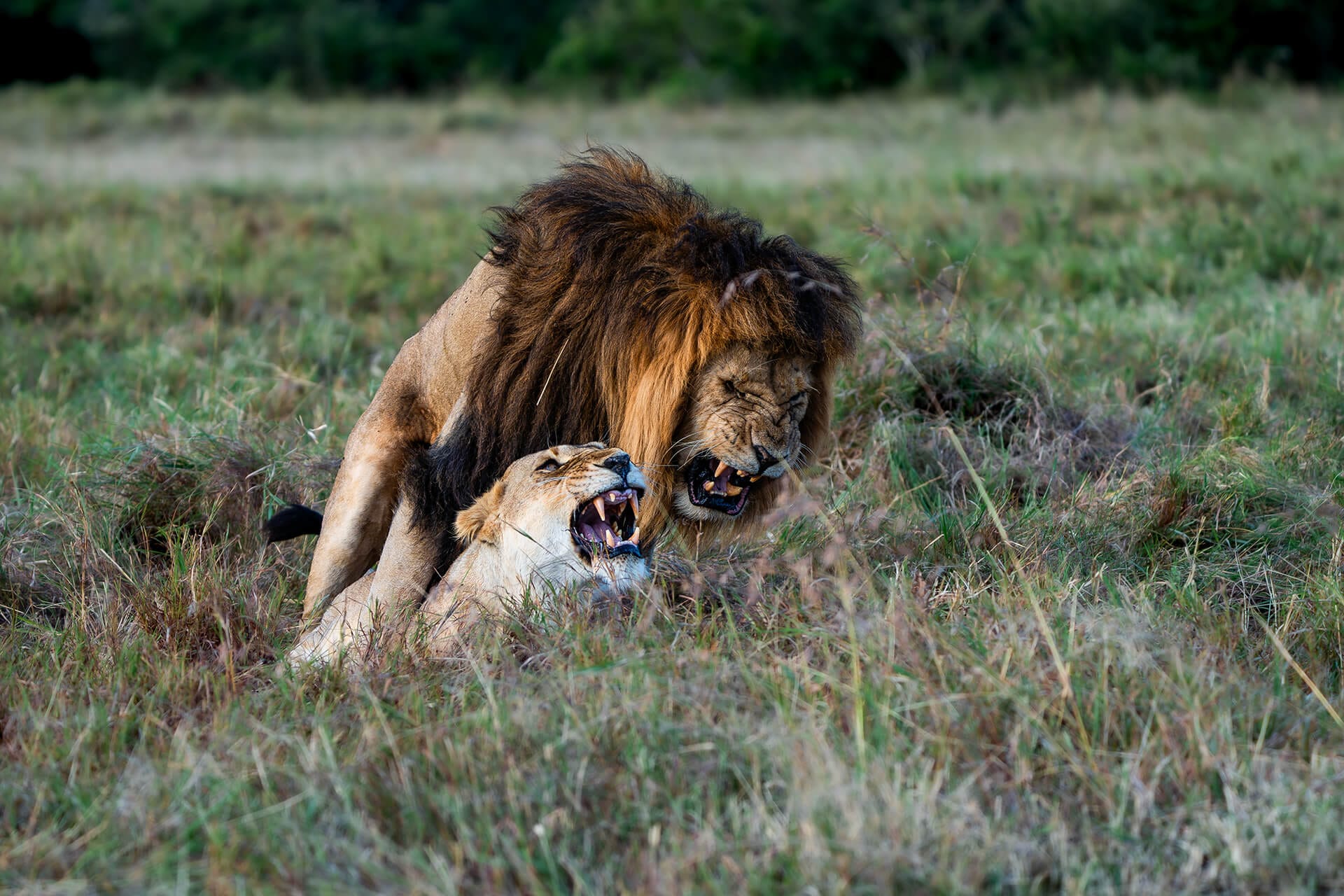
A mating pair of lions is one of the most intense things you can see on safari. For three or four days a male and a lioness leave the pride, walk, rest and mate together, with brief and frequent copulations, growls, snarls and long pauses in between. It looks dramatic, and in many ways it is. It is also one of the best studied behaviours in any wild animal, thanks to more than fifty years of continuous research on the lions of the Serengeti.
This guide explains what is actually happening when you watch lions mate: the courtship, the consortship, the neck bite, the sounds, how long it lasts and why they mate so many times. It then goes further, into the questions that make lion mating matter. Why do females prefer dark maned males? Why do so few matings result in cubs? Why does a pride takeover change everything? What happens in the 110 days after mating?
We have also corrected a few popular myths along the way, because much of what is written about lion mating online is wrong. And at the end, we explain where and when you have the best chance of seeing it yourself, in Kenya, Tanzania and Zambia.
Stays Together
Mating
Pregnancy
Lead to Conception
Lion Mating: The Short Answers
If you came for quick facts, here they are. The rest of the guide explains each one.
| Question | Answer |
|---|---|
| How long does a mating bout last? | Under a minute. A single copulation is brief, often only a few seconds. |
| How often do lions mate? | Often every 15 to 20 minutes, around three times an hour, for hours at a stretch or through the night. |
| How long does the mating period last? | About 3 to 4 days, while the lioness is in oestrus. |
| Is there a lion mating season? | No fixed season. Lions breed throughout the year, though births in some areas peak when prey is also having young. |
| How long is lion pregnancy? | About 110 days, a little under four months. The range is 100 to 114 days. |
| How many cubs are born? | Usually 2 to 3, with a range of 1 to 6. |
| Do lions mate for life? | No. Pairs form for the few days of oestrus only. Lionesses often mate with more than one male. |
| Who chooses the mate? | Males compete for access, but when more than one lioness is in oestrus, unguarded females choose, and they favour males with darker manes. |
First, Understand the Pride
Lion mating makes sense only once you understand how lions live. A pride is a group of related females, their daughters, and their dependent cubs. Young females usually stay in or near the pride they were born into. Young males do the opposite. Around two to three years old they are pushed out, and they travel as nomads, often in small groups of brothers or cousins called coalitions.
That is the origin of nearly everything that follows. A coalition of males that takes over a pride gains access to many females at once, so competition between coalitions is fierce, and larger coalitions sire more cubs than smaller ones. Inside the pride, females are different from males in a way many people do not expect. They are egalitarian. There is no dominance hierarchy among the lionesses, and all adult females breed. The old idea that only one dominant female in a pride reproduces is a myth.
Lionesses also tend to come into oestrus at around the same time, a pattern called synchronous breeding. This is very important, because it often means there are more females in oestrus than resident males can guard at once.
How Lion Courtship and Mating Unfold
1. A lioness comes into oestrus
A lioness is receptive for roughly four to seven days of a cycle that repeats about every two weeks. The first sign is restlessness. She lies down, jumps up and walks quickly. She may roll and twist on her back. A male nearby notices at once, and often tests the signal himself with flehmen: he sniffs her urine or scent marks, then lifts his head, closes his eyes, opens his mouth and wrinkles his nose into a grimace. The expression looks comic, but it is how a male reads her condition.
2. The male follows, and the pair breaks away
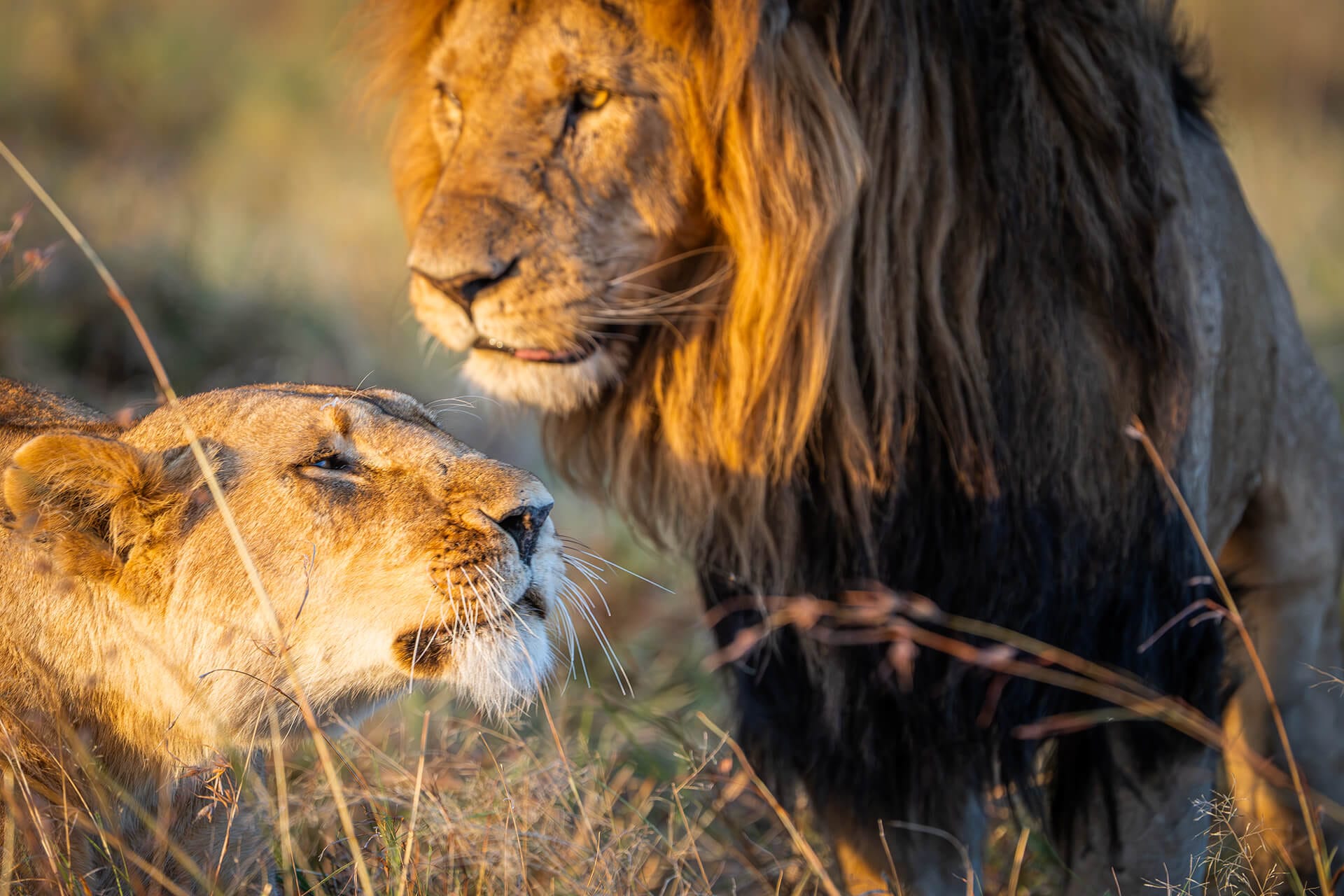
Once a male is accepted, the two become consorts. He follows her everywhere, usually within one to three metres, and rests wherever she rests. He may lick her neck, back and rump, a behaviour almost never seen outside courtship. She may play along, or she may playfully slip away. Courtship can be started by either of them. As a pair, they usually separate from the rest of the pride for the few days of mating.
A male that has found a lioness guards her. If other males from his coalition are nearby, they are generally tolerated, and fights are uncommon. Strange males are driven off.
3. The mating itself
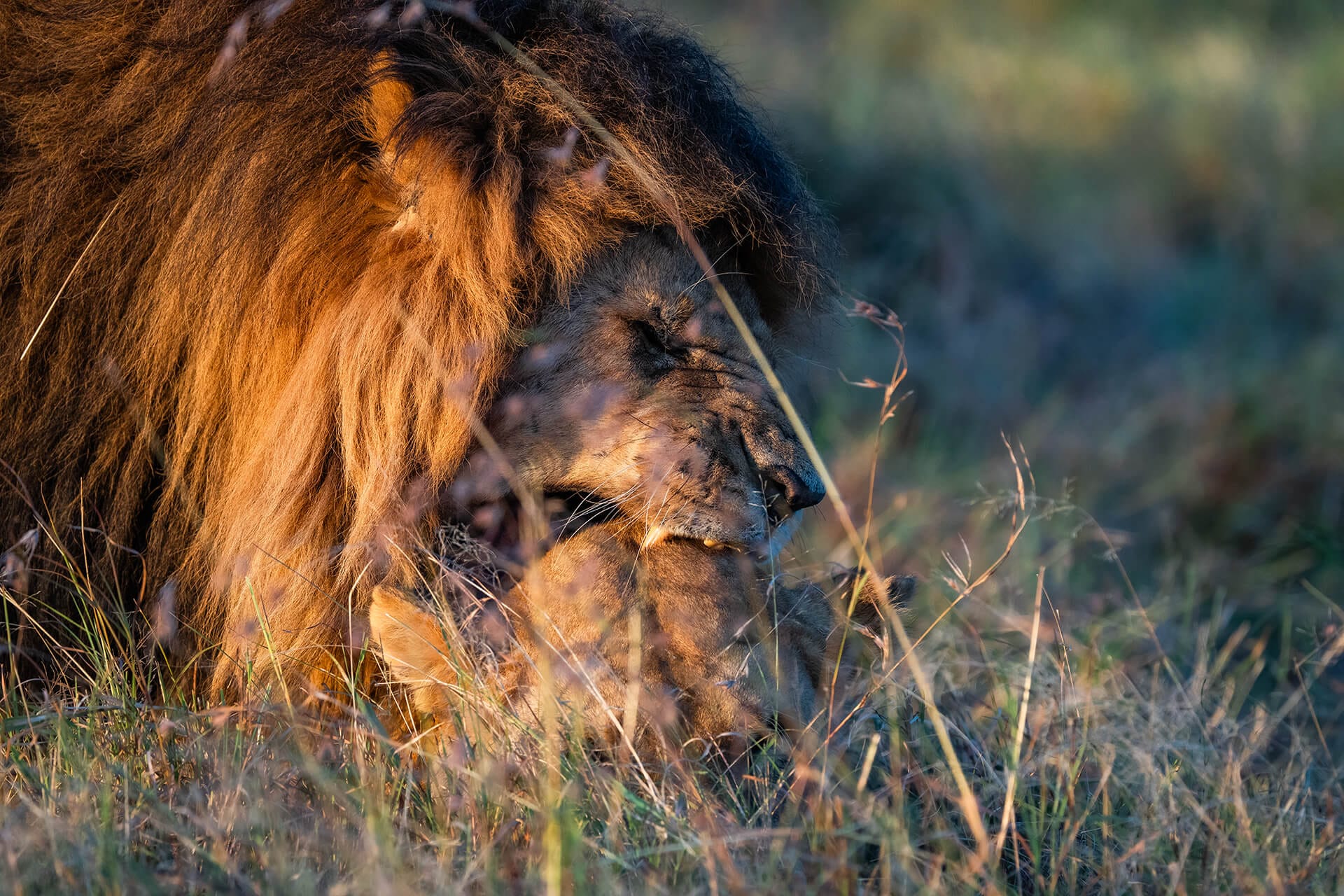
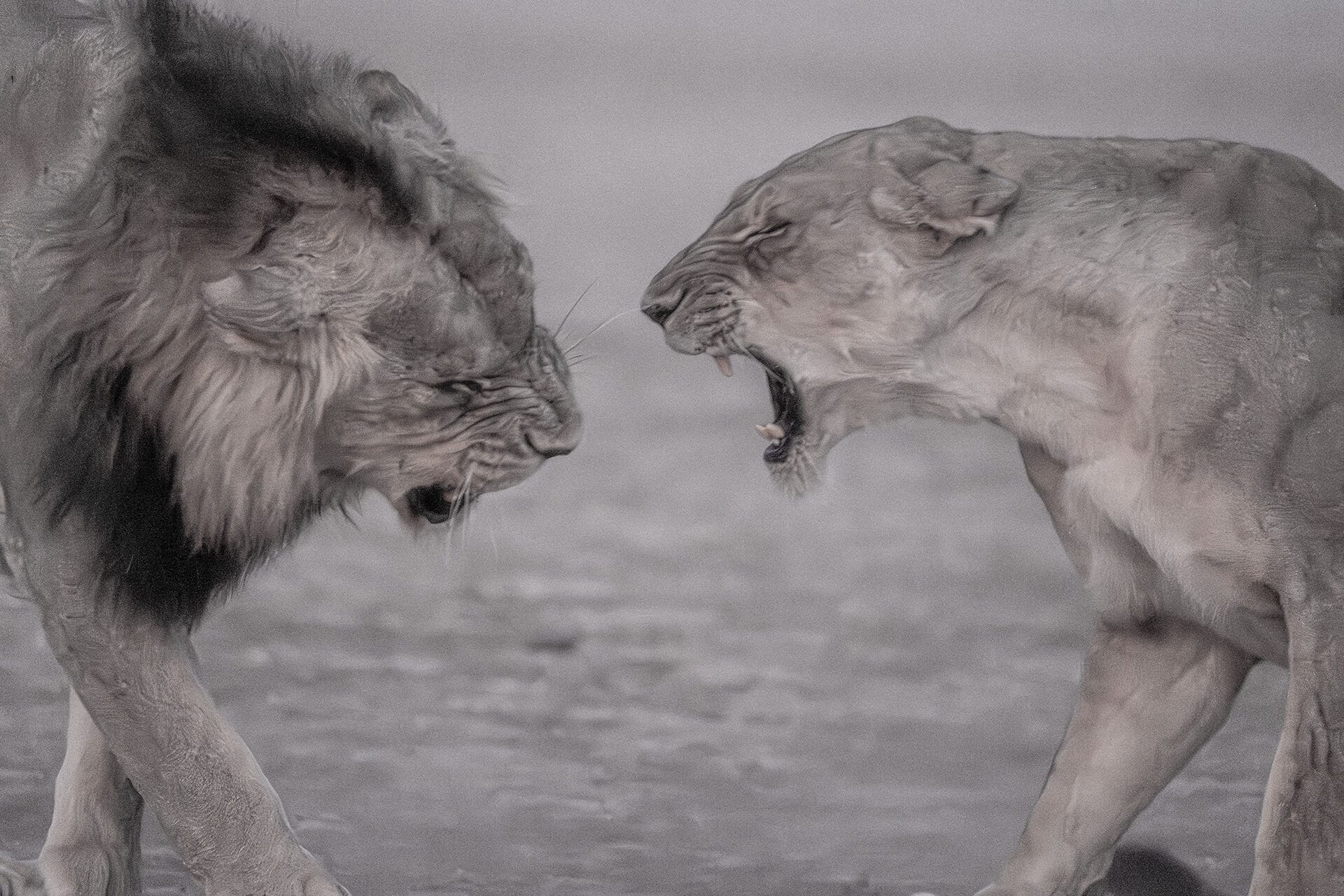
The lioness invites mating by crouching with her hindquarters raised, a reflex called lordosis. The male mounts and often grips her neck with his teeth, a restrained, gentle bite that appears to keep her still. He must be careful: a hard bite could injure her. The act is over in under a minute. As he withdraws he may growl or yelp, and she usually turns on him with a snarl and a swipe, then the pair separate abruptly.
Then they do it again. Copulations come as often as every 15 minutes, or about three times an hour, through several hours or a whole night. Between bouts, the pair lie down together, walk a little, doze. Throughout, the lioness may purr loudly or growl, and her expression can look aggressive. It is not a fight. It is simply how lion mating looks and sounds.
4. Three or four days of consortship
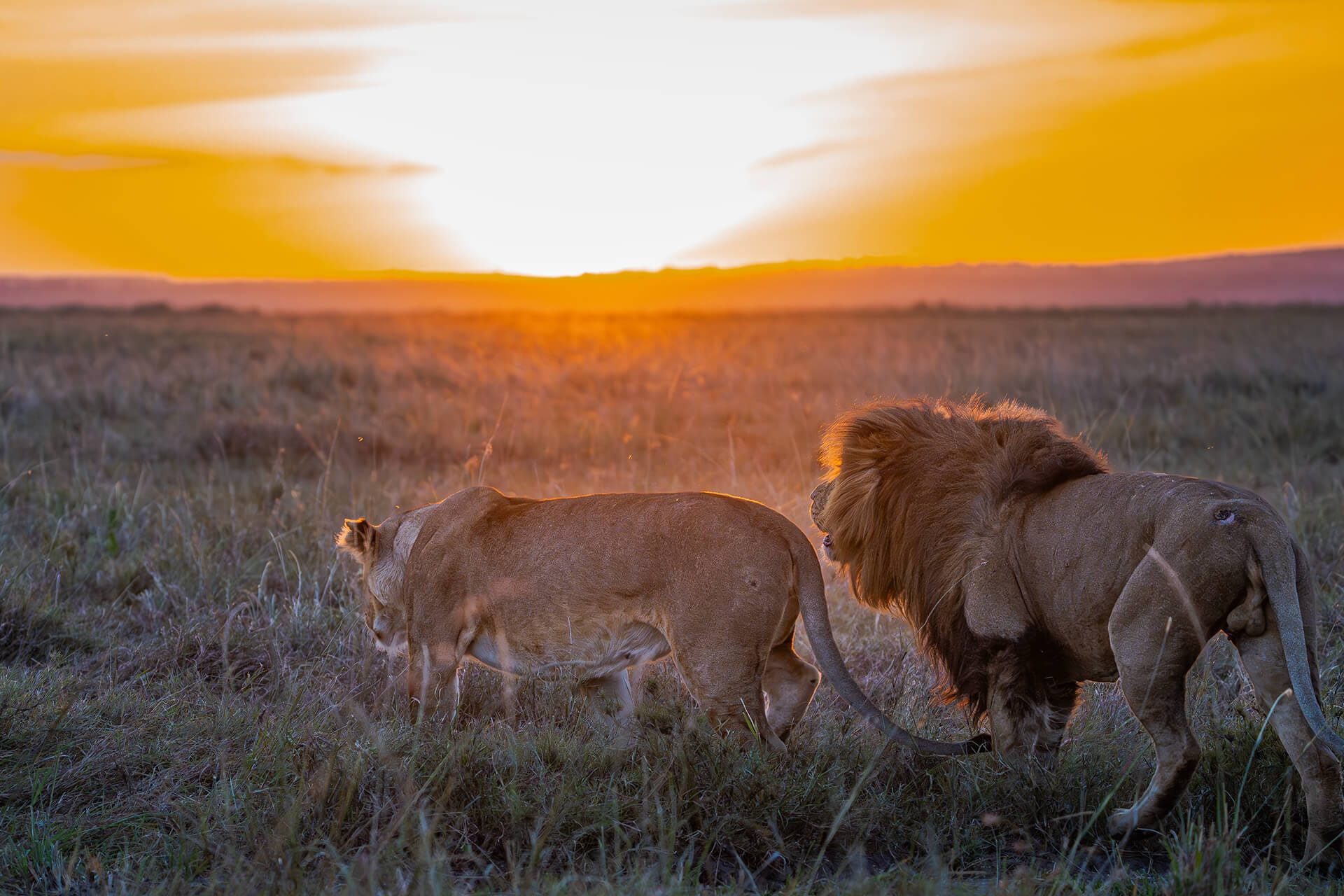
The pair remains together for about three to four days. They often eat little, which is why a courting pair is usually seen resting, walking and mating, not hunting. By the end both are exhausted. Then the bond ends as quickly as it began, and the male often drifts off to find another lioness in oestrus.
Why Do Lions Mate So Often?
Repeated mating, dozens of times a day over several days, is the part that surprises most visitors. There are good biological reasons. Many cat species need repeated copulation to trigger ovulation, though in lions it is not clear whether ovulation is induced or spontaneous. And the odds of any single mating leading to a pregnancy are low. Only about 20 to 40 percent of lion mating interactions end in conception.
For a male, the cost of mating is low but the stakes are high: a lioness is receptive only a few days at a time, a rival may be nearby, and every opportunity counts. For a lioness, the long consortship secures a partner, a protected few days, and repeated chances at a conception that carries a very high cost if it fails.
Lions in Courtship
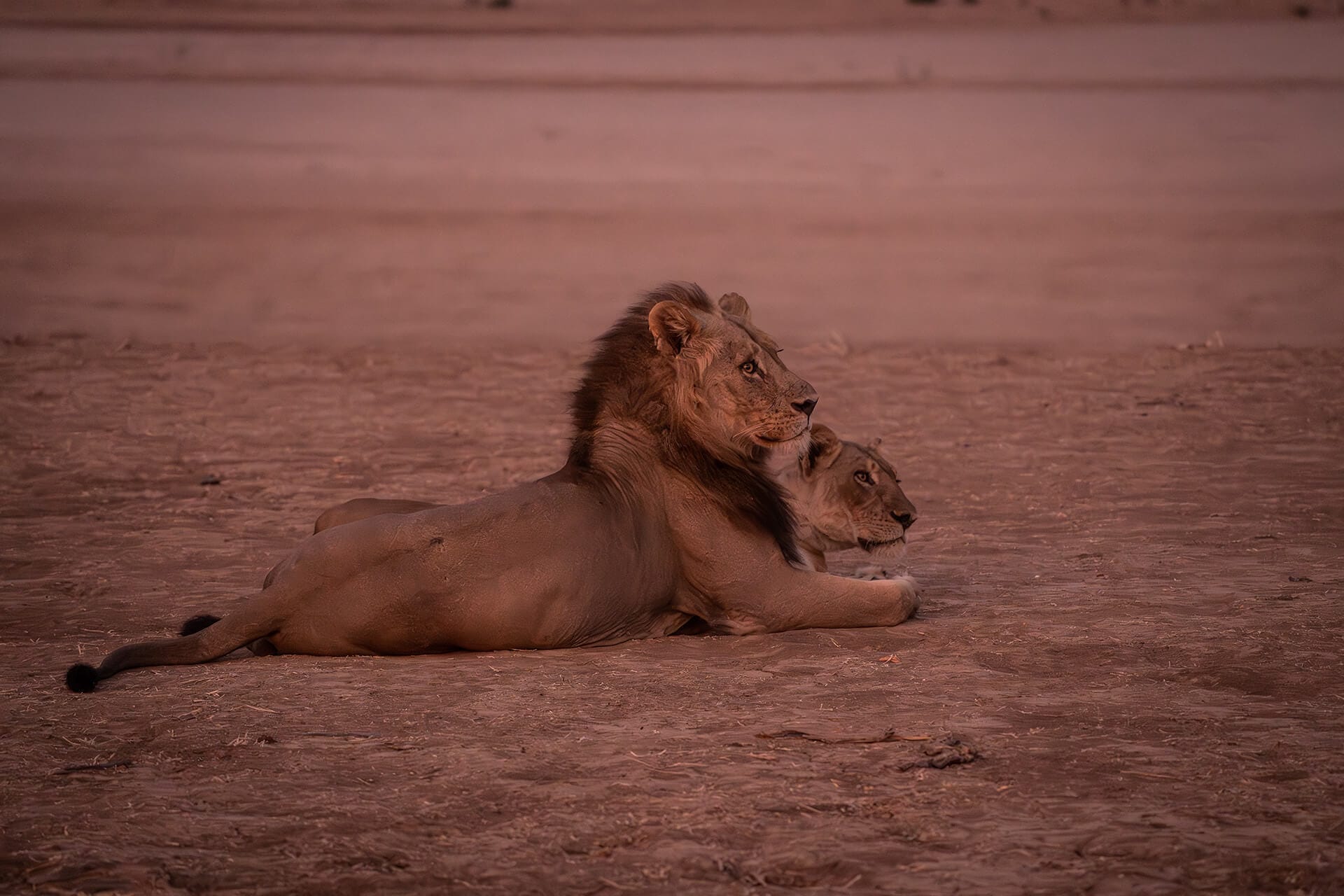
Moments from the consortship, photographed on our safaris in Kenya, Tanzania and Zambia.
Why Lionesses Prefer Dark Maned Males
A male lion's mane is the most obvious display in the African bush, and for decades no one was sure what it was for. Researchers in the Serengeti, led by Craig Packer, set out to find out, and the answers were published in the journal Science in 2002.
The key finding is that the mane is a signal. Darker manes go with higher testosterone, better feeding and greater dominance. Males with darker manes live longer with a pride, are more likely to survive when injured, and their cubs are more likely to survive to their second birthday. Lionesses seem to know it. In long term records, when a male mated with more than one lioness in an hour, so that at least one of them was choosing, the female chose the darkest maned male in 13 of 14 cases. In experiments using life sized plush lions with swappable manes, lionesses approached the dark maned model nine times out of ten.
Length mattered much less for females, though it mattered to rival males: they avoided a long maned stranger in nine of ten tests, perhaps because a long mane suggests recent fighting success.
A dark mane has a price. It is hot. Dark maned males have higher body surface temperatures, reduce their food intake in hot weather and show more abnormal sperm. That cost is what keeps the signal honest: only a strong, healthy male can afford one. It is also why male lions in hot, humid Tsavo in Kenya often have very small manes, and why researchers expect climate warming to produce fewer long, dark manes in East Africa over time.
Coalitions, Competition and Who Actually Fathers the Cubs
Male lions are the only truly cooperative males among the big cats. Brothers and cousins travel together, take over prides together and defend them together. But cooperation has limits. In coalitions of three or more, usually only one or two males father nearly all of the cubs. The others still benefit, because they are usually related and help hold the pride, but their own reproductive success can be low.
Inside a coalition, a male that finds an oestrous female guards her jealously and tries to keep his companions away. But if several lionesses are in oestrus at once, he cannot guard them all. The excess females are then free to choose, and that is when mate choice matters most.
The picture is also more complicated than pride boundaries suggest. In Etosha National Park, researchers found a high rate of paternity from males outside the pride, particularly in prides with few males. The pride is the social unit, but not always the breeding one.
Pride Takeovers and Infanticide
No account of lion mating is honest without this. Male coalitions typically hold a pride for only two to three years. When new males take over, they usually kill or drive out the cubs of the previous males. In the Serengeti, more than a quarter of all cub deaths are caused by infanticide, and when a male coalition is lost, unweaned cubs often do not survive.
The logic is brutal. A lioness with cubs does not return to oestrus until the cubs are weaned, which can take 18 months or more. Without them, she is receptive within weeks, so the new males can father their own cubs in months instead of years. A lioness will defend her cubs, often fiercely, and sometimes at the cost of her own life, but usually without success.
The consequences for mating are striking. For about three months after a takeover, lionesses are unusually sexually active, mating often, but with little chance of conceiving, an infertile testing period that draws in more males and encourages competition. This may help ensure the strongest coalition gains tenure. On average, lionesses conceive about 102 days after a takeover. When the new males' tenure is stable, synchronous breeding resumes.
It is a difficult subject to watch, and a difficult one to read about, but it is part of the reason lion society is shaped the way it is: females stay together, defend each other and synchronise their cubs, and males fight hard for the right to stay.
From Pregnancy to Cubs
Pregnancy and birth
A lioness carries her cubs for about 110 days. Shortly before giving birth she leaves the pride and finds a den in dense bush, a rocky outcrop or a thicket. Litters are usually two or three cubs, weighing about 1.5 kilograms each at birth, with spotted coats and eyes that open within days. She keeps them hidden, moving them in her mouth by the scruff of the neck.
Rejoining the pride
When the cubs are about four to eight weeks old, the mother brings them back to the pride. Cubs born around the same time are raised together in a crèche, usually four to ten of them, and lionesses nurse each other's cubs. This communal care, called alloparenting, is one of the clearest advantages of synchronous breeding, and litters born together tend to have better survival rates.
A hard start in life
Despite the care, lion cub mortality is high. On average about 60 percent of cubs die in their first year, from starvation, disease, abandonment or infanticide. After the first year, mortality drops to under 20 percent. Where a litter survives, the next oestrus comes about 20 months later. Where it is lost, a lioness may mate again within four to six months.
Growing up
Cubs are weaned by about eight months, though they may steal milk for a few months longer, and stay with the pride into their second and third years. Females usually remain; young males are pushed out at two to three years old. A male reaches sexual maturity at around two years, but rarely fathers cubs before he is five, when he is strong enough to hold a pride.
Common Lion Mating Myths, Corrected
Myth: Only the dominant male and female in a pride breed
Not true. All adult females in a pride breed, and there is no female dominance hierarchy. Among males, one or two in a coalition often father most of the cubs, but the others can still breed. The idea of a single breeding pair comes from other species such as wolves.
Myth: Lions have a mating season
They do not. Lions breed throughout the year. Births peak at certain times in some regions, probably timed to when prey is also giving birth, but there is no closed season.
Myth: Lionesses mate with many males because of polygyny
Polygyny means one male mating with several females. A lioness mating with more than one male is better described as multiple mating. It happens, and in some populations it may help protect cubs by blurring paternity, but in many African prides the males she mates with are those of the resident coalition.
Myth: The male is attacking the female during mating
It looks aggressive, with growls, a snarl and a swipe at the end, but this is normal lion mating behaviour. The neck bite is restrained, and the snarl at the end is the lioness's way of ending contact.
Myth: Mating always leads to cubs
Most lion matings do not. Only around 20 to 40 percent end in conception, which is one reason lions mate so frequently.
Do Asiatic Lions Mate Differently?
Lion mating varies between populations and habitats, and between African and Asiatic lions. Asiatic lions, which survive in India's Gir forest, live in smaller prides with a different social arrangement: males and females spend much of the year apart and associate mainly for mating and, in some cases, at kills. Researchers have noted that some Asiatic lionesses mate with several males, and that this may help protect cubs from infanticide by blurring paternity. Even so, the courtship, the frequent brief copulations and the neck bite are recognisably the same.
Where and When to See Lions Mating
Because lions breed year round, there is no month in which mating is guaranteed. What improves your odds is time on the ground, a guide who can read the signs, and a destination with healthy lion populations and relatively few vehicles. A consorting pair is easy to recognise once you know what to look for: two lions apart from the pride, lying very close together and watched closely by a male who ignores everything else. Any good guide will move quietly, keep a respectful distance and let the pair set the pace.
These are the three places where we most often see it.
The Mara and Its Conservancies
Big prides, few vehicles, and night drives
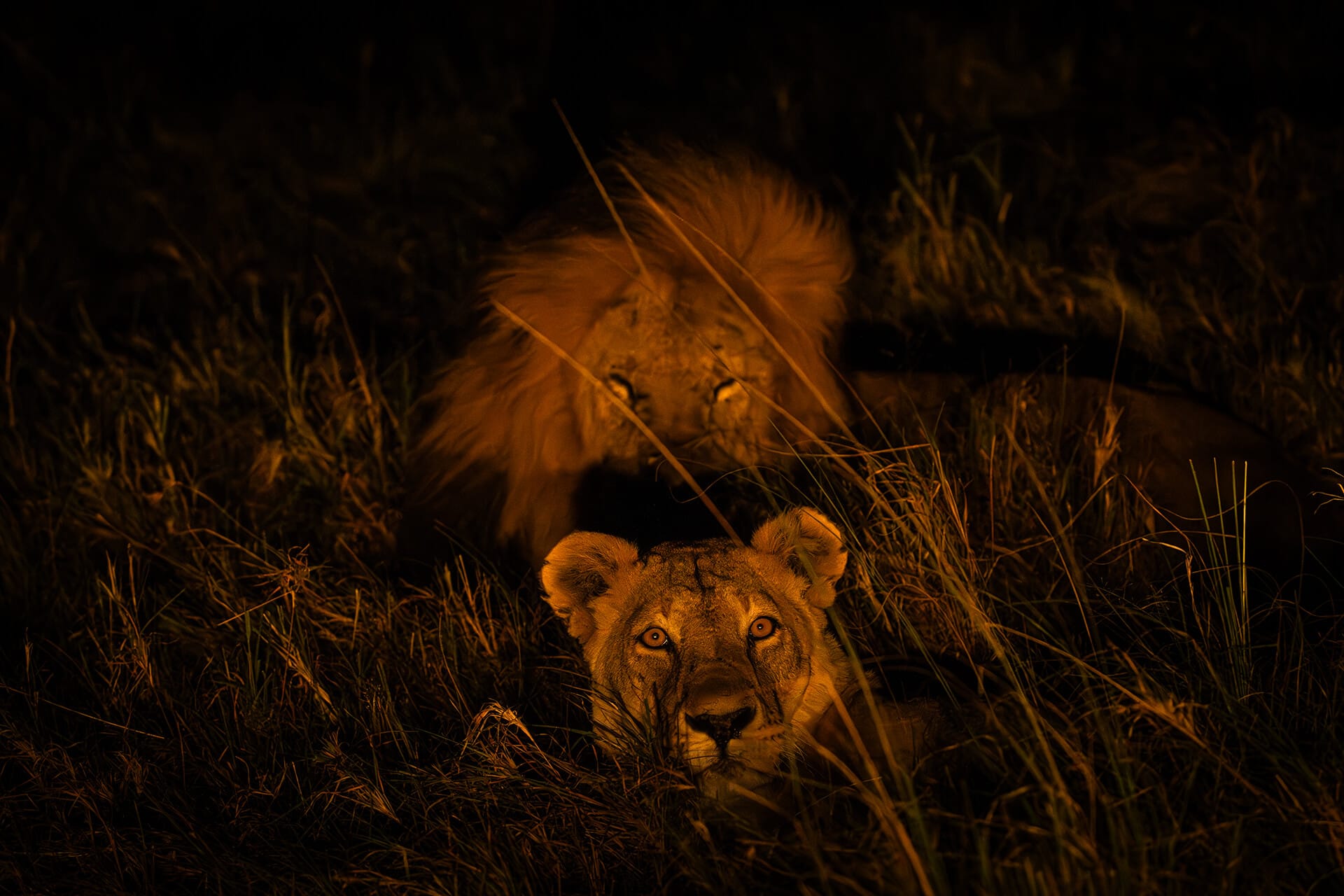
The Masai Mara holds some of the densest lion populations in Africa, and the private conservancies around it limit vehicle numbers and allow night drives and off road driving, which give you far more time with a single pair. In our Kenya safaris, we delicately focus on lion courtship if it occurs nearby.
Explore Our Kenya Safaris →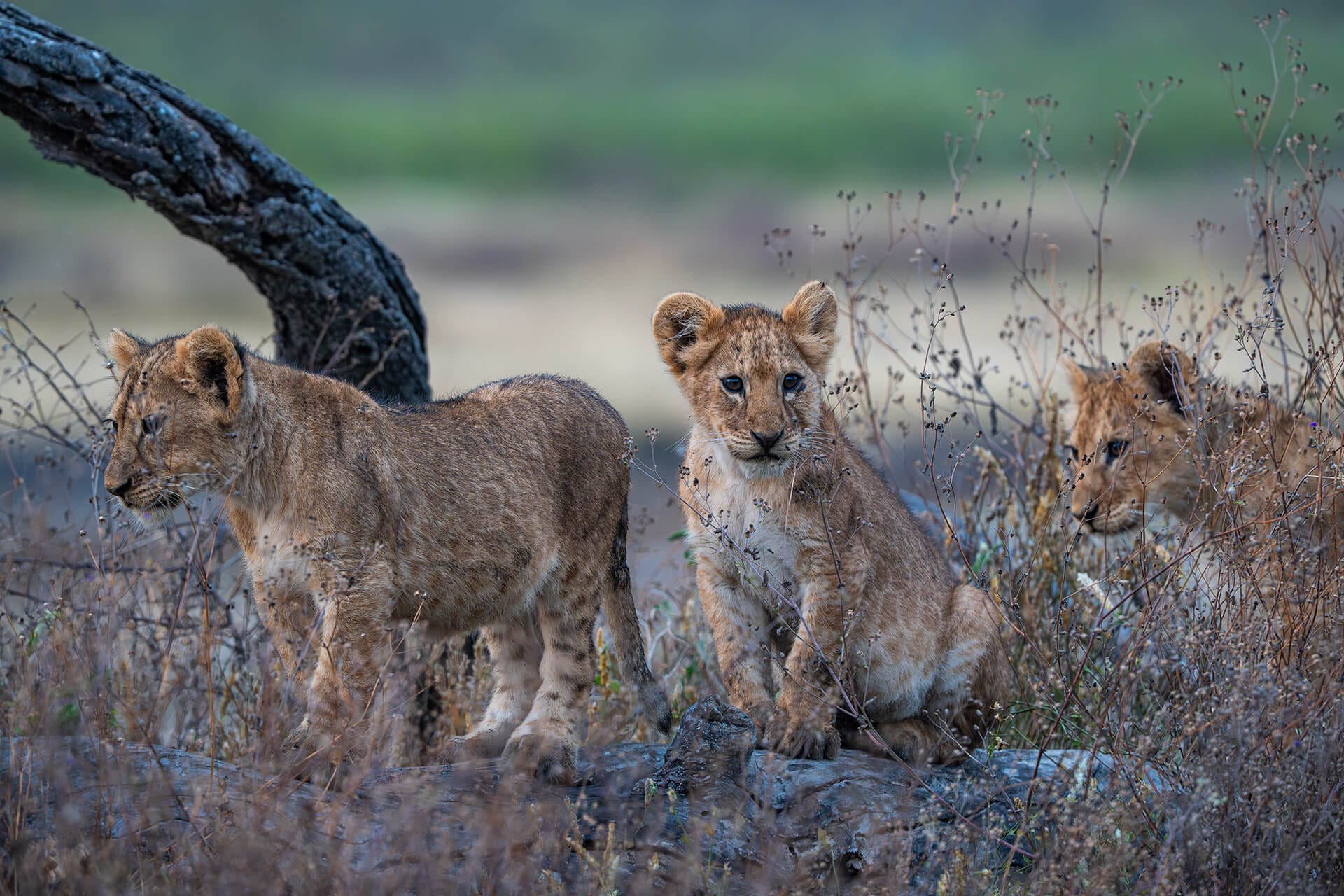
The Serengeti, Ndutu and Ruaha
Where lion research began
The Serengeti is where the lion research quoted in this guide was done, over half a century of continuous study. We position guests in the quieter northern and southern sectors, and add remote Ruaha, which holds Tanzania's largest lion population and where prides of twenty or more are seen with almost no other vehicles.
Explore Our Tanzania Safaris →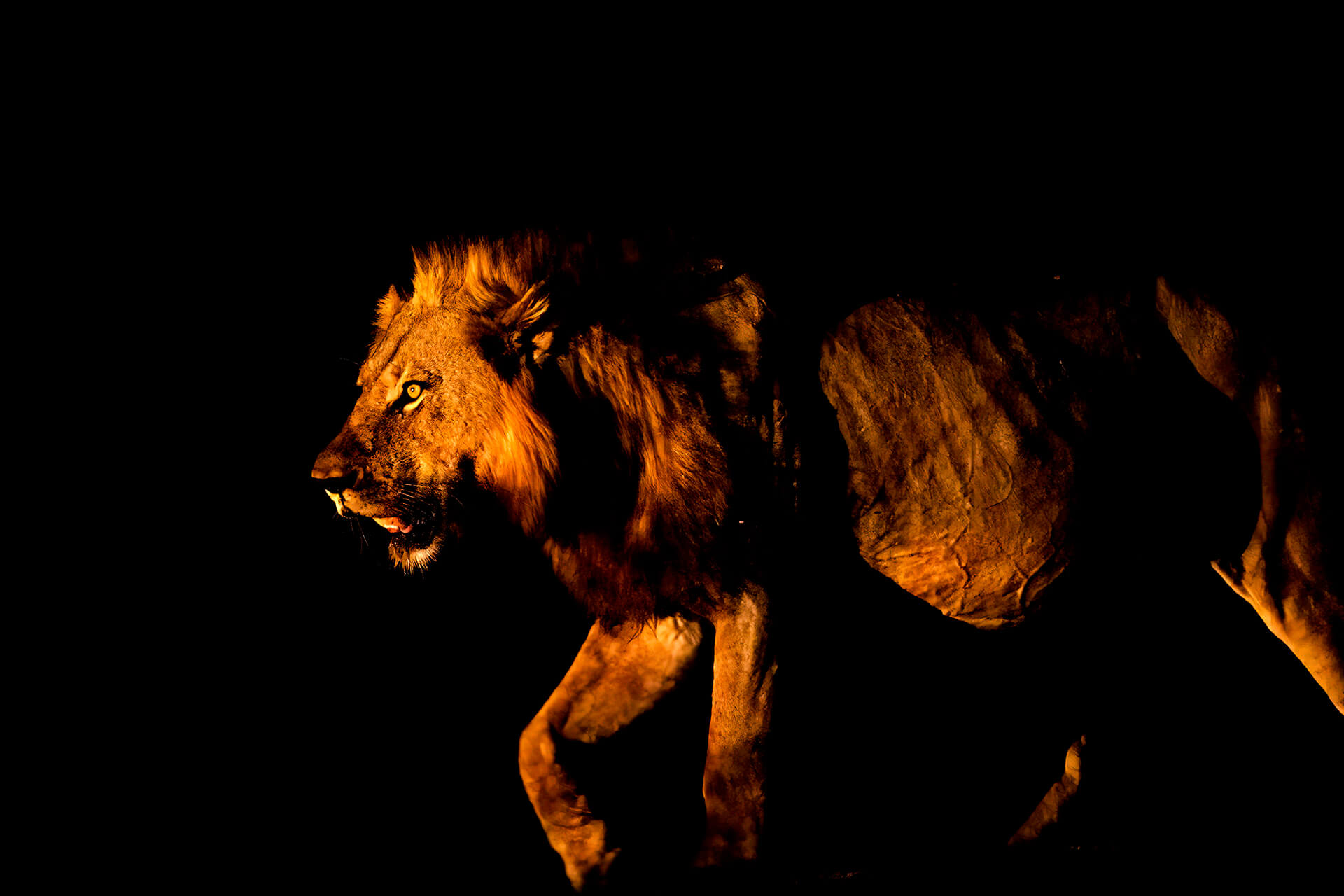
South Luangwa, After Dark
Walking safaris and licensed night drives
South Luangwa offers something the big East African parks do not: licensed night drives inside the park, when lions are most active. Small owner run camps and very few vehicles mean you can watch a pair quietly and at length.
Explore Our Zambia Safaris →Watching and Photographing Lions Mating, Respectfully
A mating pair is not a performance, and how you watch matters. We follow a few simple rules on every safari. We keep a respectful distance and never position a vehicle between the pair or in the lions' path. We keep engines off, voices low and, at dawn or dusk, flash and spotlights off or on a low setting. We never encourage lions to move or react. And we leave when the lions have had enough, not when the best frame is taken.
For photographers, the best images come from patience. Mating is brief and repeated, so there is time to compose; the snarl at the end of each bout is usually the strongest moment. Use a long lens, at least 400mm, keep the shutter fast enough to freeze movement, and shoot a few frames of the quiet moments too: the pair resting, the male's flehmen grimace, the lioness looking back. A guide who knows the pair and the light makes a big difference.
Want to See Lion Behaviour for Yourself?
We plan private safaris around the animals, not the other way round.
Every Safari Acacia programme is private, with small groups, expert guides and camps chosen for the quality of their wildlife viewing. We cannot promise a mating pair, and no honest operator can, but we can put you in the right place, with the right guide, for long enough to give it every chance. See our Kenya, Tanzania and Zambia pages, browse the wildlife and species we focus on, or speak to our Africa team.
Frequently Asked Questions
The questions people most often ask about how lions mate.
The Mating Itself
How long do lions mate for?
A single mating lasts less than a minute, often only a few seconds. But a pair stays together and mates repeatedly for about three to four days, as often as every 15 to 20 minutes.
How many times a day do lions mate?
Lions mate frequently, about three times an hour during a mating spell, which can run for several hours or through a night. Across a few days, that can add up to many dozens of matings.
Why does the lioness growl or snarl during mating?
It is normal. The lioness often purrs loudly or growls during mating, and as the male withdraws she usually turns and snarls at him, which ends the contact. It looks aggressive but is part of the behaviour.
Why does the male bite the lioness's neck?
The bite is a restrained grip of the neck, common in cats, and it seems to keep the female still. The male has to be careful, because a hard bite could injure her.
Do lions mate for life?
No. Lions form temporary pairs for the days of oestrus only. A male may then move to another lioness, and a lioness may mate with more than one male.
Breeding & Cubs
Do lions have a mating season?
No fixed season. Lions breed year round. In some regions births peak at times when prey are also having young, but lions can and do mate in any month.
How long is a lion pregnant?
About 110 days, within a range of 100 to 114 days, roughly three and a half months.
How many cubs does a lioness have?
Usually two or three, with a range of one to six. Most litters have between one and four cubs. About 60 percent of cubs die in the first year, so many litters are smaller by the time cubs rejoin the pride.
Do lions mate with their siblings?
It is mostly avoided. Young males leave their birth pride at around two to three years old, and a pride is typically taken over by unrelated males, so the males mating with a lioness are usually not her relatives. Brothers within a male coalition, however, are often related to one another.
Where is the best place to see lions mating?
There is no guaranteed place or time, but the Masai Mara and its conservancies in Kenya, the Serengeti, Ndutu and Ruaha in Tanzania, and South Luangwa in Zambia all hold strong lion populations. Time on the ground and a skilled guide matter more than the calendar.
Where This Information Comes From
The figures in this guide come from published research on wild lions, including Packer and Pusey's long term studies in the Serengeti and West and Packer's 2002 paper, Sexual Selection, Temperature, and the Lion's Mane. For more detail, see the San Diego Zoo Wildlife Alliance lion reproduction fact sheet and Peyton West's account in American Scientist, The Lion's Mane. Behaviour varies between populations and habitats, so the figures given are typical rather than universal.
Safari Acacia designs private wildlife journeys across Kenya, Tanzania, Zambia, India and Malaysian Borneo, for travellers who treat a safari as a serious pursuit. Read more on our Kenya, Tanzania and Zambia destination guides, or see all the wildlife species we track.