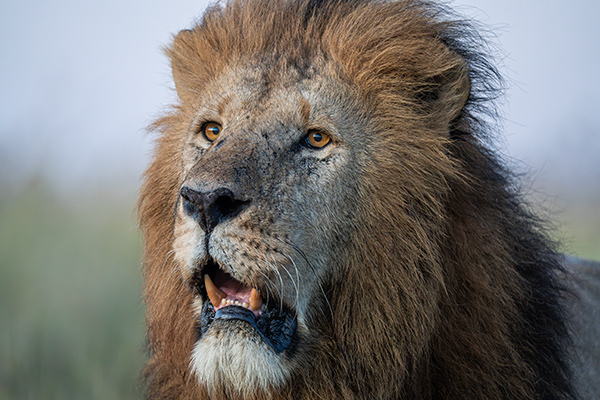
Deramakot Forest Reserve Safari - The Ultimate Guide to Borneo’s Best Wild Cat Destination
Introduction
Hidden deep within the rainforests of northern Borneo, the Deramakot Forest Reserve has quietly earned a reputation among wildlife experts as one of the most remarkable safari destinations in Asia. Unlike many tropical forests where wildlife sightings can be unpredictable, Deramakot has become famous for its surprisingly consistent encounters with rare animals, particularly elusive wild cats.
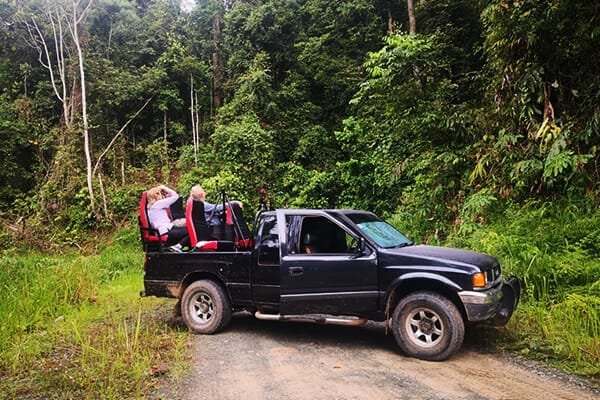
For wildlife enthusiasts, photographers, and naturalists seeking an authentic rainforest safari, Deramakot offers an experience that is dramatically different from typical Southeast Asian wildlife destinations. Instead of crowded boardwalks or luxury lodges, visitors explore an extensive network of forest roads by four-wheel-drive vehicles, searching for animals that emerge along the roadside during the cooler hours of the evening and night.
The reserve’s remote location, careful forest management, and low visitor numbers have allowed its wildlife populations to thrive. As a result, Deramakot has become one of the best places in the world to see rare carnivores such as the Sunda Clouded Leopard and the incredibly elusive Bornean Bay Cat.
This guide explores everything you need to know about visiting Deramakot Forest Reserve, including its wildlife, safari experience, conservation significance, and why it is increasingly considered one of the finest wildlife destinations in tropical Asia.
Where is Deramakot Forest Reserve?
Deramakot Forest Reserve is located in the Malaysian state of Sabah on the island of Borneo. The reserve lies roughly 120 kilometres inland from the coastal city of Sandakan, surrounded by a vast landscape of tropical rainforest and commercial forest concessions.
Covering approximately 55,000 hectares, Deramakot forms part of the larger Upper Kinabatangan forest landscape, one of the most biologically rich regions in Southeast Asia. The reserve sits within the same ecological region as several other famous conservation areas, including the Danum Valley Conservation Area and the Kinabatangan Wildlife Sanctuary.
However, unlike many protected areas that prohibit night access, Deramakot allows visitors to explore its extensive network of logging roads by vehicle both during the day and after dark. These roads, originally constructed for sustainable timber extraction, have inadvertently created ideal conditions for wildlife viewing.
Animals frequently use the roads as easy travel corridors through dense rainforest, making them easier to spot compared to deep forest interiors.
Why Deramakot is One of Asia's Best Wildlife Safari Destinations
While Borneo is famous for its rainforests and orangutans, most visitors rarely encounter the island’s more secretive animals. Dense vegetation and nocturnal behaviour make wildlife sightings difficult in many locations.
Deramakot is different.
Several factors combine to make this reserve one of the most productive wildlife-watching destinations in Southeast Asia.
1. Extensive Forest Road Network
Deramakot contains more than 100 kilometres of forest tracks that allow slow wildlife drives deep into the rainforest. These roads create open sightlines where animals can be detected using spotlights during night drives.
2. Night Drives are Permitted
In many Asian protected areas, night drives are prohibited. Deramakot is one of the few places where wildlife enthusiasts can legally conduct extended nocturnal safaris.
This dramatically increases the chance of seeing rare mammals, since many of Borneo’s most fascinating animals are active after sunset.
3. High Density of Rare Carnivores
The reserve has recorded an impressive number of carnivore species, including five species of wild cats. This diversity has earned Deramakot the reputation of being the best wild cat safari destination in Asia.
4. Low Visitor Numbers
Deramakot receives far fewer tourists than more famous destinations such as Sepilok or the Kinabatangan River. Limited accommodation and remote access help keep the reserve uncrowded.
For wildlife enthusiasts, this means a peaceful and immersive experience.
Plan your Dream Safari Travel
Get in touch today and receive a complimentary consultation.
The Unique Safari Experience in Deramakot
A typical safari in Deramakot revolves around long wildlife drives conducted throughout the day and night.
Unlike African savannahs where animals are easily visible in open landscapes, rainforest safaris require patience and persistence. Guides slowly drive along forest tracks while scanning the roadside vegetation with powerful spotlights.
Animals are often detected by:
eye shine reflecting in torchlight
movement along the roadside
sounds in the forest canopy
Night drives are particularly exciting. As darkness falls, the rainforest becomes active with nocturnal mammals emerging to hunt or forage.
Spotting a rare carnivore such as a clouded leopard suddenly appearing on the road is one of the most thrilling wildlife encounters in Asia.
Wildlife of Deramakot Forest Reserve
One of the greatest attractions of Deramakot Forest Reserve is its remarkable diversity of mammals, birds, and reptiles. Camera trap studies and wildlife surveys have shown that the reserve supports around 75% of Sabah’s mammal species.
Below are some of the animals most commonly encountered during wildlife safaris.
Wild Cats of Deramakot
The presence of multiple wild cat species is one of the defining characteristics of the reserve.
Sunda Clouded Leopard
The Sunda Clouded Leopard is the largest wild cat found on Borneo and one of the most sought-after animals for wildlife watchers visiting Deramakot.
This striking predator is named for the distinctive cloud-shaped markings covering its coat. Adapted to life in dense forests, the clouded leopard is an excellent climber capable of descending trees headfirst.
Although naturally elusive, Deramakot has produced a surprisingly high number of sightings compared to other locations in Southeast Asia. Many encounters occur during night drives when individuals are seen walking along forest roads or resting on branches above the track.
For photographers and wildlife enthusiasts, seeing a clouded leopard in the wild is often the highlight of a Borneo safari.
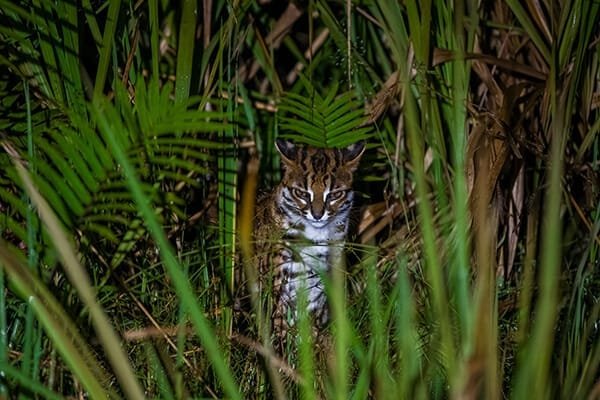
Bornean Bay Cat
The Bornean Bay Cat is one of the rarest wild cats on Earth and endemic to the island of Borneo.
For decades, the species remained almost completely unknown to science, with only a handful of specimens recorded. Even today, sightings are extremely rare.
Deramakot is one of the few places where bay cats have occasionally been observed, usually during night drives along quiet forest roads. The species is recognisable by its reddish coat and long tail.
Because so little is known about its behaviour and ecology, every sighting contributes valuable information to researchers studying the species.
Marbled Cat
The beautiful Marbled Cat resembles a miniature clouded leopard and is superbly adapted for life in the forest canopy.
Its large paws and long tail help maintain balance while moving among tree branches. Marbled cats are believed to spend much of their time in trees, where they hunt birds and small mammals.
In Deramakot, they are occasionally spotted resting on roadside branches or crossing forest tracks during night drives.
Leopard Cat
The Leopard Cat is the most frequently encountered wild cat in Deramakot.
This small, spotted feline is highly adaptable and can inhabit a wide range of environments. In the reserve, leopard cats are often seen hunting along road edges where rodents and insects are abundant.
Although relatively common compared to other cats, seeing one illuminated by a spotlight against the dark rainforest backdrop is still an exciting experience.
Flat-Headed Cat
The unusual Flat-headed Cat is among the world’s most specialised felines.
Unlike most cats, it is strongly associated with wetlands and rivers, where it hunts fish, frogs, and crustaceans. Its elongated head and partially webbed feet help it capture aquatic prey.
Sightings are rare but occasionally occur in low-lying areas near streams and forest ponds within Deramakot.
Primates of Deramakot
Bornean Orangutan
The iconic Bornean Orangutan inhabits many forests across Sabah, including Deramakot.
These intelligent great apes spend most of their lives in trees, constructing elaborate nests of branches and leaves each evening. During the day, they feed on fruits, young leaves, and bark.
Although orangutans are less frequently encountered here than in dedicated rehabilitation centres, wild individuals are sometimes seen feeding quietly in the canopy above forest roads.
Bornean Gibbon
The haunting morning calls of the Bornean Gibbon echo through the rainforest at dawn.
These agile primates move through the canopy using a remarkable form of locomotion known as brachiation, swinging effortlessly between branches.
Their territorial duets are one of the most characteristic sounds of Borneo’s rainforest mornings.
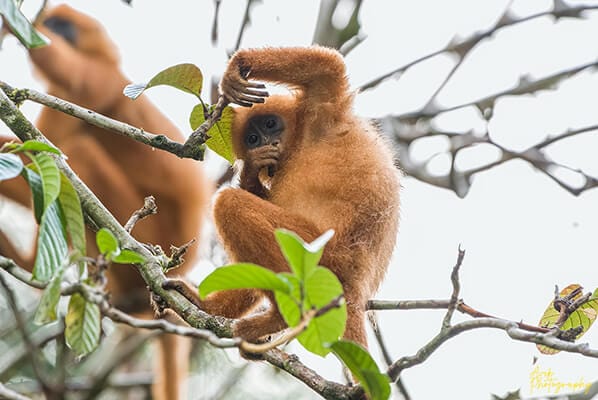
Red Leaf Monkey
The Red Leaf Monkey is another common primate species in the reserve.
These monkeys feed primarily on leaves, fruits, and seeds, and are often seen moving quietly through the mid-level forest canopy.
Large Mammals
Bornean Pygmy Elephant
The gentle Bornean Pygmy Elephant is the smallest subspecies of Asian elephant.
These elephants are known for their relatively rounded ears, long tails, and calmer temperament compared to mainland Asian elephants.
Although they range widely across northern Borneo, small herds occasionally pass through Deramakot while travelling between forest areas.
Bearded Pig
The Bornean Bearded Pig is one of the most frequently encountered mammals during wildlife drives.
Named for the distinctive bristly hair on its face, this species travels in groups and forages on fruits, roots, and fallen seeds on the forest floor.
Bearded pigs play an important ecological role by dispersing seeds throughout the forest.
Sambar Deer
The large Sambar Deer is one of the primary prey species for large carnivores in the reserve.
These shy deer are usually detected by their reflective eyes during night drives. When alarmed, they produce loud barking calls that echo through the forest.
Small Mammals and Other Nocturnal Wildlife
Night drives in Deramakot frequently reveal a variety of smaller mammals.
These include:
Malay Civet
Common Palm Civet
Binturong
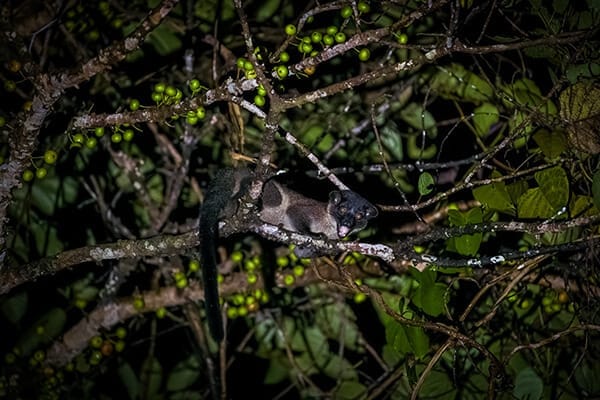
Colugo
The colugo, sometimes called the “flying lemur,” is particularly fascinating. Although not capable of powered flight, it glides between trees using a membrane stretching between its limbs.
Spotting one gliding across a forest road at night is an unforgettable sight.
Birdlife of Deramakot
Birdwatchers visiting Deramakot can encounter an impressive variety of rainforest species.
Among the most iconic are the hornbills, including the magnificent Rhinoceros Hornbill.
These large birds play a vital role in rainforest ecosystems by dispersing seeds from fruiting trees.
Other notable species include:
Crested Serpent Eagle
Blue-eared Kingfisher
Black-and-red Broadbill
Conservation Importance of Deramakot
What makes Deramakot particularly significant is its role as a model for sustainable forest management.
Unlike strictly protected national parks, Deramakot is a commercial forest reserve where selective logging occurs under carefully regulated conditions.
The reserve was one of the first tropical forests in the world to receive certification from the Forest Stewardship Council, demonstrating that timber harvesting can be conducted while maintaining biodiversity.
This approach has helped preserve large tracts of forest while providing economic incentives for conservation.
Best Time to Visit Deramakot
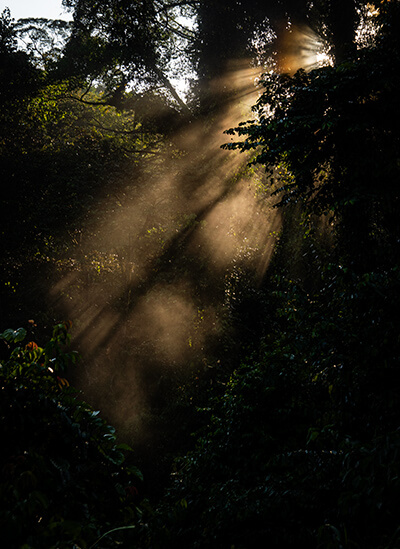
Wildlife safaris in Deramakot are possible throughout the year.
However, conditions may vary depending on rainfall patterns in Sabah.
Dry Season (March-October)
easier road conditions
longer wildlife drives possible
generally more comfortable weather
Wet Season (November-February)
heavier rainfall
lush forest scenery
fewer visitors
Interestingly, wildlife sightings can still be excellent during the wetter months because animals often use the roads more frequently when the forest floor becomes muddy.
How to Reach Deramakot
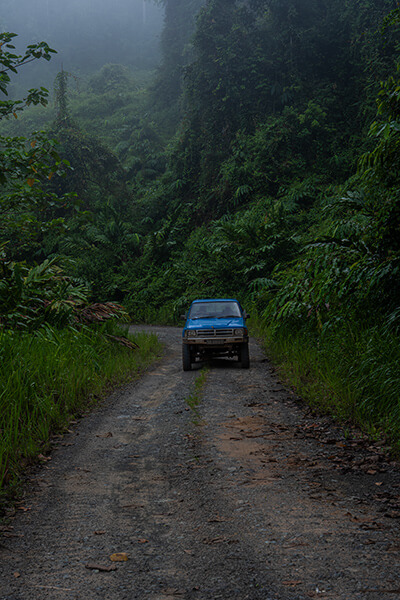
Most visitors travel to Deramakot from the city of Sandakan.
The journey typically takes four to five hours by road, passing through rural villages and palm oil plantations before entering the forest reserve.
Some itineraries combine Deramakot with other wildlife destinations such as:
Sepilok Orangutan Rehabilitation Centre
Kinabatangan River
This allows visitors to experience both river-based wildlife viewing and rainforest safaris during a single trip.
Why Deramakot is a Dream Destination for Wildlife Photographers
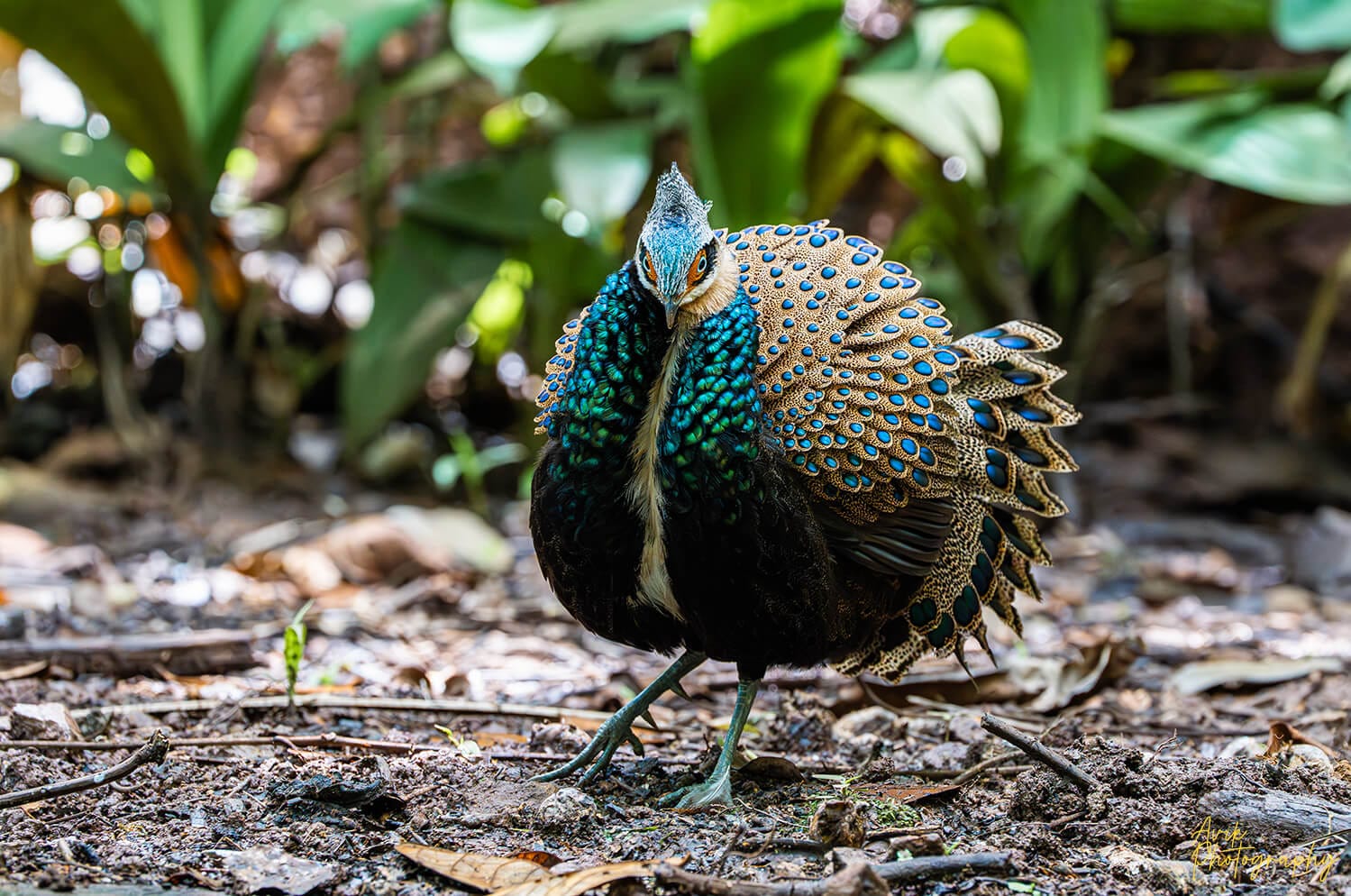
Photographers are increasingly drawn to Deramakot because the road network allows vehicles to approach wildlife without disturbing them.
Night photography is particularly rewarding. When animals pause on the road, guides can position vehicles carefully so photographers have a clear view.
Species such as civets, leopard cats, and occasionally even clouded leopards may remain visible long enough for multiple photographs.
A True Wilderness Experience
Perhaps the greatest appeal of Deramakot lies in its sense of authenticity.
There are no large hotels, no crowds of tourists, and no artificial wildlife attractions. Instead, visitors experience the rainforest much as field researchers do: slowly exploring forest roads, listening to the sounds of nocturnal animals, and waiting patiently for wildlife to appear.
For those willing to embrace the unpredictability of the rainforest, Deramakot offers one of the most exciting wildlife adventures in Asia.