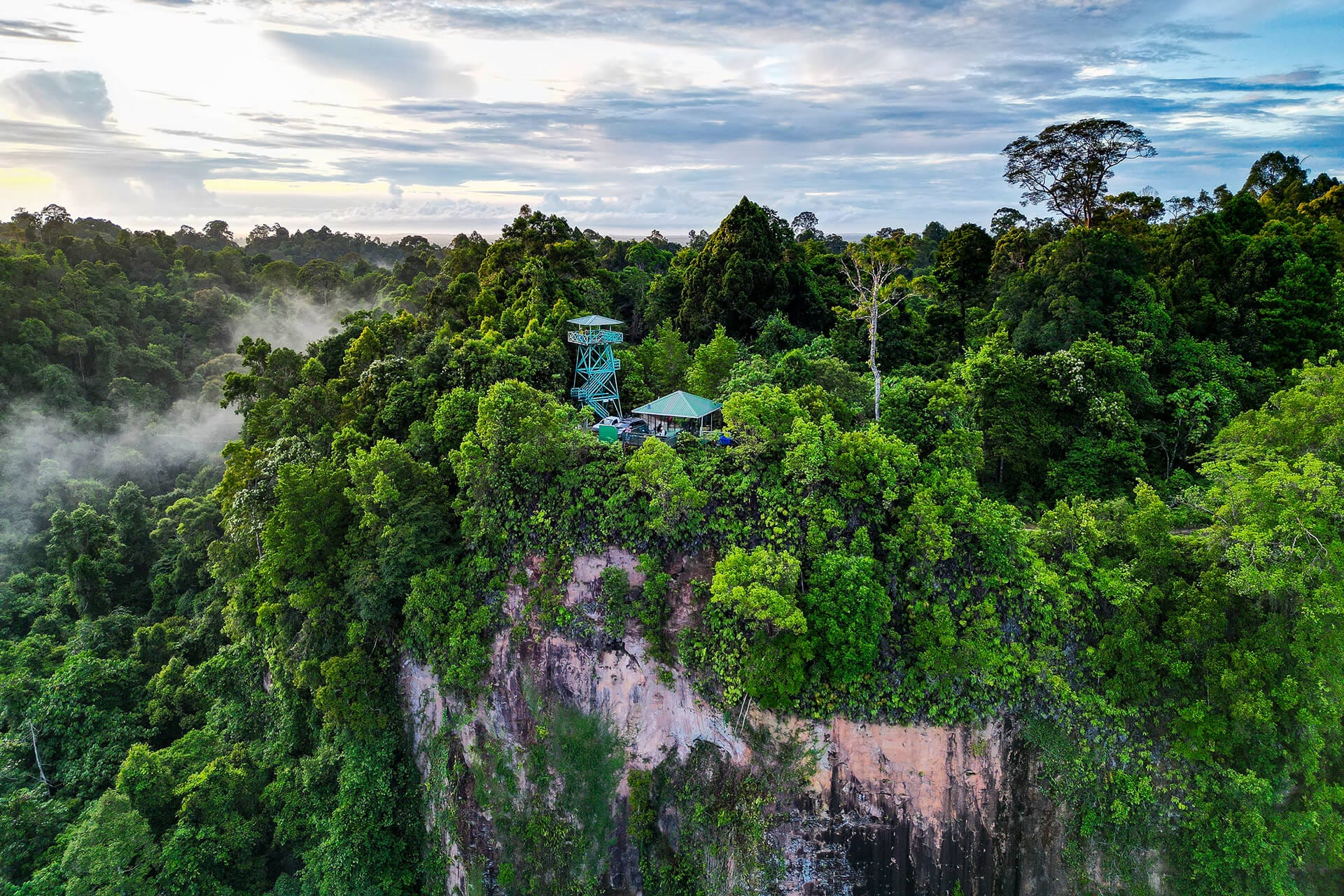
Trusan Sugut Forest Reserve
Sabah's Newest, Most Remote Wildlife Destination
An 8,680 hectare former logging forest reclassified in 2014, tucked between the Sugut and Paitan rivers, where wild orangutan and banteng move through a regenerating rainforest that most operators have never heard of.
Begin Your Trusan Sugut SafariProtection Forest
Logging Concession
Bird Species
Mammal Species
Safari Time Available
Trusan Sugut was a working logging concession until 2014, when it was reclassified as a Class I Protection Forest. It has spent the years since regenerating quietly, unnoticed by most of Sabah's operators, which is precisely why we send guests here now, before that stops being true.
What Trusan Sugut Is
A regenerating forest between two rivers
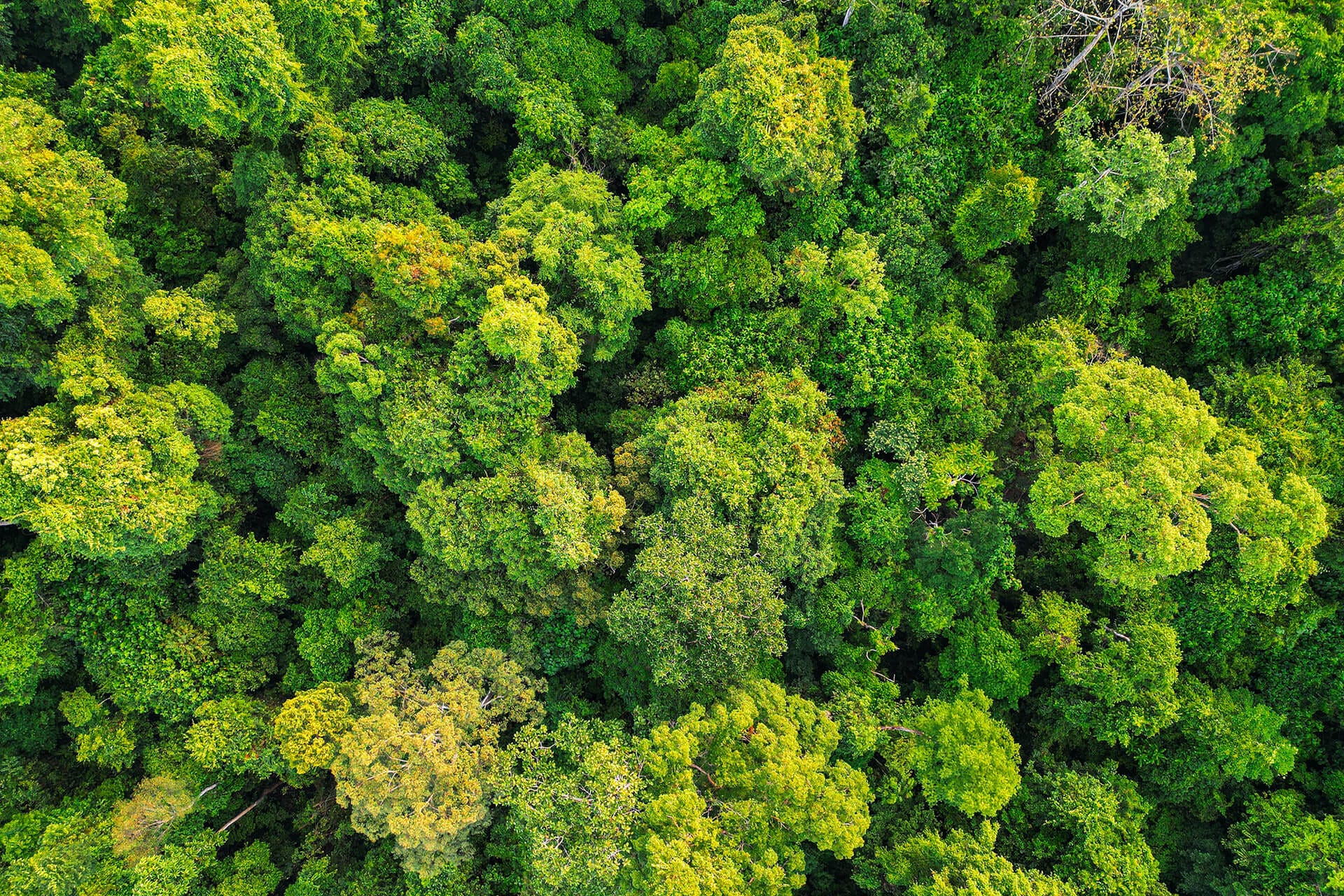
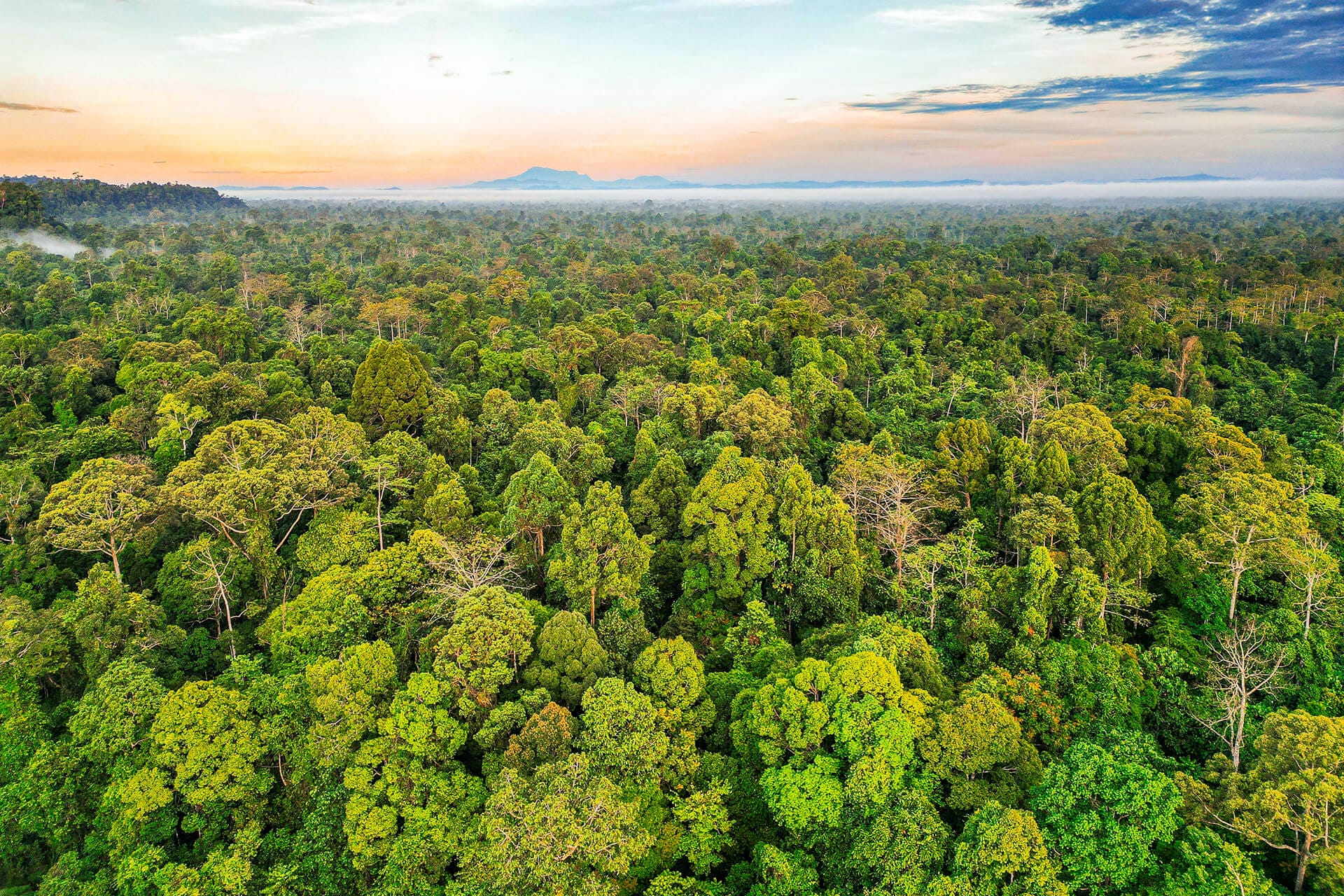
Trusan Sugut Forest Reserve sits between the Sugut and Paitan rivers in Sabah's Beluran district, roughly 75 kilometres northwest of Sandakan, and forms part of the larger Sugut Conservation Area. Once logged, the 8,680 hectare reserve was reclassified as a Class I Protection Forest in 2014, and the mosaic of habitats inside it, mixed dipterocarp forest, freshwater swamp forest, kerangas forest, mangrove and coastal forest, now supports 168 recorded mammal species and more than 330 recorded bird species in a footprint far smaller than Sabah's better known reserves.
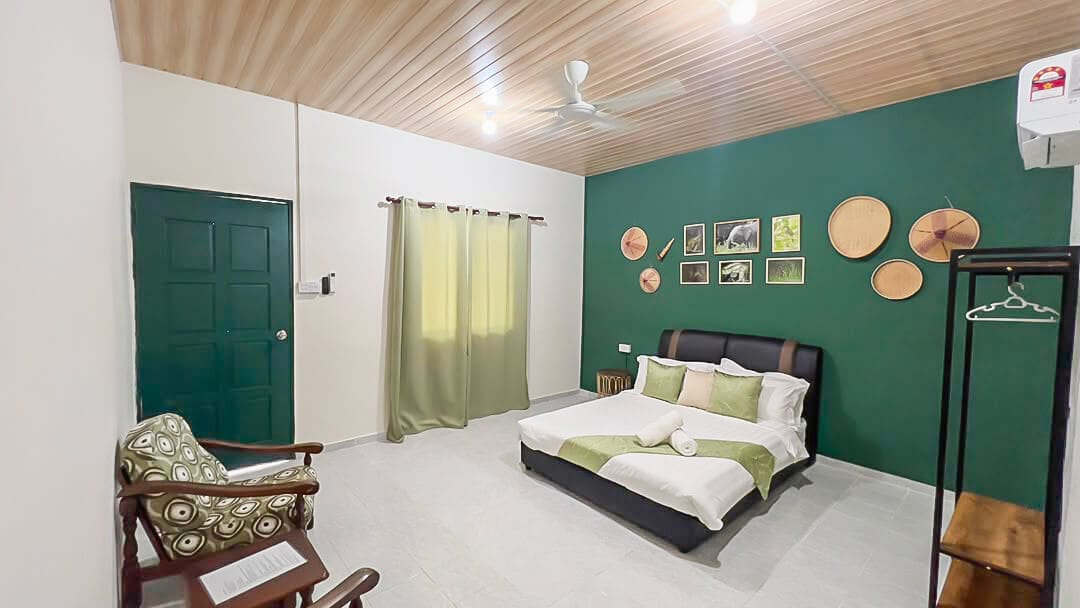
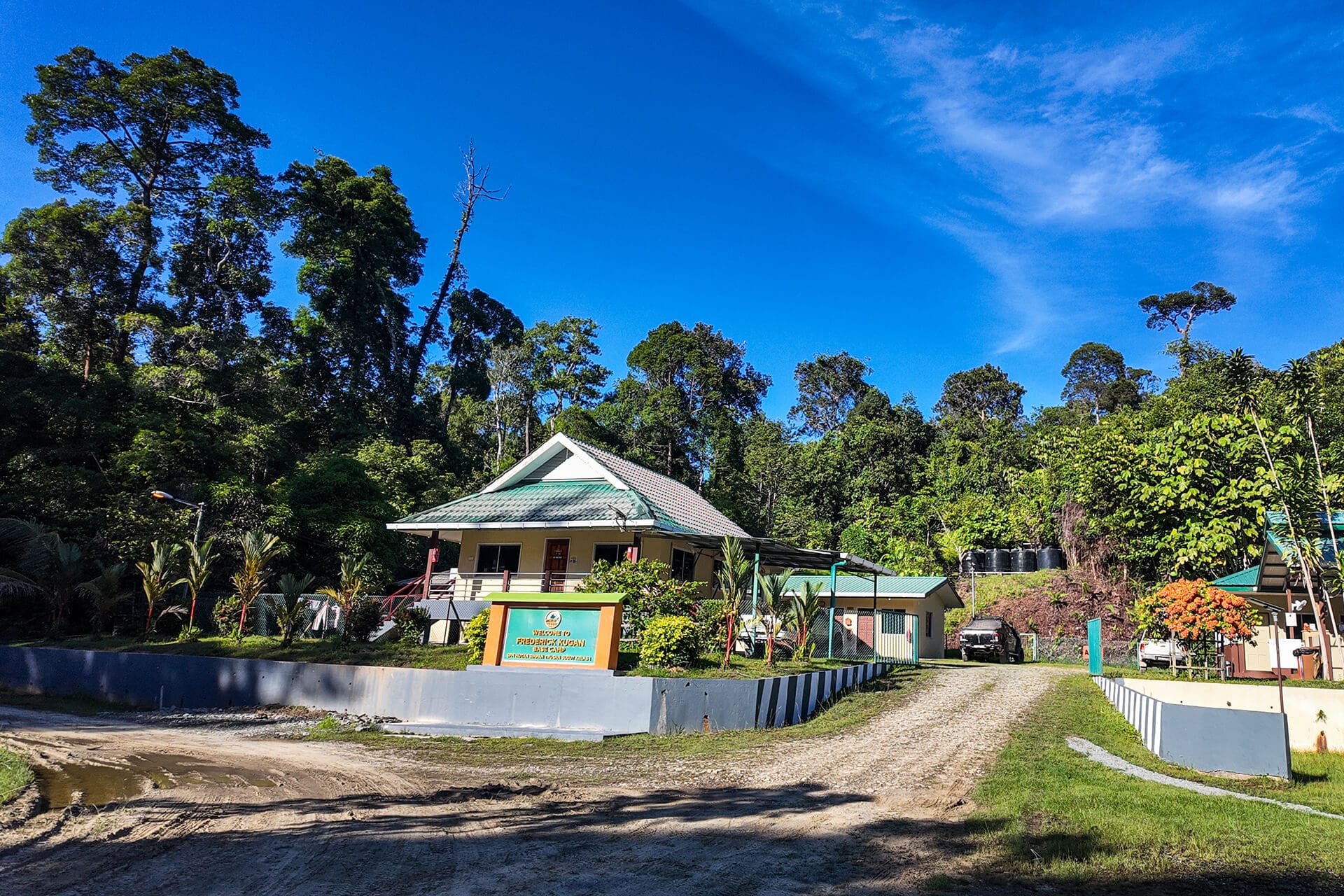
Accommodation sits at Frederick Kugan Base Camp, a remote research style field station adapted for small group wildlife tourism rather than a conventional lodge. It is comfortable, not luxurious, and built for guests whose priority is the wildlife outside rather than the room they sleep in.
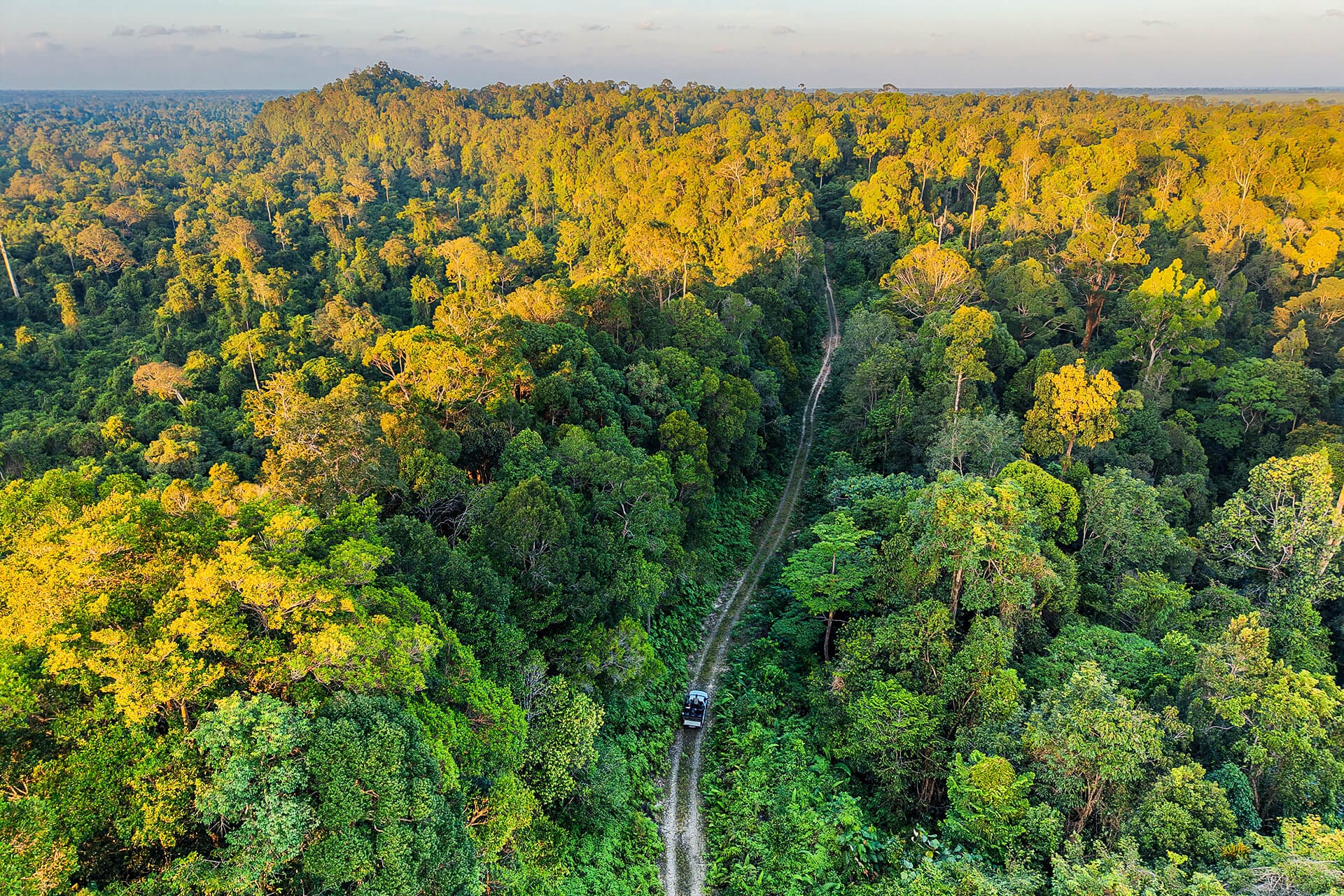
4WD Tracks, Not Long Treks
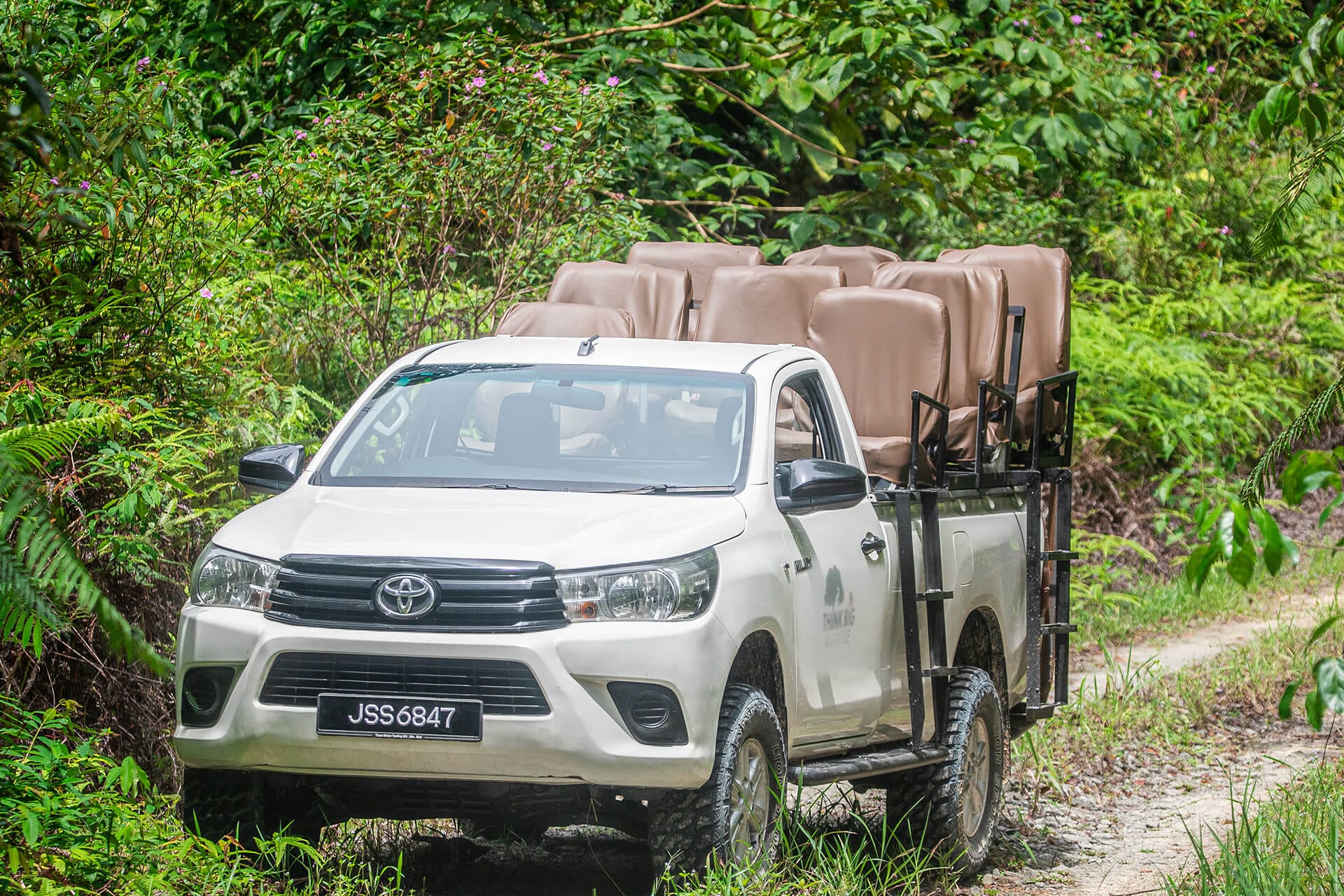
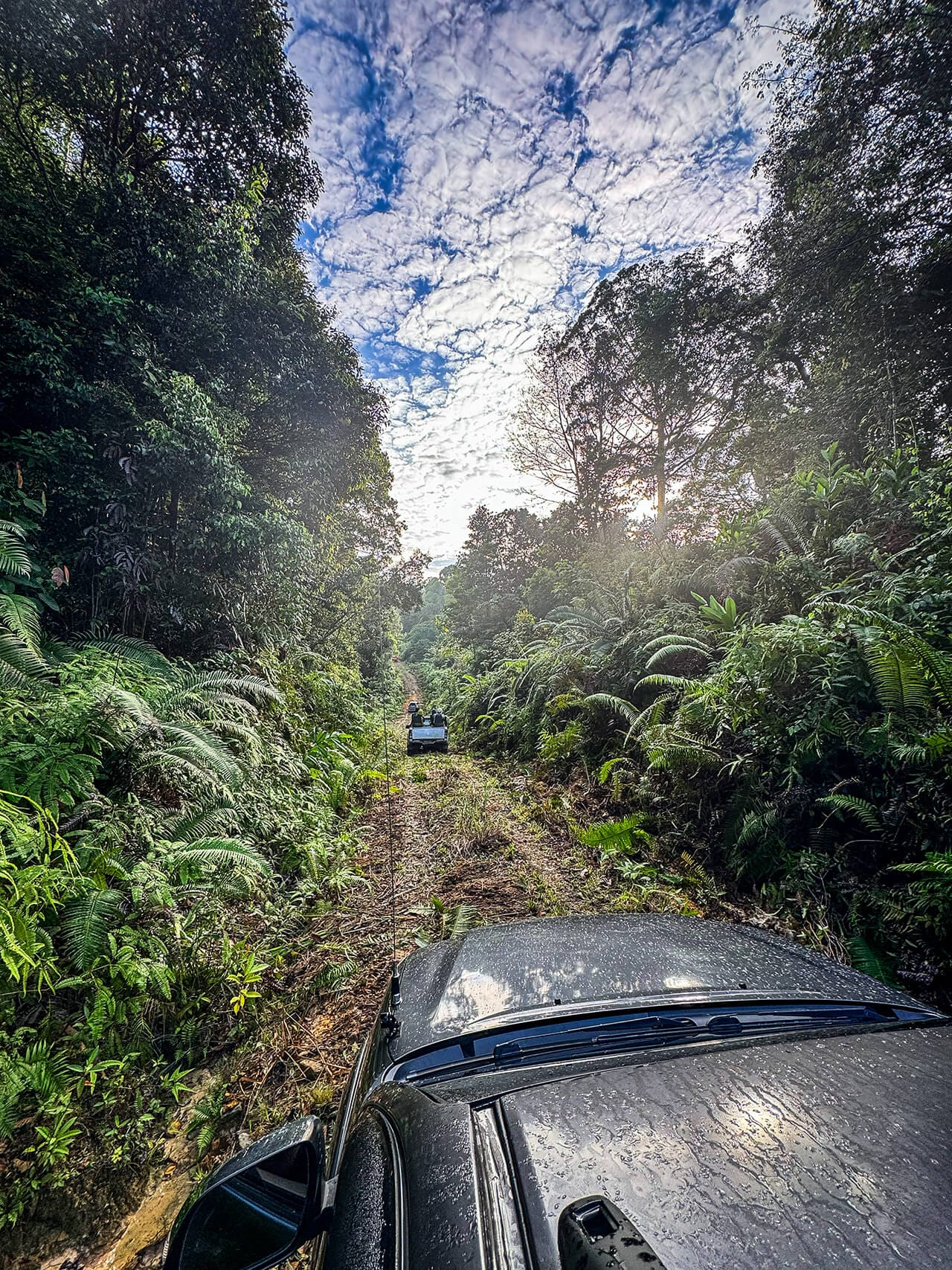
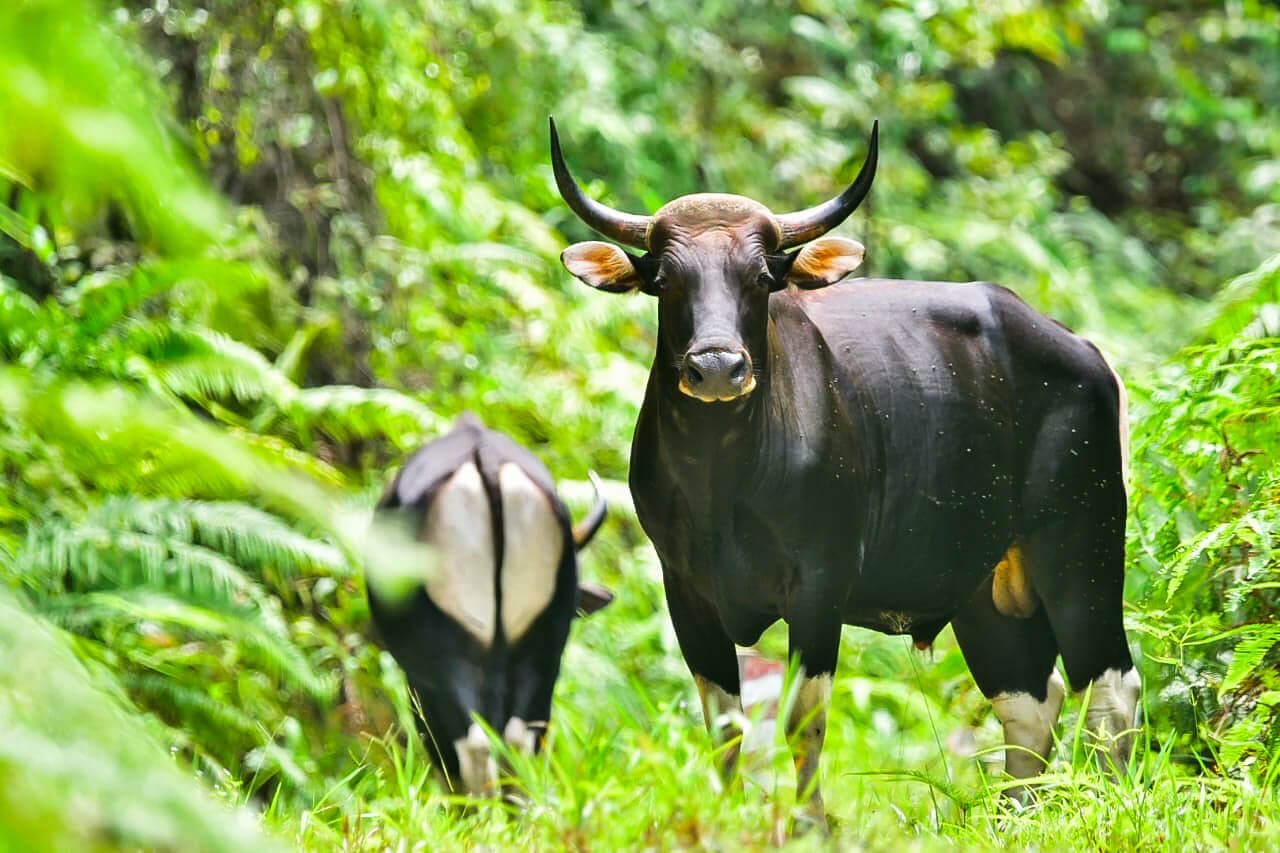
Unlike destinations built around trekking, Trusan Sugut is explored mostly by vehicle, with up to twelve hours of daily 4WD safari time available across morning and afternoon drives along remote forest roads. Banteng are seen frequently along these tracks, alongside orangutan, proboscis monkey and gibbon.
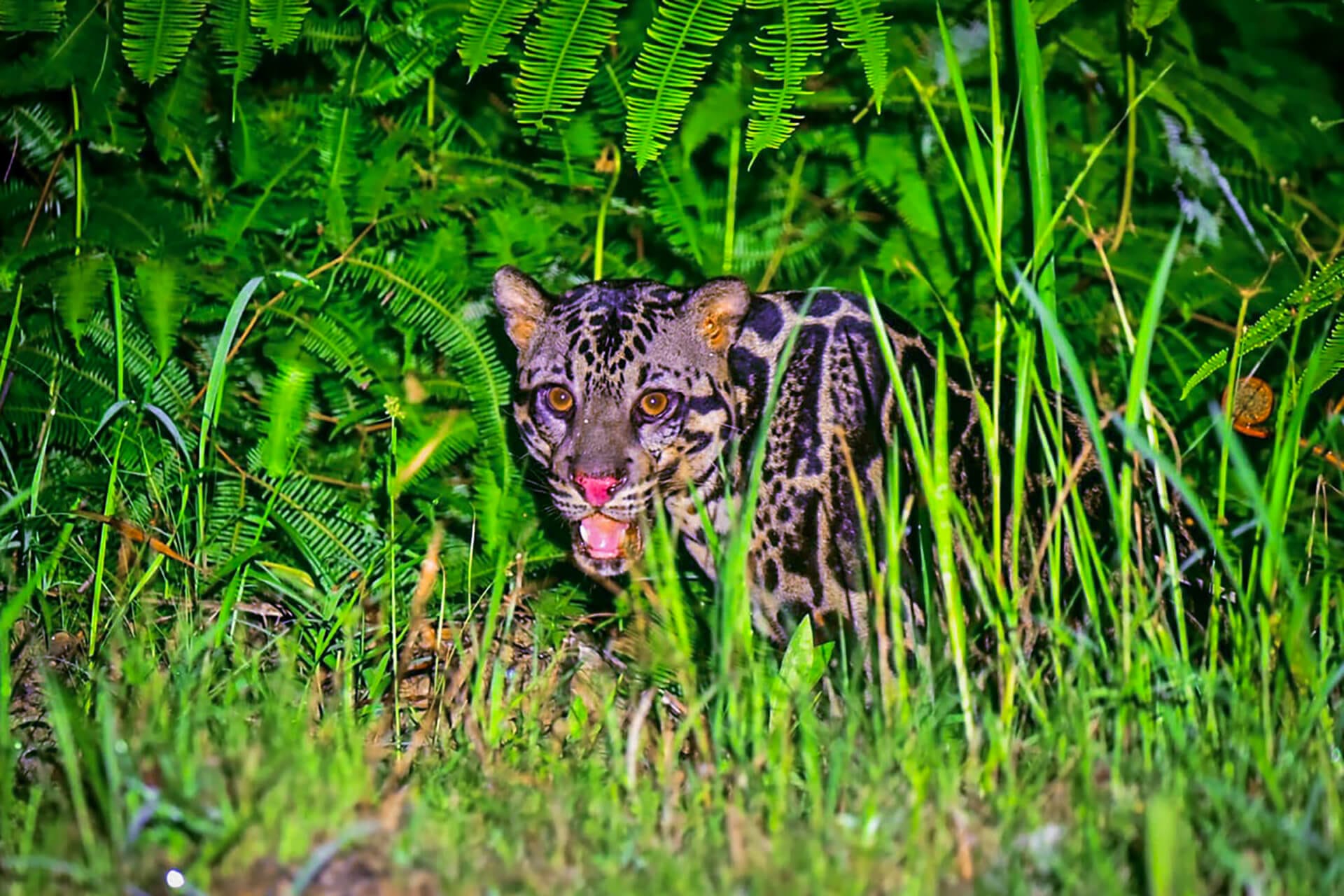
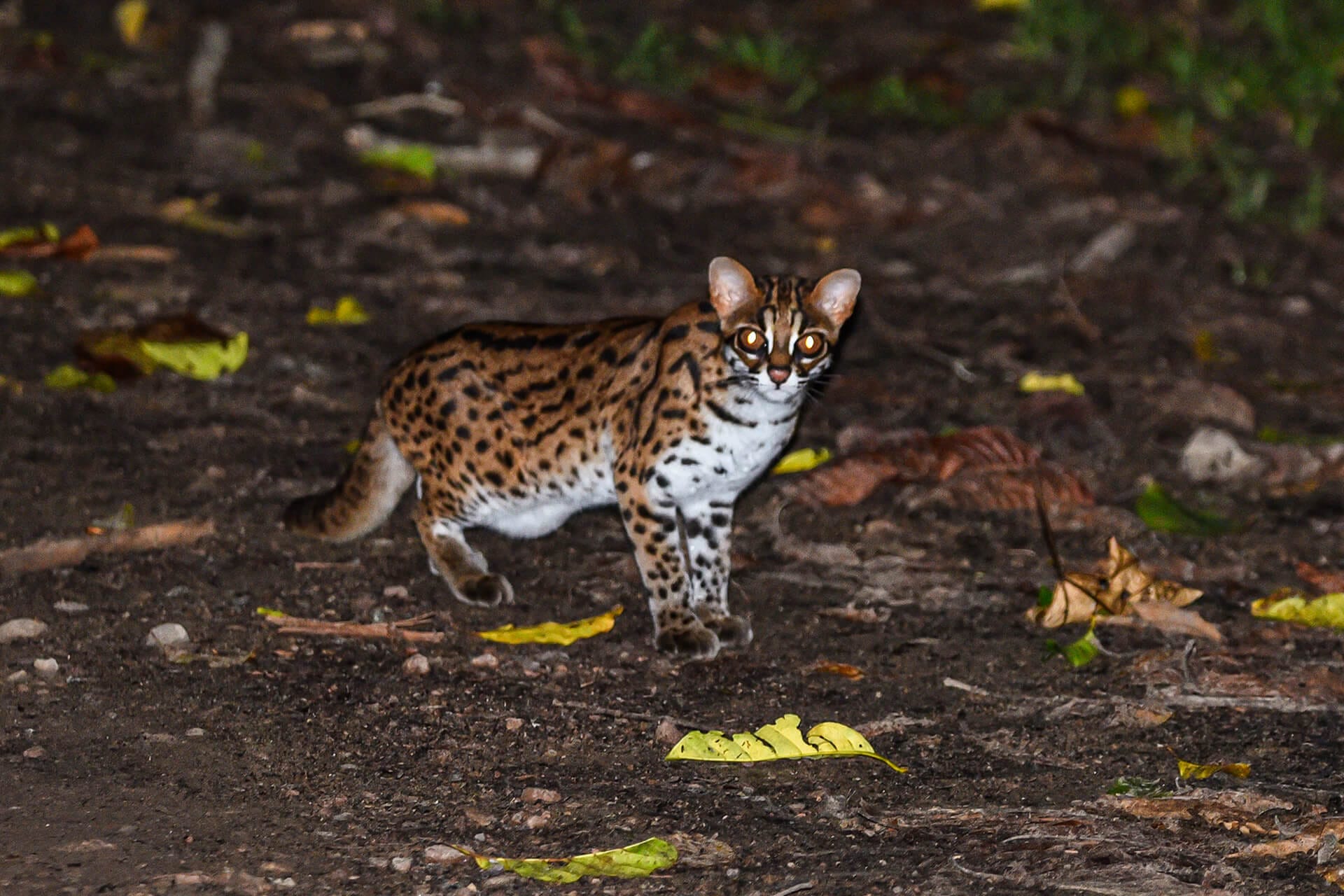
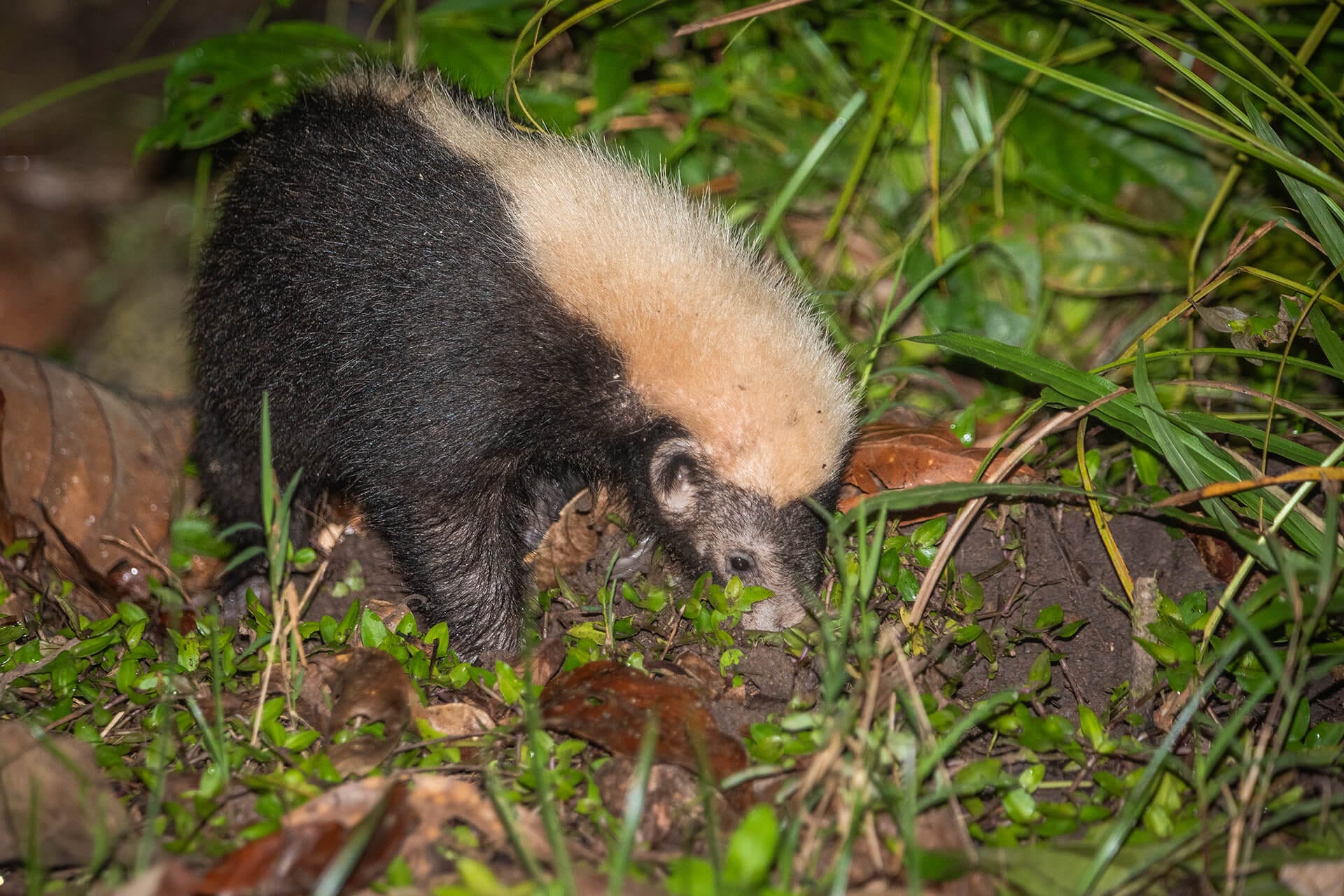
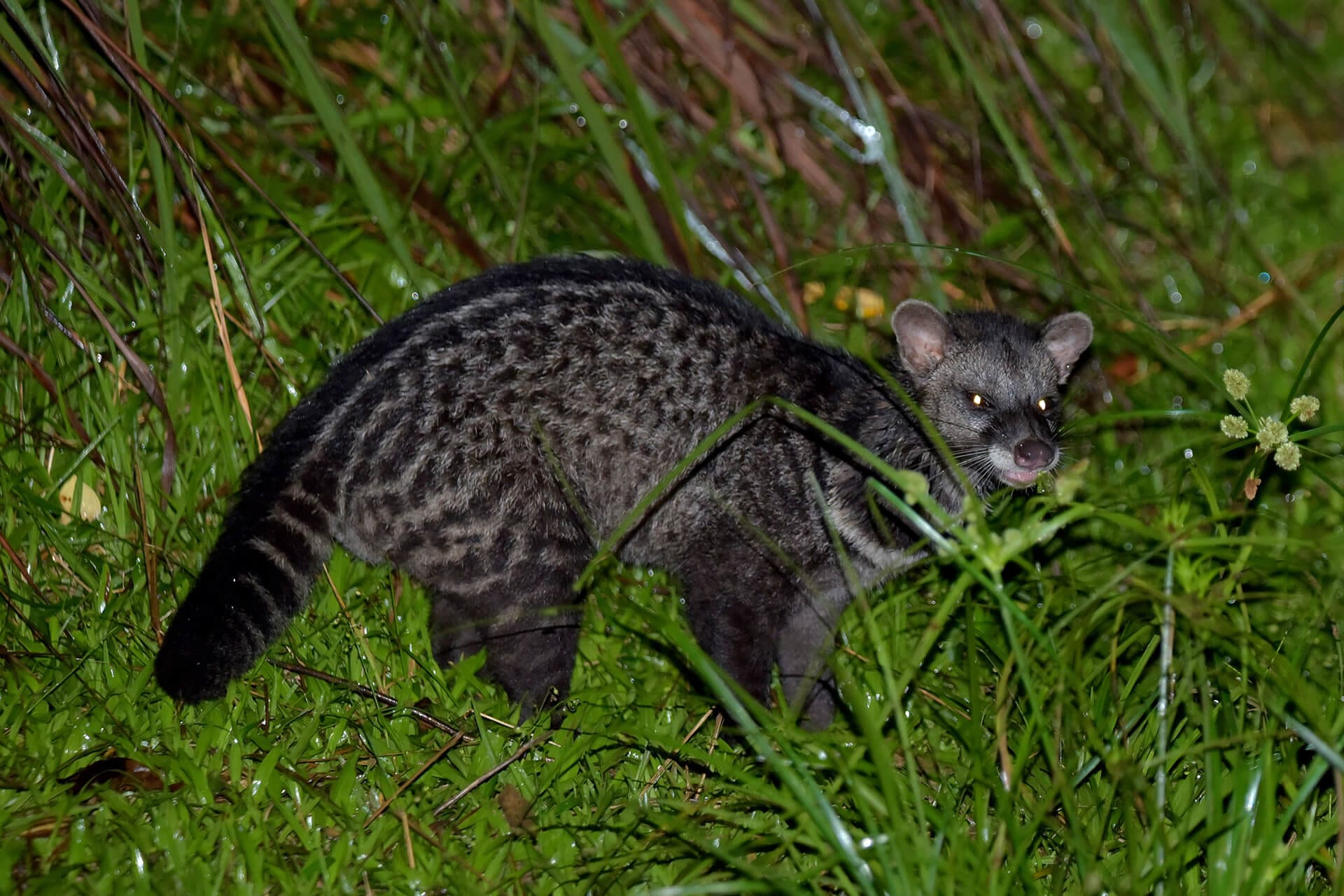
Night safaris reveal a different reserve entirely, civets, flying squirrels, slow loris, owls and night birds are all regular, and the occasional clouded leopard rewards a patient guide. Guests can also join tree planting activities that directly support the reserve's rainforest restoration work.
Trusan Sugut is not remote by accident. It is remote because almost nobody else has found a reason to go yet, and every drive here still feels like the first one.
Our Approach
A small camp, and a route built around you
Frederick Kugan Base Camp holds only a handful of rooms, and we treat that scarcity as an advantage rather than a limitation. We arrange a private vehicle and guide for every safari drive, and can request a guide with a specific focus, birding, photography or conservation, when we book.
We also plan which route you take in, and out, along the Sugut River by longboat, overland by 4WD through Paitan, so that a Trusan Sugut stay uses both without doubling back on either.
Ask About a Private Trusan Sugut Safari →The Wildlife of Trusan Sugut
A compact reserve with a genuinely wide range of habitats, and the wildlife to match.
Bornean Orangutan
A genuinely significant wild population for northern Sabah, moving through forest that most operators have never surveyed.
Bornean Banteng
Seen frequently along the reserve's 4WD tracks, one of the more reliable large mammal sightings here.
Sunda Clouded Leopard
Elusive as anywhere in Borneo, though night safaris here have turned up sightings that patient guides still talk about.
Proboscis Monkey
Found in the reserve's mangrove and coastal forest, particularly along the Sugut River approach by longboat.
Bornean Gibbon
Their calls carry across the regenerating canopy at dawn, one of the more distinctive sounds of a Trusan Sugut morning.
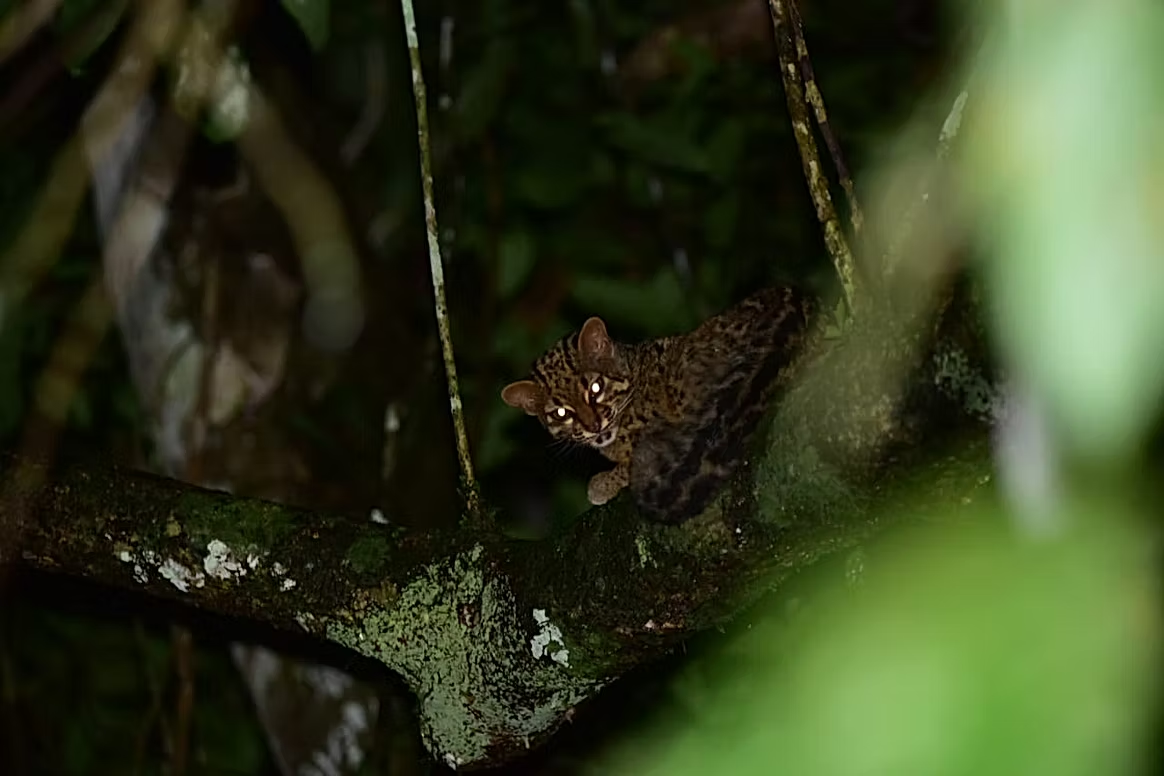
Leopard Cat
The most frequently recorded cat on night drives, alongside civets, flying squirrels and slow loris.
Rhinoceros Hornbill
One of seven hornbill species recorded in the reserve, seen regularly along the forest tracks and river approach.
Great Argus Pheasant
A genuine prize for visiting birders, part of a bird list running past 330 species across the reserve's mixed habitats.
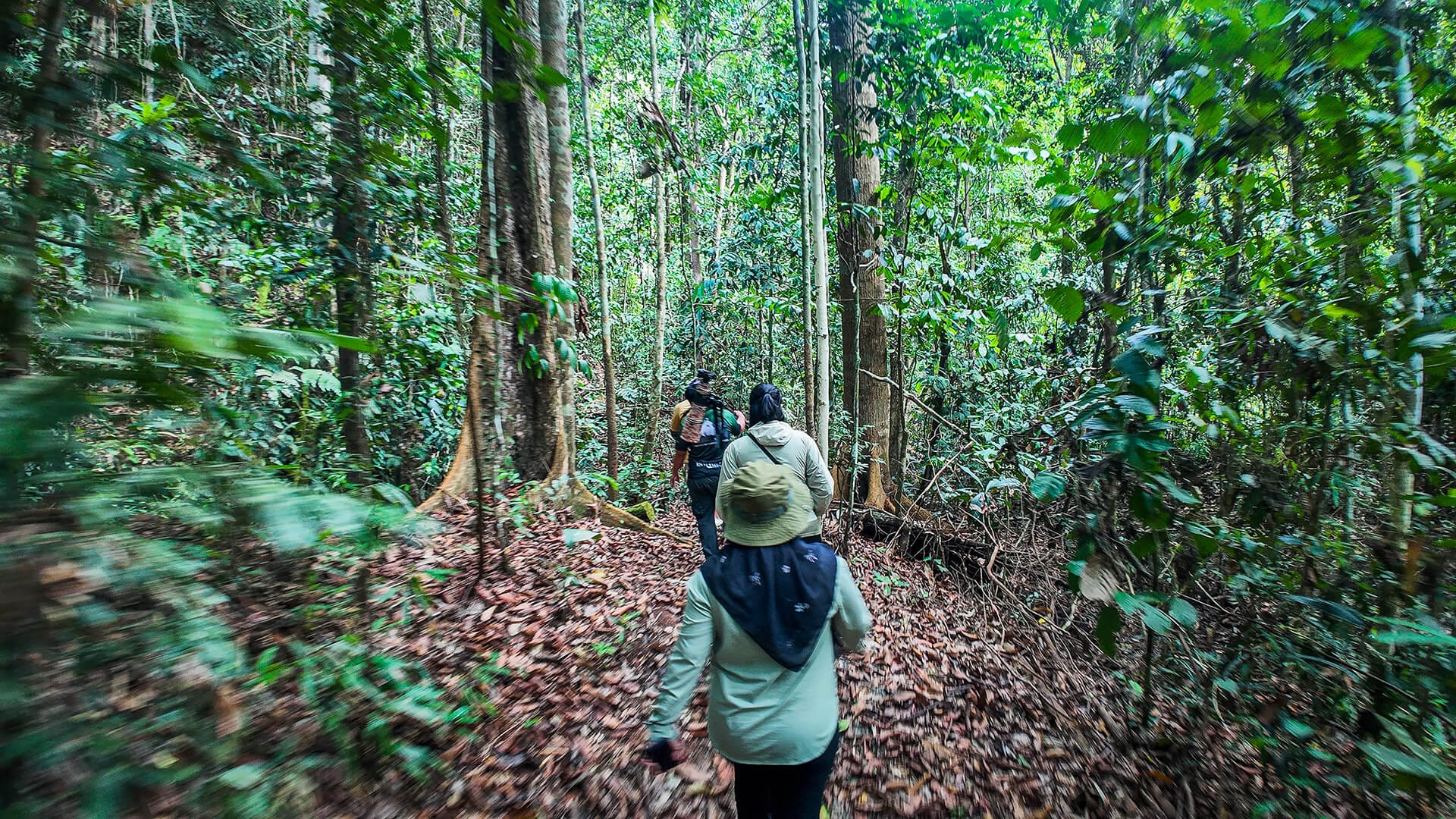
Conservation & Sustainable Eco Tourism
Every stay in Trusan Sugut supports the people and the programmes protecting this forest, from rainforest restoration to the community partnerships that keep it standing.
Read About the Conservation Effort in SugutFrederick Kugan Base Camp holds only a handful of rooms. Let us check availability first.
A Closer Look at Trusan Sugut
A remote field base inside the reserve, the river and forest tracks that lead to it, and the wildlife that moves through a recovering Bornean rainforest.
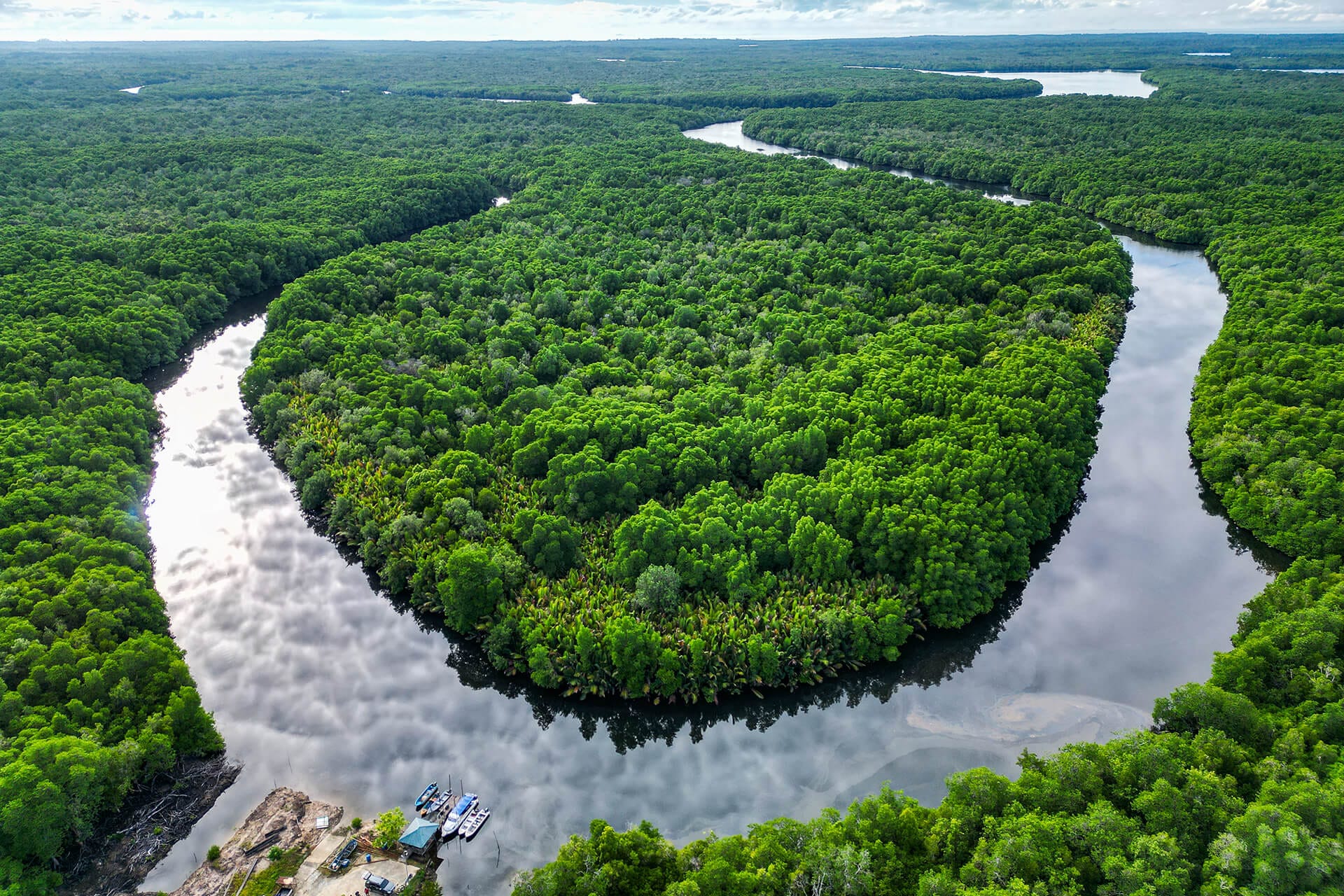
Frederick Kugan Base Camp
A research style field station inside the reserve, built for wildlife access first and comfort second.
Family & Two Bedroom Chalets
A three bedroom family chalet and several two bedroom chalets, air conditioned, with private studio rooms also available for smaller groups. Meals are Malaysian home style cuisine, served in an open air dining hall.
- Air conditioned rooms
- Generator powered electricity and satellite internet
- Open air dining hall and wildlife log briefing area
Before You Travel
Useful information for your Trusan Sugut trip
A genuinely remote reserve, further off the circuit than Deramakot or Danum Valley. We brief every guest on the specifics before departure.
Booking and Availability
Frederick Kugan Base Camp holds only a small number of rooms and dormitory beds. We recommend confirming dates well in advance, particularly for the family and two bedroom chalets.
What to Pack
Lightweight long sleeved clothing, insect repellent, a torch for night safaris, binoculars and rain protection for your camera. Satellite internet is available but limited, and power runs from a generator, pack accordingly.
Choosing Your Route
The river route, a drive to Beluran jetty followed by an hour by motorised longboat, is scenic and faster than the alternative. The overland 4WD route via Paitan takes longer but suits guests already travelling that way. We often combine both, one route in and the other out.
Weather and Timing
The reserve is explored by vehicle rather than on foot, so wet season rain affects the experience less than at trek focused destinations, though river levels on the longboat approach can vary seasonally.
Getting to Trusan Sugut
Two genuinely different ways in, and we plan which one you take based on the rest of your itinerary.
The river route
Drive from Sandakan to Beluran jetty, around an hour to an hour and a half, then continue by motorised longboat for about an hour along the Sugut River, watching for wildlife along the banks as you go. This is the route we recommend for most guests.
The overland route
Drive around two hours to Paitan, then continue by 4WD for a further three to four hours into the reserve. Longer than the river route, but a practical alternative depending on where else you are travelling.
How long to stay
Two to three nights suits most guests, and we frequently build Trusan Sugut into a longer Sabah itinerary alongside Deramakot, Danum Valley or the Kinabatangan.
From the Journal
Everything else we have written about Trusan Sugut
Conservation notes, species guides and the wider Sabah picture, for guests who want to go deeper before they travel.
Trusan Sugut, Conservation & Sustainability
How a former logging concession became a Class I Protection Forest, and what that means for the wildlife inside it.
Read the Journal →
Where to See Wild Orangutan
How Trusan Sugut compares with Deramakot, Danum Valley and Kinabatangan for a genuine wild sighting.
Read the Journal →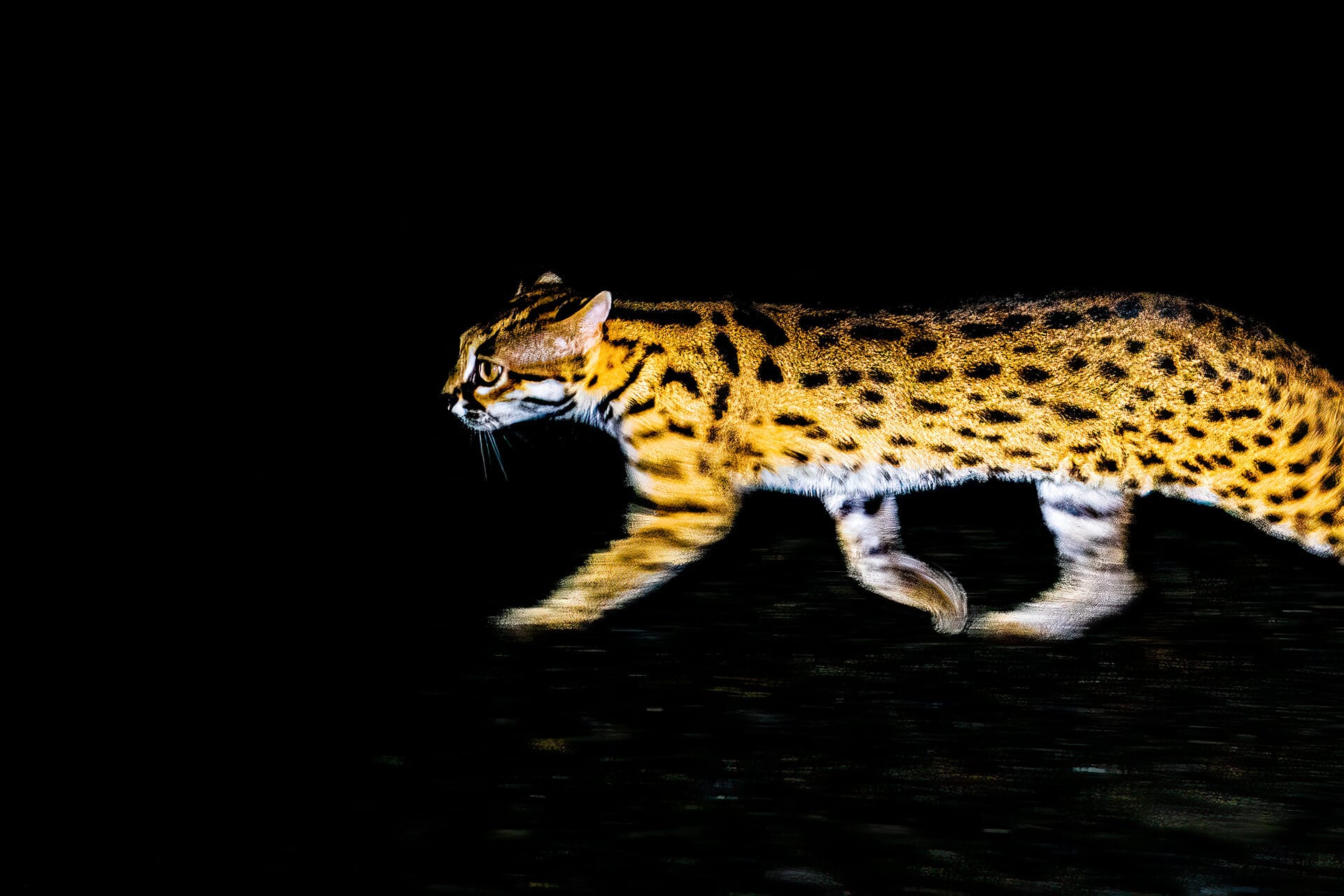
Deramakot, Every Mammal Watcher's Bucket List Forest
All five Bornean wild cat species recorded in this working forest, a natural pairing for a longer Sabah itinerary.
Read the Journal →
Danum Valley, Borneo's Most Pristine Rainforest
Untouched primary forest, a private canopy walkway and some of the last genuinely undisturbed rainforest in Southeast Asia.
Read the Journal →
Kinabatangan, Borneo's Amazon Like River Safari
The only place in Borneo to watch pygmy elephants swim across the river, directly in front of your boat.
Read the Journal →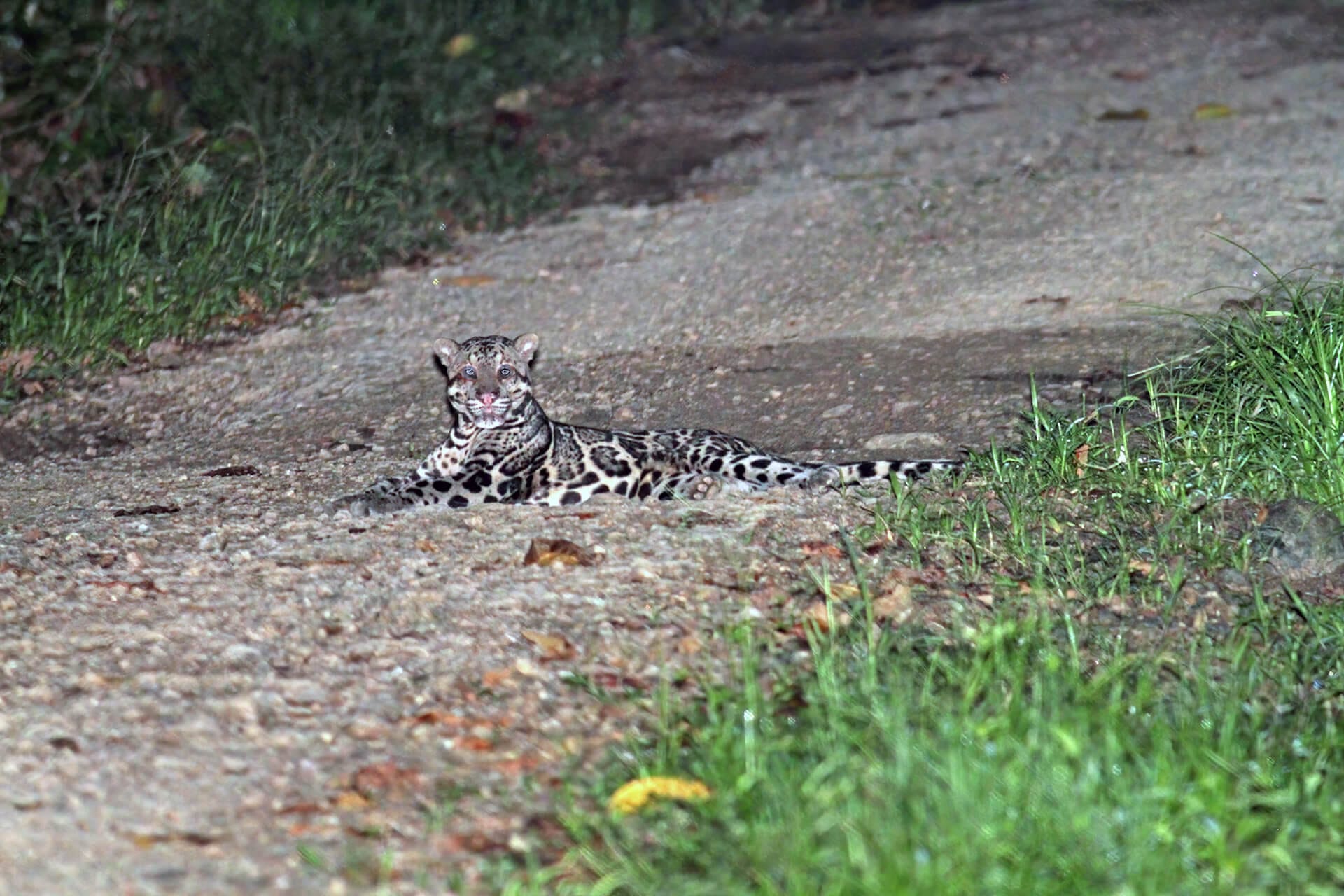
Tabin, Sabah's Largest Protected Reserve
A working mud volcano and pygmy elephants still moving through 122,500 hectares of lowland forest.
Read the Journal →Trusan Sugut Intelligence
Questions we are asked first
Answered with the specificity a generic travel site rarely offers.
Planning & Access
How do I get to Trusan Sugut?
Two ways. The river route drives from Sandakan to Beluran jetty, around an hour to an hour and a half, then continues by motorised longboat for about an hour along the Sugut River, this is the route we recommend for most guests. The overland route drives about two hours to Paitan, then continues by 4WD for a further three to four hours into the reserve.
What is Frederick Kugan Base Camp like?
A remote, research style field station rather than a conventional lodge, with a three bedroom family chalet, two bedroom chalets, private studio rooms and separate male and female dormitories. Rooms are air conditioned, power comes from a generator, and internet is satellite based and limited.
How many days do I need?
Two to three nights suits most guests. We frequently build Trusan Sugut into a longer Sabah itinerary alongside Deramakot, Danum Valley or the Kinabatangan, sharing transport where the routing allows.
Can I take part in the reserve's conservation work?
Yes, tree planting activities supporting the reserve's rainforest restoration programme are available to guests, run in partnership with conservation organisations working in the reserve.
Wildlife & Habitat
Can I see wild orangutans in Trusan Sugut?
Yes. The reserve holds a genuinely significant wild population for northern Sabah, moving through forest that most operators have never surveyed in any detail.
What makes Trusan Sugut different from Deramakot or Danum Valley?
Scale and history. Trusan Sugut is a smaller, more recently protected forest, reclassified from a logging concession only in 2014, and it is explored mostly by 4WD rather than on foot. It also remains far less visited than either Deramakot or Danum Valley, which is exactly its appeal for guests seeking real solitude.
Is Trusan Sugut good for birdwatching?
Very much so, with more than 330 recorded species across the reserve's mixed habitats. Seven hornbill species have been recorded, alongside the Great Argus pheasant and Wallace's hawk eagle among the reserve's more sought after sightings.
What might I see on a night safari?
Civets, flying squirrels, slow loris, owls and other night birds turn up regularly. Sightings of the Sunda clouded leopard are rare but have been recorded, and remain the reserve's most sought after night drive prize.
Trusan Sugut is still genuinely unknown. That will not last forever.
We run no group departures to Trusan Sugut. Every programme is private, built by a team that knows the camp, the guides and both routes in directly.