The first-time safari mindset
Wildlife doesn’t perform on cue, and the encounters you remember are rarely the ones you planned. A first-timer’s guide to arriving ready — in spirit and in suitcase — for the wildest places on Earth.
The best safaris begin not at the airport, but in the mind — with the willingness to surrender the schedule and simply be present.
The safari mindset
Master these before you fly, and everything that follows in the bush will land deeper.
Surrender your schedule
Wildlife doesn’t perform on cue. The best encounters happen when you least expect them. Release the urge to checklist species and simply be in the moment.
Master the art of silence
Silence in a vehicle is the first language of the bush. When your guide signals to stop and listen, the sounds that fill the void — a distant lion, an alarm call, a rustle in the grass — are the real safari.
Trust your guide completely
A skilled naturalist has spent years reading this landscape. Their choice to wait at an empty waterhole, or to drive away from a pride of lions, will always have a reason. Ask questions. Listen hard.
Embrace the digital detox
Most good camps are remote, and connectivity is limited or absent. This is a gift. The initial restlessness passes quickly, and what replaces it is genuine presence — the entire point of coming here.
Travel with intention
Ask your operator about their conservation partnerships, community investments, and sustainability commitments. Choosing the right camp funds anti-poaching, ranger training, and habitat protection.
Write everything down
A safari diary kept in the evenings — the light at 6am, the smell of rain on dry earth, what the guide said about the elephant’s ears — will become one of your most treasured possessions.
“Every wilderness demands a different mindset, and here’s what to expect from each.”
Your packing checklist
Recommendations that apply across every destination. Tick items as you pack — the list remembers your progress.
▲ Clothing
Lightweight, breathable, neutral tones — khaki, olive, beige.
▲ Photography
The right kit transforms the wildlife experience.
▲ Health & protection
As important as clothing or camera kit.
▲ Documents & essentials
Organised, secure, and easy to reach.
Every wilderness, a different mindset
Choose a destination to see what it asks of you — where to go, and how a first-timer should approach it.
Borneo
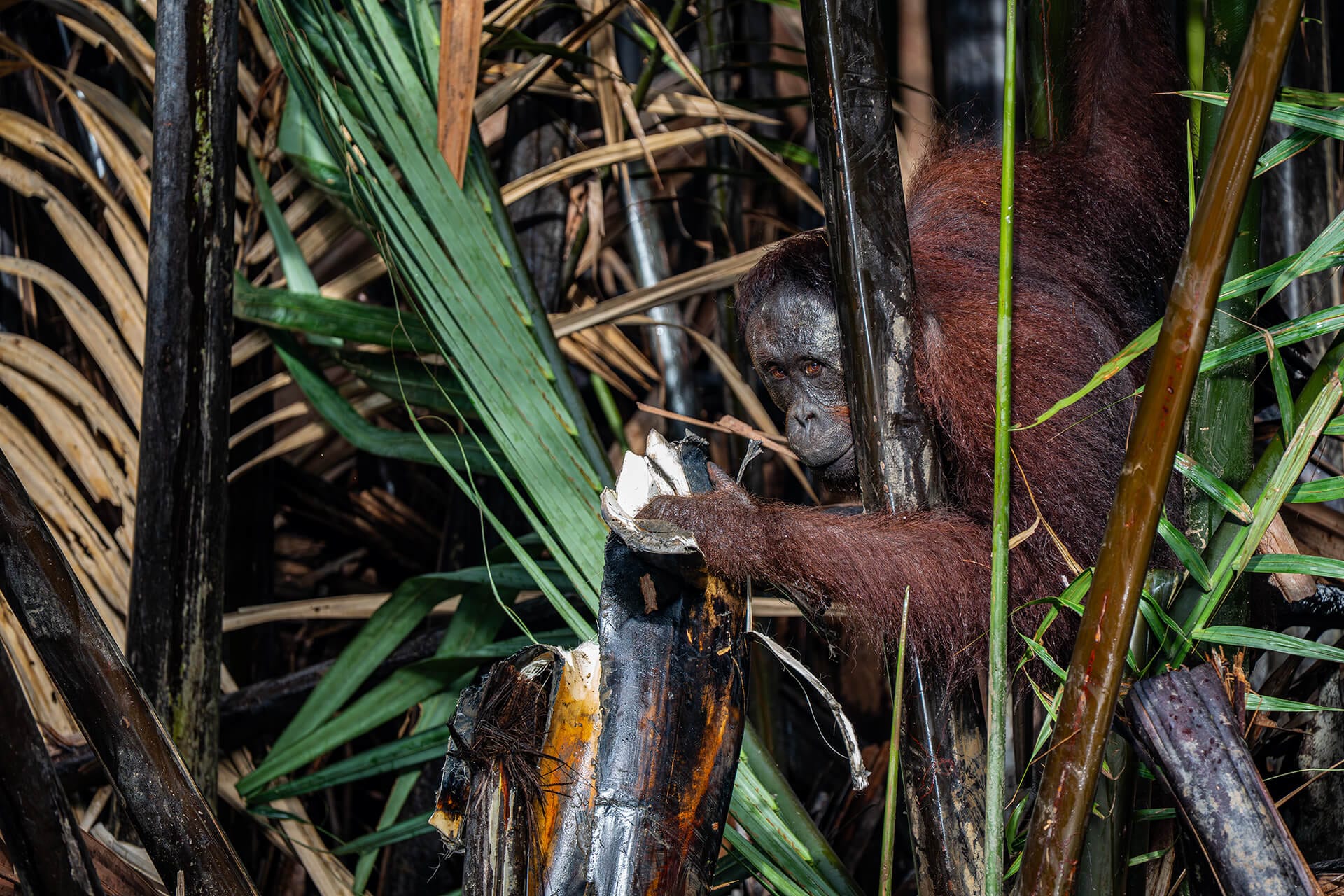
Borneo is the third-largest island on Earth — shared between Malaysia (Sabah and Sarawak), Indonesia (Kalimantan) and Brunei — and among the most biodiverse places in the world. For first-timers, one thing stands above all else: orangutans. Their very name, orang hutan, means “person of the forest” in Malay, and spending time near them — whether at a rehabilitation sanctuary or spotting one wild in the river-forest canopy — is profoundly moving.
But Borneo is so much more: pygmy elephants, proboscis monkeys with their absurdly endearing bulbous noses, clouded leopards, sun bears, and over 600 species of birds. Unlike the open-vehicle savannah safaris of Africa, Borneo is about river cruises in flat-bottomed longboats, jungle treks on raised boardwalks, and canopy walks above a cathedral of ancient trees. The humidity is intense; the rewards are immense.
Kinabatangan River
One of the world’s great wildlife rivers. Spot proboscis monkeys, pygmy elephants and orangutans from a boat at dusk.
Danum Valley
Primary old-growth rainforest — the most pristine in Malaysian Borneo. For serious wildlife watchers and photographers.
Sepilok Sanctuary
The world’s most famous rehabilitation centre. Morning feeding sessions are a guaranteed, deeply affecting experience.
- Spend a minimum of 7–10 nights — distances are long and internal flights are necessary.
- Visit Sepilok first; it primes your eye for spotting orangutans in the wild later.
- Book the Kinabatangan at least 4–5 months ahead — quality lodges sell out fast in the dry season.
- Pack clothes you don’t mind ruining. River spray, red laterite mud and humidity test everything.
- Humidity is relentless (often 90%+). Build in rest time and don’t over-programme.
- Travel with a specialist, responsible operator — orangutan habitat is under pressure from palm-oil deforestation.
Ready for the rainforest?
From wild orangutans to sunset cruises along the Kinabatangan, Borneo is one of Earth’s most immersive wildlife journeys.
India
India is the only country on Earth where you can track a Bengal tiger at sunrise in the jungles of Madhya Pradesh, watch one-horned rhinos bathing in Assam’s floodplain grasslands, and search for the elusive snow leopard in Ladakh’s frozen valleys — all in a single trip. It is among the most complex but rewarding wildlife destinations in the world. Planning 4–6 months ahead is essential, as park permits sell out within hours of opening 120 days prior to travel.
Indian safaris are conducted in open gypsies (jeeps) with a mandatory forest guide, and most parks operate morning and afternoon slots. A specialist naturalist is often the difference between a transformative encounter and a blank drive through beautiful scenery.
Central India circuit
The classic high-density tiger region. Kanha & Bandhavgarh, Pench & Satpura, Panna & Tadoba. Best February to June.
Northeast & eastern
Kaziranga’s one-horned rhinos and the Sundarbans — the world’s largest mangrove, where safaris are entirely boat-based.
Himalayan circuit
Hemis National Park — the snow-leopard capital of the world. Winter expeditions, January to March.
- Book permits through a reputable operator the moment they open (120 days before). Don’t leave it to chance.
- Allocate a minimum of 9–10 days for a proper Central India tiger circuit.
- February to June is peak season — water dries up and animals concentrate around it.
- For snow leopards, travel January–February and treat it as an expedition, not a guarantee.
- Kaziranga is best November–April; it floods completely in the monsoon.
- The Sundarbans needs a permitted operator — no independent visits; the terrain is genuinely dangerous.
- Camera and lens rentals are available at select parks for those travelling light.
Track tiger, rhino and snow leopard.
India delivers one of the most diverse wildlife experiences in the world.
Zambia
Zambia has long been Africa’s best-kept secret. Where the crowds flock to Kenya and Tanzania, Zambia offers a deeply intimate, raw and unhurried wilderness that many veteran safari-goers consider the finest on the continent. South Luangwa National Park is the jewel of a 9,050 km² paradise of oxbow lagoons, ancient ebony trees, and astonishing wildlife density. Uniquely, it is the birthplace of the walking safari — pioneered here in the 1950s — and walking remains the gold standard.
This is not a mass-market destination. Camps are small and exclusive, operators are deeply committed to conservation, and the experience feels genuinely remote. Prepare to disconnect completely — and to love it.
South Luangwa NP
The heartbeat of Africa. Legendary leopards, enormous elephant herds, and the finest walking safari on the continent. Night drives reveal honey badgers, genets and civets.
The Luangwa Valley
The broader ecosystem — combine a main camp on the river with a remote fly-in bushcamp in the park’s interior for the ultimate immersion.
- Do a walking safari at least one morning — it transforms how you read the bush.
- Keep an open mind: embrace the remoteness, the silence and the unexpected.
- Prepare to fully disconnect — most camps have limited Wi-Fi by design.
- Invest time in your guide; you’ll spend 6–8 hours a day with them.
- The dry season (June–October) is peak — nights can be cold, so pack layers.
- The emerald season (November–January) is lush and great value, but some camps close.
- Book accommodation and internal flights 9–12 months ahead for peak dry season.
Africa beyond the crowds.
Walking safaris in South Luangwa and remote bushcamps under starlit skies — safari at its purest.
Tanzania
Tanzania is often regarded as the world’s greatest wildlife destination. The northern circuit alone — Serengeti, Ngorongoro and Lake Manyara — offers a safari that is almost surreally spectacular. The Great Migration, the world’s largest overland movement of animals, circles endlessly through the Serengeti ecosystem, and timing your visit to witness a river crossing remains one of wildlife travel’s most dramatic bucket-list moments. Add the untouched vastness of the south, anchored by Ruaha, and you have a destination of extraordinary variety.
Serengeti NP
The stage for the Great Migration — over 2 million wildebeest, zebra and gazelle in a ceaseless circuit. One of Earth’s densest lion populations.
Ndutu Plains
Southern short-grass plains where wildebeest calve in their hundreds of thousands, December to March. Cheetahs hunt with extraordinary grace.
Ngorongoro Crater
A 20km volcanic caldera with one of the most concentrated assemblages of wildlife anywhere — including regularly-seen black rhino.
Lake Manyara NP
Famous for tree-climbing lions and vast flocks of flamingoes — a diverse ecosystem in a compact area.
Ruaha NP
Tanzania’s largest park and best-kept secret. Enormous baobabs, exceptional big-cat viewing, and true wilderness with no crowds.
- The Migration follows the rain and the grass — work with an operator tracking it in real time.
- For calving (January–March) head to Ndutu; for crossings (July–October) the northern Serengeti near the Mara River.
- Ngorongoro is extraordinary but crowded — combine it with 3–4 nights in the Serengeti.
- Ruaha rewards those willing to go south — the bush is essentially yours.
- Internal flights between parks beat hours of rough road time.
- Book a camp inside the Serengeti — waking to the park’s sounds and light changes everything.
The greatest show on Earth.
From the Great Migration to the Ngorongoro Crater and remote Ruaha — wildlife on an almost unimaginable scale.
Kenya
Kenya is where modern safari was born, and the Masai Mara remains its beating heart. Its open savannah, lion prides and cheetah families — and its role as the northern terminus of the Great Migration — make it one of the most consistently spectacular wildlife destinations on Earth. But Kenya has evolved far beyond the Mara. The private conservancies adjoining the reserve offer an intimacy and quality that has redefined what a safari can be: night drives, off-road access, walking safaris, and the near certainty of close encounters without another vehicle in sight.
Amboseli, in the shadow of Kilimanjaro, delivers Africa’s most iconic photographs: elephant herds crossing the dusty floodplain with the snows of the continent’s highest peak behind them. Samburu in the north is a revelation — a rugged, semi-arid landscape home to the “Special Five” found nowhere else in Kenya: reticulated giraffe, Grevy’s zebra, Somali ostrich, gerenuk and Beisa oryx.
Masai Mara Reserve
Kenya’s crown jewel — the northern Migration, resident Big Five year-round, and the world’s best big-cat viewing.
Mara conservancies
Naboisho, Olare Motorogi, Mara North, Ol Kinyei — fewer vehicles, night drives, walking and off-road access.
Amboseli NP
Arguably Africa’s most photogenic park — large-tusked elephants foregrounding Kilimanjaro, with exceptional birding.
Samburu Reserve
A completely different Kenya — arid and rugged, with the Ewaso Nyiro River and the unique “Special Five”.
- Spend 3–4 nights in a private Mara conservancy rather than the reserve — a qualitatively superior experience.
- The best crossings happen July–October on the Mara River, but the Mara is exceptional year-round.
- Combine Amboseli with the Mara for the most varied Kenya safari.
- Add Samburu — the Special Five exist nowhere else in Kenya, and the landscape is breathtaking.
- Nairobi is an efficient hub — you can be game-viewing in the Mara within 45 minutes by light aircraft.
- Kenya’s community-conservancy model means your spend directly supports Maasai and Samburu communities.
Where modern safari was born.
From the plains of the Mara to elephants beneath Kilimanjaro — crafted to your style of travel.
Every detail considered
At Safari Acacia, we only partner with camps that meet our conservation benchmarks — ensuring every booking directly funds anti-poaching, ranger training, and the communities who share their land with wildlife. Every itinerary is tailor-made.
Begin planning your journey