Satpura
India's Most Exclusive Wildlife Experience
Unlike India's heavily visited tiger reserves, Satpura operates on an entirely different philosophy: low-impact tourism, radical solitude, and deeply immersive wilderness experiences unavailable anywhere else in India. Walking safaris. Canoe safaris. Night safaris. Near-complete privacy.
"Only a limited number of safari vehicles are permitted into the core zone each day. There are no traffic jams around wildlife sightings, no crowds competing for photographs. Instead, guests experience intimate encounters with tigers, leopards, and wild dogs in near-complete privacy — something increasingly rare in modern wildlife tourism."
Forest
Species
Species
Types
Open Window
Seven folds of mountain, four safari types, one philosophy
Satpura National Park takes its name from the Sanskrit phrase meaning "Seven Folds" — a reference to the layered mountain ranges that create one of the most dramatic and ecologically diverse wilderness landscapes in Central India. Located between the sacred Narmada and Tapti rivers, the reserve covers more than 2,133 square kilometres of protected forests, river systems, sandstone escarpments, bamboo thickets, grasslands, and untouched valleys.
Only a limited number of safari vehicles are permitted into the core Madhai zone each day. There are no traffic jams around wildlife sightings, no crowds competing for photographs, and no rushed safari experiences. Guests experience intimate encounters with tigers, leopards, sloth bears, gaur, crocodiles, and hundreds of bird species in near-complete privacy. This exclusivity has transformed Satpura into one of the finest luxury wildlife safari destinations in India.
Unlike other high-traffic tiger reserves, Satpura is one of the only parks in India offering guided walking safaris, exclusive canoe safaris on the Denwa backwaters, and night safaris in designated buffer zones — experiences unavailable in most other Indian national parks. For discerning travellers for whom the quality of access matters as much as the species encountered, Satpura represents the most sophisticated safari experience available in Central India.
The Denwa backwaters — the setting for Satpura's signature canoe safari experience
"Very few national parks in India allow visitors to explore protected forest on foot. A Satpura walking safari — accompanied by expert forest guards through sal corridors, bamboo groves, and riverbanks — is one of the most exclusive and immersive wildlife experiences in Central India."
52 Mammals,
300+ Birds
Satpura's extraordinary biodiversity is supported by its varied landscape of dense sal forests, bamboo groves, riverine habitats, grasslands, wetlands, and sandstone hills. Its extremely low tourism pressure allows wildlife to behave in a far more relaxed and natural manner than in any other Central Indian reserve.
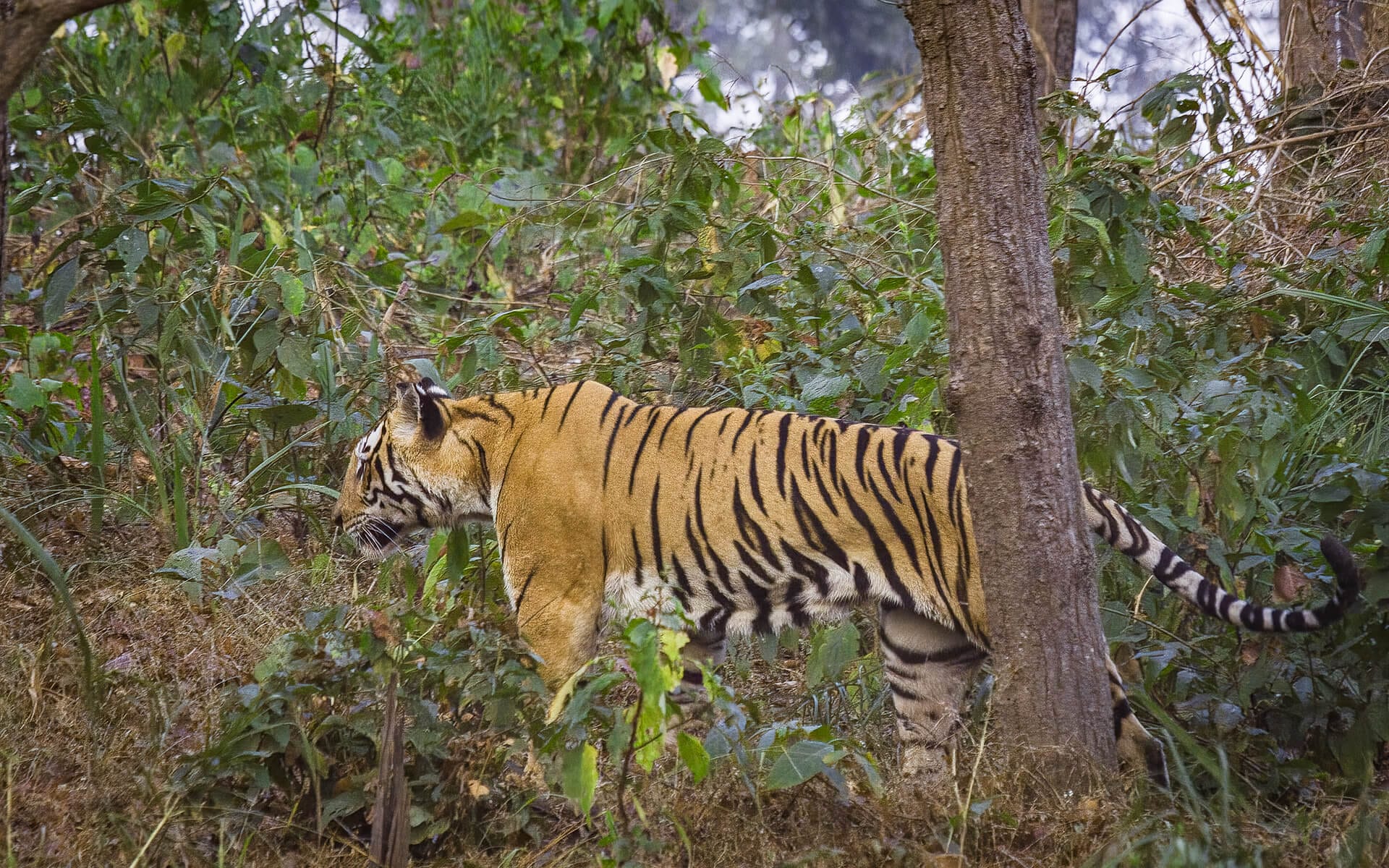
Bengal Tiger
Panthera tigris tigris
Sightings at Satpura are known for their intimacy and tranquillity. Instead of competing with multiple vehicles, guests often enjoy prolonged private encounters. Summer months (March–May) generally offer the highest probability as animals concentrate near water sources.
Indian Leopard
Panthera pardus fusca
Healthy populations throughout the reserve. Frequently seen near rocky ridges, forest edges, and buffer zones, particularly during early morning and late afternoon drives. The buffer zone night safari adds a further dimension to leopard encounters.
Sloth Bear
Melursus ursinus
Satpura is considered one of the finest places in India to encounter sloth bear. These charismatic animals are regularly observed near rocky terrain and fruiting Mahua trees — encounters are unhurried in the absence of vehicle pressure.
Dhole
Cuon alpinus
Strong populations of India's endangered wild dog. Encounters are particularly prized among serious wildlife enthusiasts and photographers. The low vehicle density means dhole pack encounters are not shared with a convoy of other vehicles.
Gaur
Bos gaurus
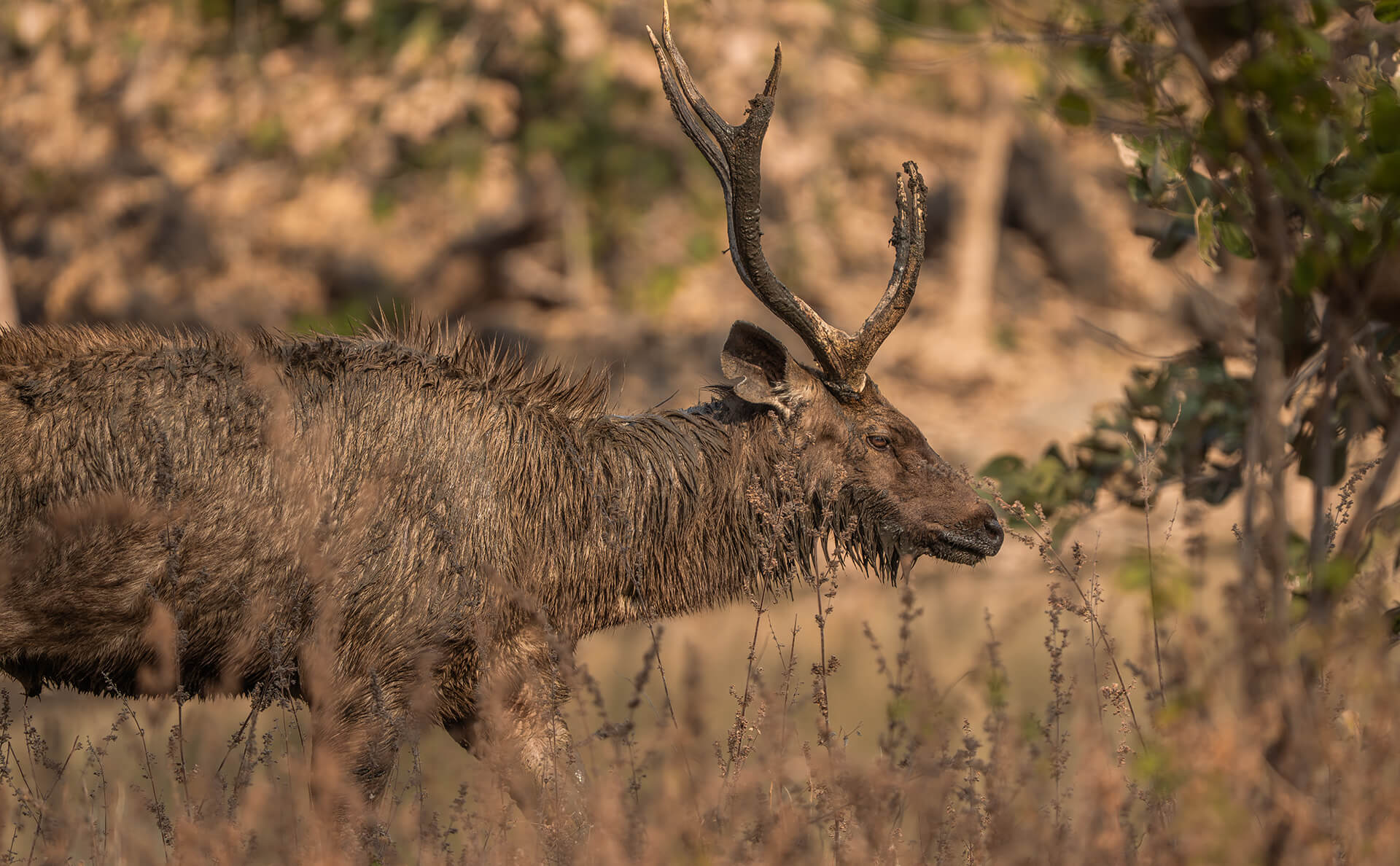
Frequently encountered grazing in meadows and open clearings across the Madhai zone. Massive and imposing, gaur herds are among Satpura's most visually dramatic wildlife experiences — especially at dawn when mist holds in the valleys.
Mugger Crocodile
Crocodylus palustris
The Denwa backwaters support excellent populations. Boat safaris and canoe expeditions frequently reveal basking crocodiles at close range — an encounter impossible from a jeep and entirely different in character.
Smooth-coated Otter
Lutrogale perspicillata
The Denwa River supports otter populations visible during canoe safaris. Moving silently through the backwaters at dawn, otter sightings are among the most rewarding encounters the river experience delivers.
Malabar Pied Hornbill
Anthracoceros coronatus
Among Satpura's most striking resident birds. The reserve's diverse habitats — sal forest, bamboo, wetland, riverine strips — support over 300 species including grey-headed fish eagle, paradise flycatcher, multiple owl species, and six kingfisher species.
Four ways to experience the wilderness
Satpura's defining difference is its range of safari modes — unavailable in combination at any other Indian tiger reserve. Each delivers a fundamentally different relationship with the forest. A complete Satpura visit uses all four.
Jeep Safari
Madhai zone — intimate encounters
Jeep safaris in the Madhai Core Zone provide access to Satpura's primary tiger habitat. Strict vehicle limits create an experience categorically different from crowded Central Indian reserves. Morning safaris track predators in golden light; afternoon drives offer atmospheric forest scenes and movement around water sources. Full-day safaris access more remote sections where wildlife encounters are often quieter and longer than anywhere else in India.
Walking Safari
Guided on foot through tiger territory
One of the most extraordinary experiences in Indian wildlife travel - and available at very few national parks. Accompanied by expert trained forest guards, guests move quietly through sal forests, bamboo groves, riverbanks, and grassland corridors, learning to track wildlife footprints, interpret alarm calls, and understand the intricate ecosystem at ground level. For experienced safari enthusiasts who have explored African conservancies or India's commercial tiger reserves, the Satpura walking safari is frequently considered the highlight of the journey.
Canoe Safari
Silent movement through wilderness waterways
Gliding through the tranquil Denwa River backwaters without engine disturbance, wildlife encounters become remarkably intimate and natural. Canoe safaris frequently reveal marsh crocodiles on the shoreline, playful otters in the waterways, herds of deer near the riverbanks, kingfishers and fish eagles at close range, and the possibility of leopards emerging near the forest edge. Sunrise and sunset canoe safaris are especially breathtaking, with golden light reflecting across calm water.
Night Safari
Buffer zone nocturnal wildlife
Unlike most tiger reserves in India, Satpura offers controlled night safaris in selected buffer zones. As darkness settles, the forest transforms: civets move silently through undergrowth, flying squirrels glide between trees, porcupines forage along forest tracks, owls hunt from the canopy, and nightjars camouflage against the woodland floor. The reserve's healthy predator population creates real opportunities for leopard sightings after dark. A fundamentally different experience from any traditional wildlife drive.
Seven folds, sacred rivers, and a model for ethical conservation
Satpura's story is not just about wildlife. It is about how a large, complex ecosystem can be managed with radical restraint — producing a tourism model that has become the benchmark for luxury conservation travel in India.
The Denwa River & Backwaters
The Denwa River, whose pristine backwaters provide the setting for Satpura's exclusive canoe safaris, is one of the park's defining natural features. Unlike the dry and often crowded forests of other popular tiger reserves, the Denwa backwaters feel ancient, raw, and deeply atmospheric — offering travellers a sense of true wilderness exploration and supporting crocodiles, otters, migratory birds, and diverse aquatic life accessible in no other way.
Conservation Philosophy
Satpura has adopted conservation-led tourism policies that prioritise ecological sustainability over mass tourism. Strict vehicle limits, controlled safari access, low visitor density, and eco-sensitive safari experiences ensure that tourism revenue directly supports wildlife conservation without damaging the fragile ecosystem. Community-supported village relocation programmes have reduced human-wildlife conflict while improving habitat continuity. The reserve is widely regarded as a model for responsible wildlife management.
The Churna Wilderness
The Churna Zone — far less visited than the Madhai core — offers raw, isolated, deeply immersive jungle landscape where dense forests, rugged terrain, river crossings, and untouched wildlife corridors create an atmosphere of true wilderness. Particularly appealing for wildlife photographers, birdwatchers, and repeat safari travellers looking to move beyond conventional tiger safari experiences, Churna's drama light conditions and unspoiled scenery provide exceptional landscape photography opportunities.
The optimal window
Satpura's season is defined by the balance between comfortable safari conditions and wildlife visibility. The walking safari and canoe safari programmes have their own optimal windows within the broader season.
Widely regarded as the luxury safari season at Satpura. Pleasant temperatures (4–22°C in winter), lush post-monsoon forests, comfortable walking safari conditions, exceptional birdwatching, and spectacular natural scenery. Migratory birds arrive in large numbers; soft golden light provides exceptional conditions for wildlife photography. November and December are especially popular among international travellers and photographers seeking atmospheric jungle landscapes.
Prime tiger-viewing season as rising temperatures increase wildlife movement around rivers, waterholes, and shaded forest areas. The drying vegetation improves visibility throughout the reserve, making it easier to spot tigers, leopards, and sloth bears. The Mahua flowering season produces exceptional wildlife concentrations. Although daytime temperatures become warmer, Satpura's luxury lodges provide excellent comfort between safari sessions.
Intense heat (38–44°C) warrants only a deliberate niche choice for experienced safari enthusiasts targeting late May for extreme wildlife concentration near diminishing water sources. Not recommended for first-time visitors or those without tolerance for high heat.
The park usually closes from mid-June through September during the monsoon season, allowing the forests, wetlands, and wildlife habitats to regenerate naturally after the rains. An important part of Satpura's conservation-focused tourism model. The ideal planning window for securing lodge availability and specialist permits — particularly for the walking safari programme, which books quickly for the peak winter season.
We know Satpura.
The question is how you want to explore it.
We do not run group itineraries to Satpura. Every Safari Acacia programme is built around your specific combination of jeep, walking, canoe, and night safari — tailored to the experience depth you are seeking.