Central India
Six tiger reserves. The highest wild tiger density on earth.
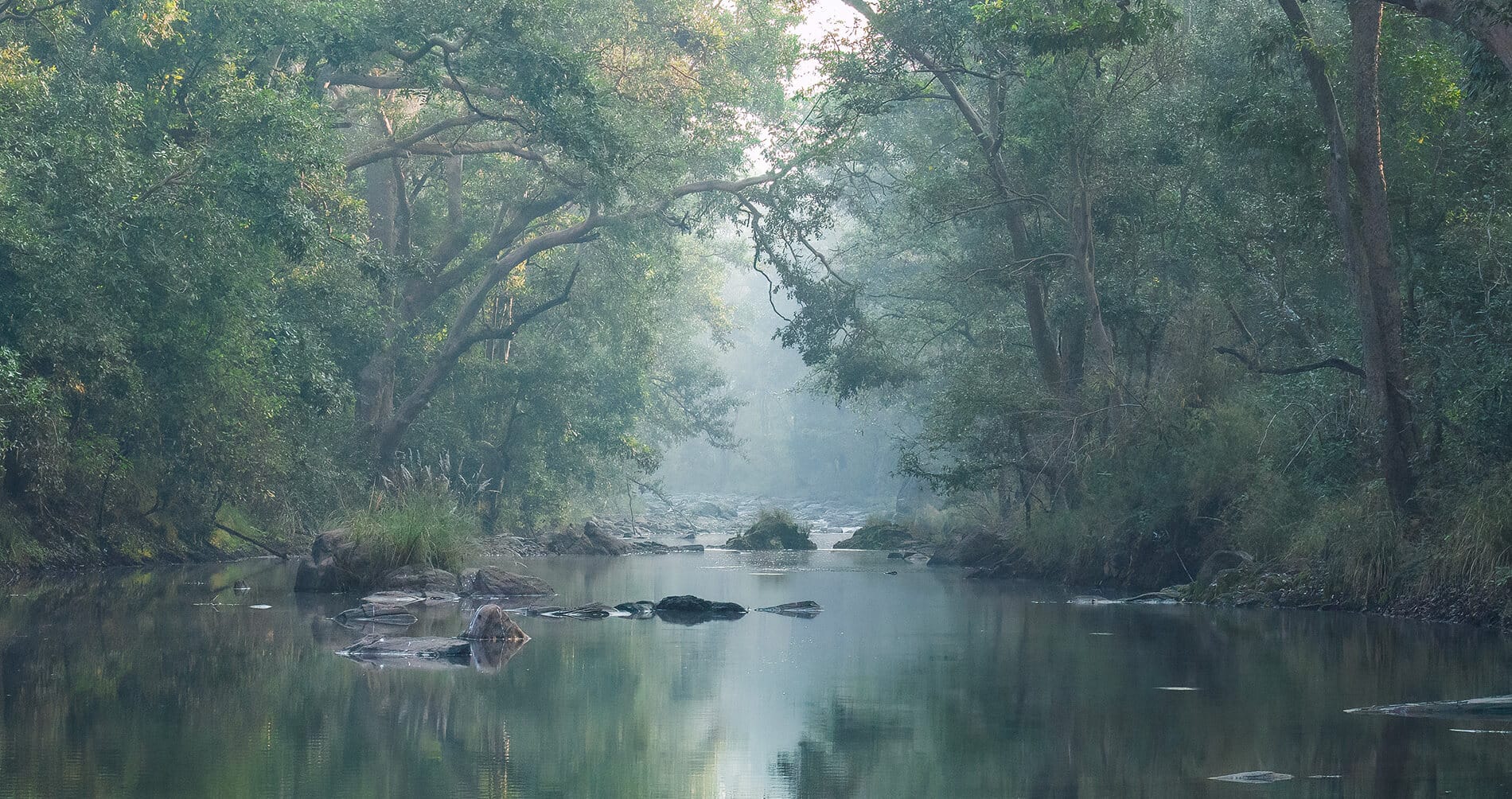
The Central Indian Highlands — rolling hills, ancient sal and teak forests, grassland maidans, and perennial lakes nestled in the Satpura and Vindhya ranges — hold the most productive Bengal tiger safari destination in the world. Bandhavgarh, Kanha, Pench, Satpura, Panna, and Tadoba: each distinct, each exceptional, each known to us in detail.
Begin Your Tiger SafariReserves
Protected Area
Species
Formats
Season
The most productive tiger country in the world
The Central Indian Highlands are a wildlife enthusiast's dream. Majestic tigers prowl the dense sal and teak forests; elusive leopards stalk the rocky outcrops; the mighty gaur, one of the largest terrestrial mammals in India, grazes the open maidans; and the dhole, the Indian wild dog, hunts in packs across the grasslands.
Thanks to sustained conservation under Project Tiger, the region's wildlife populations are thriving. The combination of open sal forest, grassland, perennial lakes, and a prey base that supports breeding tiger populations produces an encounter probability unavailable anywhere else on earth — alongside sloth bear, the critically endangered barasingha, and a remarkable bird list including hornbills, paradise flycatchers, and the Malabar pied hornbill.
Each reserve has its own ecological and experiential character. Zone selection within a reserve matters as much as which reserve you choose. We know all six — the guides, the zones, the named individual tigers, the optimal weeks — and we plan accordingly.
Bandhavgarh — India's Tiger Capital
Bandhavgarh National Park holds the highest known tiger density of any protected area on earth. An encounter here is not a question of luck — it is a question of preparation, zone selection, and the kind of guiding intelligence that knows where a specific tigress will be on a given February morning.
Spread over 716 square kilometres of forested hills, grassland maidans, and streams, the park is crowned by the ancient Bandhavgarh Fort — a 2,000-year-old structure on a cliff above the forest. Four distinct safari zones, over 250 bird species, leopards, and the open meadow terrain that produces the classic Central Indian tiger portrait make this the definitive first reserve for any serious tiger traveller.
Full Bandhavgarh Guide →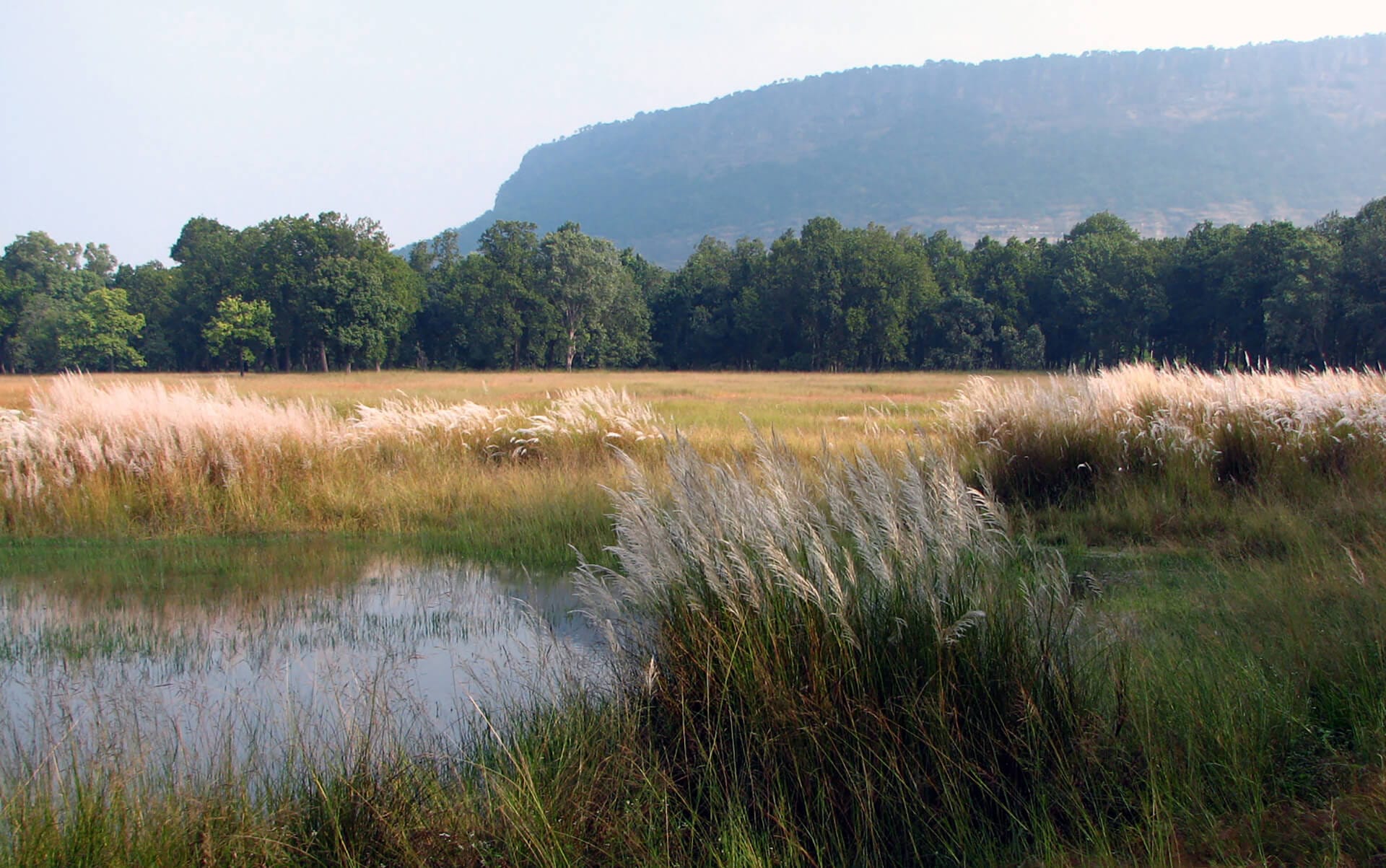
Bandhavgarh — the highest known tiger density of any protected area on earth
Kanha — where The Jungle Book begins
Kanha National Park is the largest contiguous protected habitat in Central India and the landscape that inspired Kipling's Jungle Book. Its dense sal forests, vast grassy meadows, and the scenic Banjar and Halon valleys create one of the most beautiful wilderness settings in the country.
Kanha's singular conservation achievement is the rescue of the barasingha — the hard-ground swamp deer found nowhere else on earth, brought back from the brink of extinction within the park's grasslands. Alongside tigers, leopards, sloth bears, dhole, and gaur, the diversity and the scale of Kanha make it the essential companion to Bandhavgarh on any Central India circuit.
Full Kanha Guide →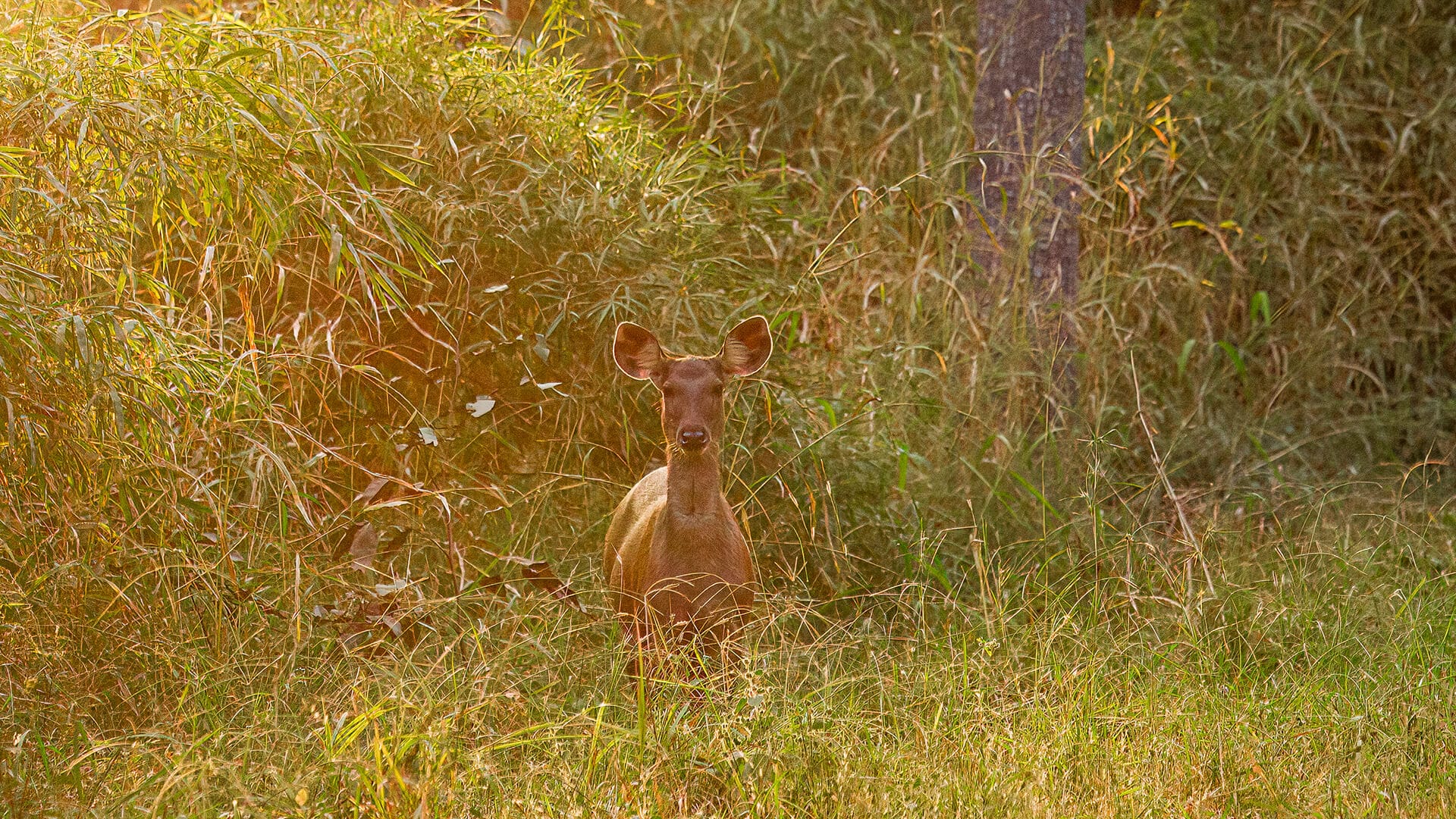
Kanha — the largest protected habitat in Central India, home to the rescued barasingha
Pench — the forest Kipling actually described
Pench National Park, straddling Madhya Pradesh and Maharashtra, is the landscape Kipling described in The Jungle Book — the Seoni forests, the Pench River winding through teak woodland and open grassland. It is among the most richly biodiverse of the Central reserves.
Home to tigers, the rare melanistic (black) leopard, sloth bears, and over 200 bird species, Pench combines reliable wildlife with a quieter, less-trafficked character than Bandhavgarh. Its teak-framed compositions and riverine settings make it a favourite of returning photographers, and its accessibility from Nagpur makes it an easy circuit anchor.
Full Pench Guide →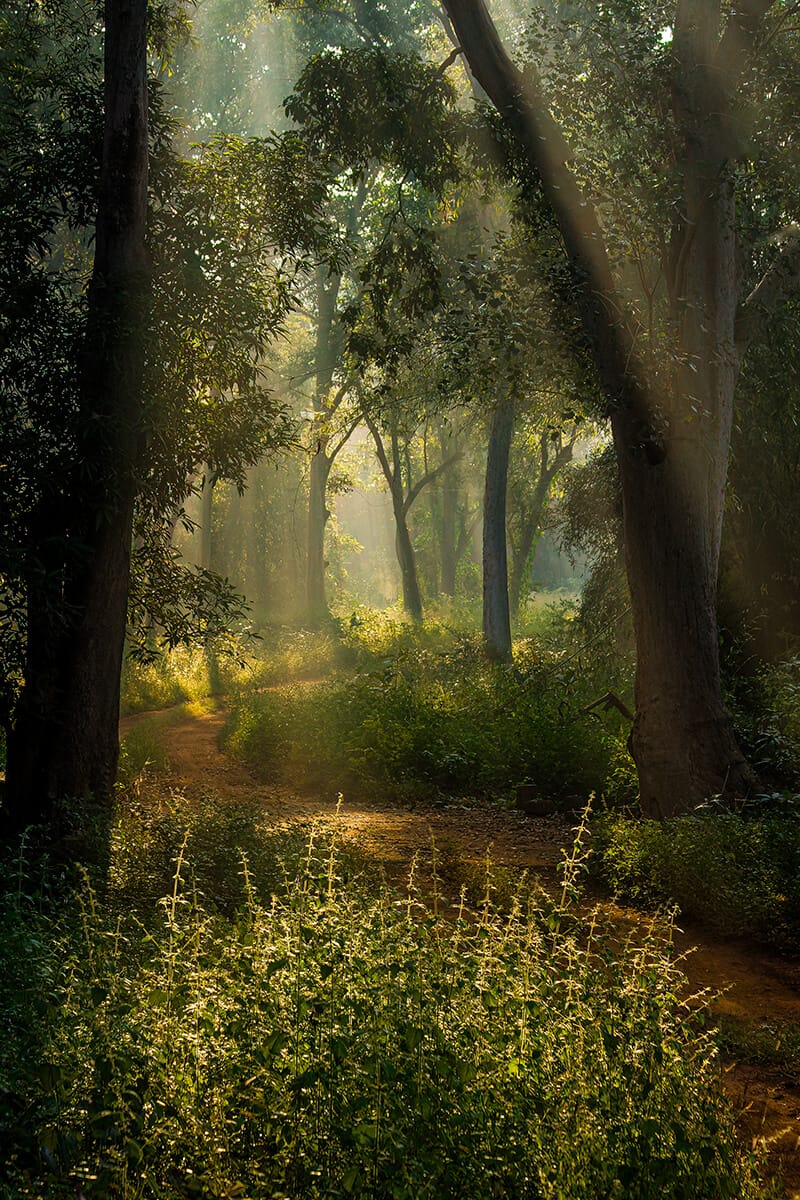
Pench — the forest Kipling actually wrote about, the Seoni country of The Jungle Book
Satpura — India's most exclusive wildlife experience
Satpura — the land of seven mountains — operates on a philosophy no other Indian tiger reserve shares. Walking safaris. Canoe safaris. Night safaris. Cycling through buffer zones. Where every other Central Indian park confines you to a jeep, Satpura lets you out of it.
Spread over 1,400 square kilometres of rolling hills, waterfalls, and the Denwa River, Satpura is home to tigers, leopards, dhole, sloth bears, and crocodiles — but its real distinction is the manner of encounter. A walking safari through Satpura's forest, a canoe drift along the Denwa backwaters at dawn: this is the most intimate and exclusive wildlife experience available in India, and the closest the country comes to the walking-safari tradition of southern Africa.
Full Satpura Guide →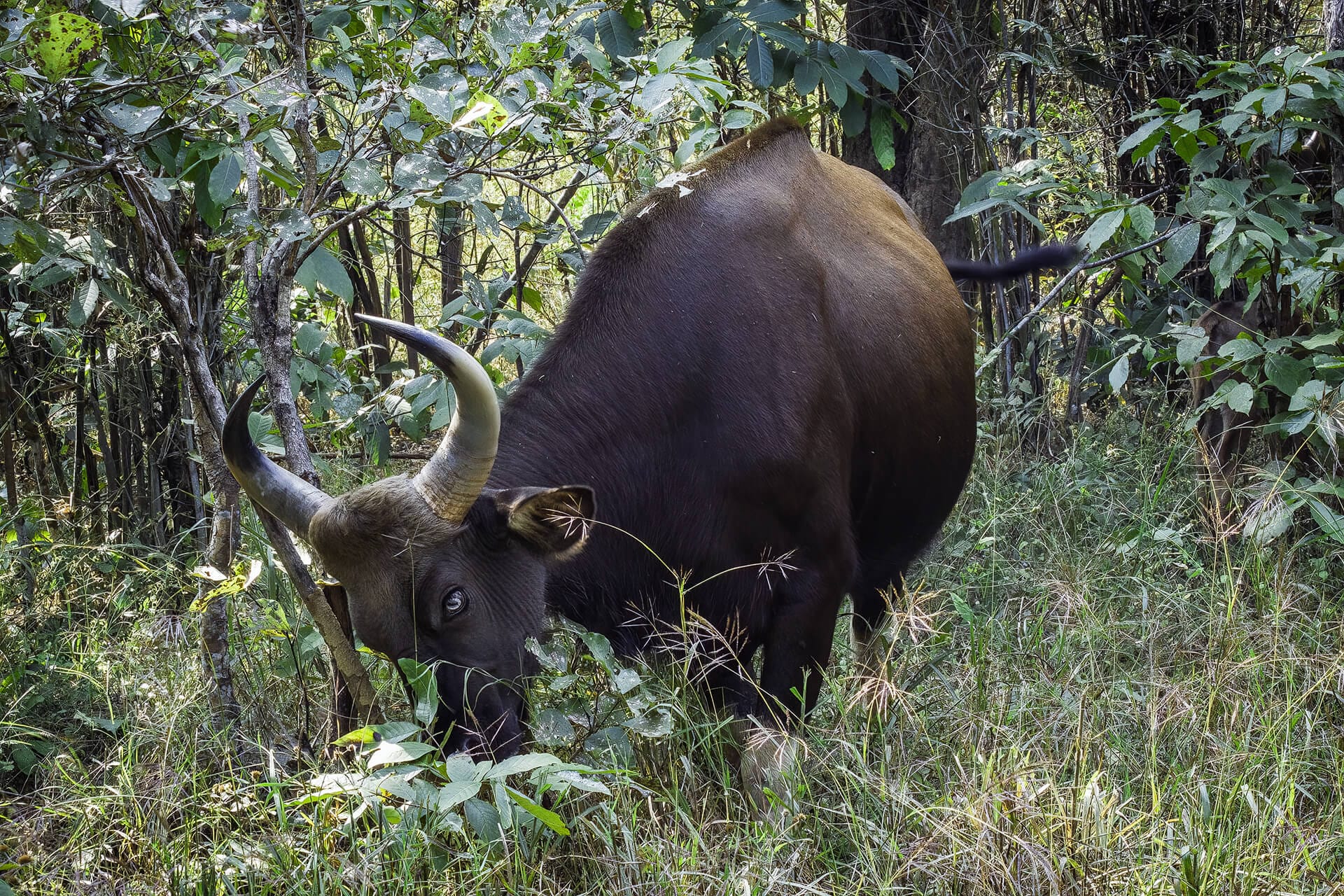
Satpura — walking, canoe, and night safaris: India's most exclusive wildlife experience
Panna — India's great conservation comeback
Panna National Park is one of conservation's most remarkable recovery stories — a tiger population rebuilt from zero after local extinction in 2009, now thriving across 542 square kilometres of the Panna Biosphere Reserve. It is proof of what determined conservation can achieve.
The Ken River runs through the park, carving deep gorges and waterfalls and supporting India's only river boat safari within a tiger reserve — drifting past gharial, mugger crocodile, and extraordinary birdlife. And Panna's proximity to the UNESCO World Heritage temples of Khajuraho, just 25 kilometres away, makes it the one Central India reserve that pairs a tiger safari with a world-class cultural experience in a single visit.
Full Panna Guide →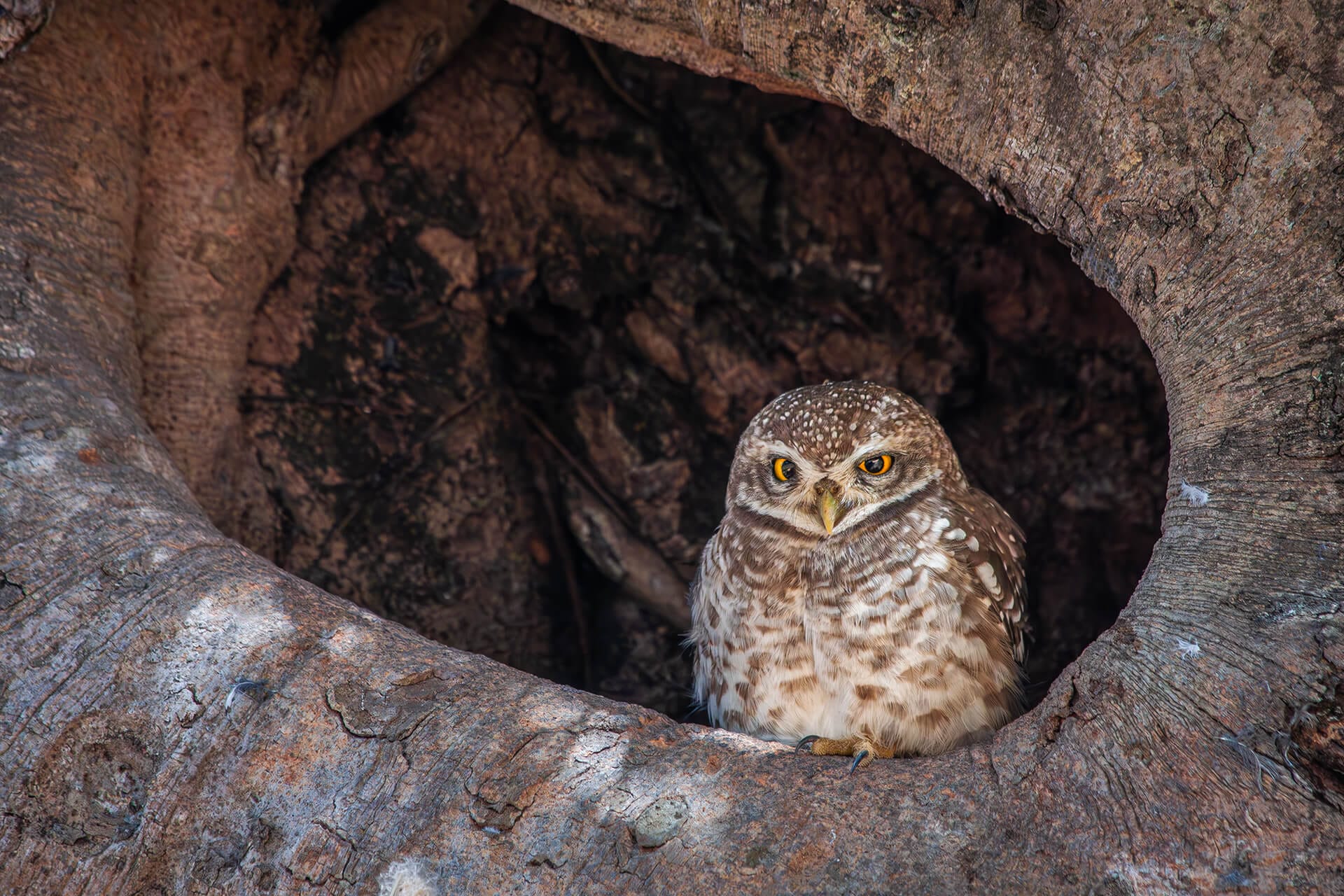
Panna — a tiger population rebuilt from zero, with India's only tiger-reserve boat safari
Tadoba — India's highest tiger encounter rate
Tadoba-Andhari Tiger Reserve in Maharashtra delivers the highest tiger encounter rate per safari of any reserve in India. Permanent lakes that hold water through the punishing dry season, open teak forest with long sightlines, and a population of named, well-documented individual tigers combine to make Tadoba the connoisseur's choice.
Less internationally famous than the Madhya Pradesh parks, Tadoba is increasingly recognised by serious wildlife photographers as producing the finest tiger photography conditions in the country — particularly during the Palash flowering season of February and March, when the forest blazes orange and the tigers concentrate around the shrinking waterholes. The Jewel of Vidarbha rewards the traveller willing to look beyond the obvious.
Full Tadoba Guide →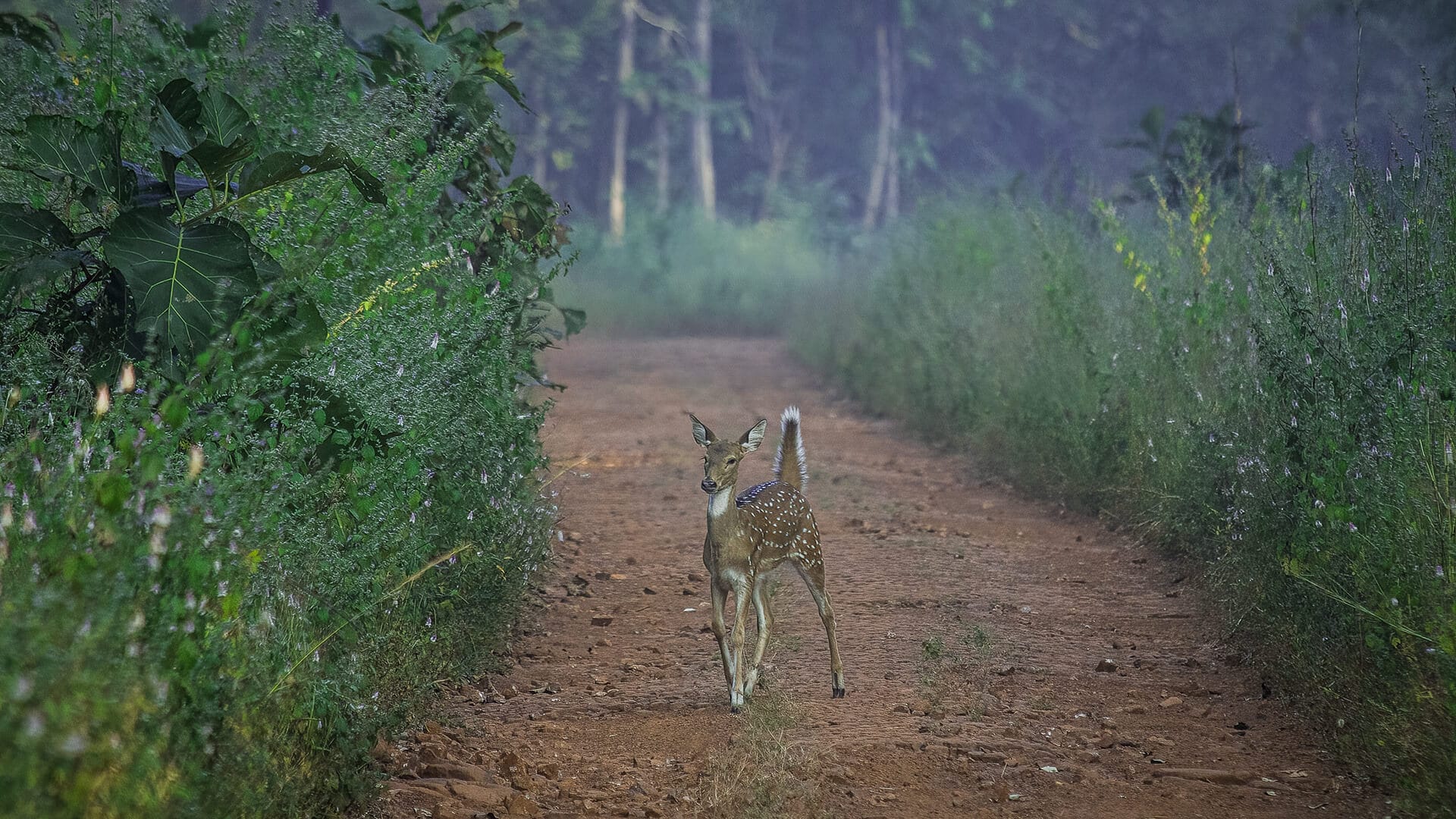
Tadoba — India's highest tiger encounter rate per safari, the Jewel of Vidarbha
Tipeshwar — the reserve beneath the radar
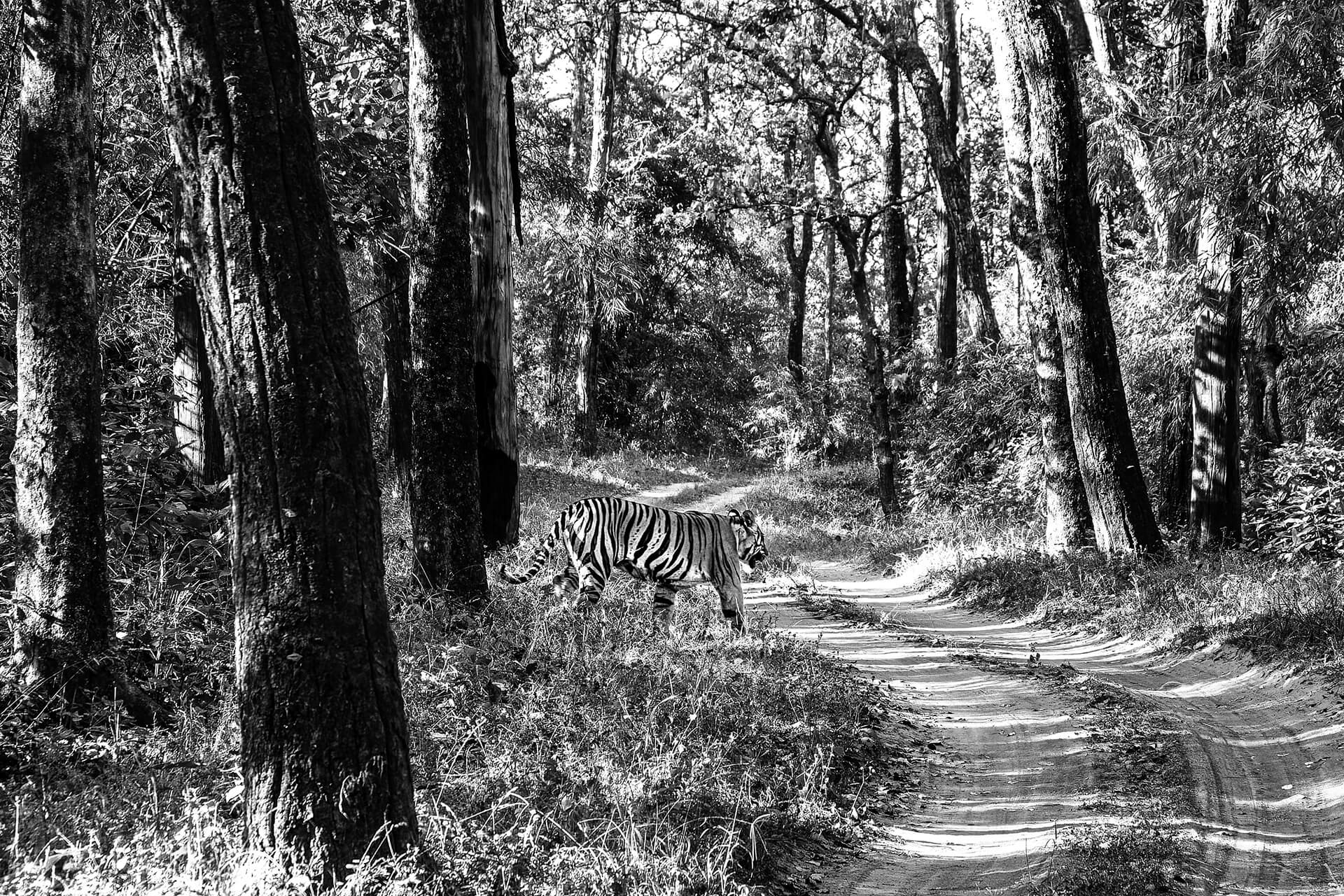
While the famous reserves draw the crowds, the seasoned wildlife traveller asks a different question: where can I have the forest almost to myself? The answer, increasingly, is Tipeshwar — a 148-square-kilometre wildlife sanctuary in Maharashtra's Yavatmal district, sitting at the confluence of four river systems, that most international travellers have never heard of.
That obscurity is precisely its value. Tipeshwar carries a healthy tiger population and over 180 bird species, but a fraction of the safari traffic of Tadoba or Bandhavgarh. A sighting here is not shared with a dozen jeeps — it is, more often than not, yours alone. The intimacy of the encounter, the quiet of the forest, and the genuine sense of discovery make Tipeshwar the connoisseur's secret in Central India.
We include Tipeshwar for the guest who has done the famous parks and wants something quieter, wilder, and more personal — often paired with neighbouring Tadoba for a complete, crowd-free Maharashtra circuit.
Which reserves, in which order? We have the answer.
Four ways to experience the forest
The classic open 4×4 jeep safari is the foundation across all six reserves — exploring dense forest and grassland to track tiger and leopard. But Central India offers far more: walking safaris at Satpura for an intimate, ground-level encounter with the ecosystem; canoe and boat safaris on the Denwa backwaters and the Ken River at Panna, drifting past gharial and riverside birdlife; and night safaris and sundowner experiences in the buffer zones. Multi-day expedition safaris combine all of these into a comprehensive journey through the region's biodiversity. Matching the format to the reserve and to you is the planning task we perform.
The six reserves compared
Each reserve offers a distinct character, landscape, and signature draw. Most well-planned circuits combine two or three. Here is how they compare at a glance.
| Reserve | State · Area | The Draw | Signature Experience | Best For |
|---|---|---|---|---|
| Bandhavgarh | Madhya Pradesh · 716 km² | Highest tiger density on earth; ancient fort | Jeep safari, Tala zone | The definitive first tiger reserve |
| Kanha | Madhya Pradesh · 940 km² | Largest habitat; barasingha; Jungle Book | Jeep safari, grassland meadows | Scale, beauty, and biodiversity |
| Pench | MP & Maharashtra · 758 km² | Kipling's forest; melanistic leopard | Jeep safari, river settings | A quieter, photogenic circuit anchor |
| Satpura | Madhya Pradesh · 1,400 km² | Walking, canoe & night safaris | Walking & canoe safari | The most exclusive, active experience |
| Panna | Madhya Pradesh · 542 km² | Conservation comeback; Ken River; Khajuraho | Boat safari on the Ken | Tigers paired with world-class culture |
| Tadoba | Maharashtra · Vidarbha | Highest encounter rate; permanent lakes | Jeep safari, lake hides | Photography & the connoisseur's choice |
Central India Safari Lodges
Luxury lodges and tented camps blending modern comfort with the rustic aesthetic of the forest — spacious villas, plunge pools, fine dining, expert resident naturalists, and a deep commitment to sustainability and the local communities of the Highlands.

Denwa Backwater Escape
On the Denwa River backwaters at Satpura's edge — the launch point for the reserve's signature canoe safaris and the most atmospherically positioned lodge in Central India. Walking, canoe, jeep, and night safari all accessible from a single base.
View Lodge →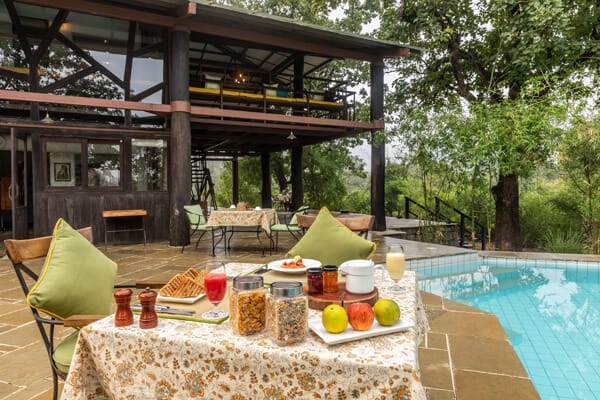
Pench Tree Lodge
Treehouse-inspired architecture in the forest buffer zone, with private plunge pools and naturalist-led drives in the Turia and Karmajhiri zones. Low-footprint design reflecting Pench's wilderness character.
View Lodge →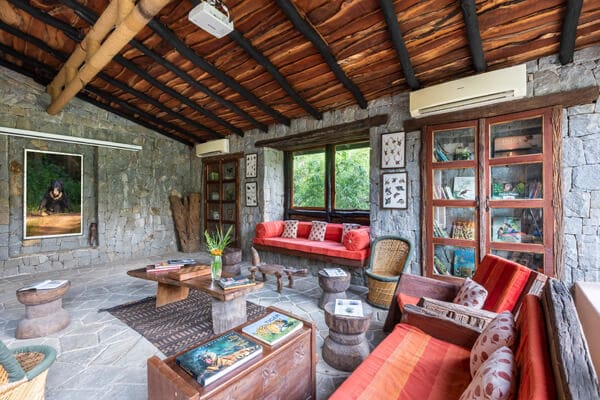
Kanha Earth Lodge
Solar-powered, locally built, and positioned near the Mukki gate — one of Kanha's most productive entry points for tiger and barasingha. A conservation-integrated property that pairs ecological seriousness with genuine luxury.
View Lodge →The Central India season
The reserves open October through June and close for the monsoon. Cooler months are ideal for birds and comfort; the hot months of April–June concentrate wildlife at the waterholes for the highest tiger sighting probability.
Post-monsoon reopening — the forest lush and green, comfortable temperatures, excellent birding with winter migrants arriving. Wildlife dispersed across abundant water, so sightings require patience, but the landscape is at its most beautiful.
The balanced peak. Cool, dry, comfortable conditions with excellent visibility as vegetation thins. February and March bring the Palash flowering at Tadoba and increasingly concentrated wildlife. The ideal window for first-time visitors and photographers alike. Book 6–9 months ahead.
The hot season — temperatures reach 40°C+, but this is when tiger sightings peak as animals concentrate at the shrinking waterholes. For the traveller who can handle the heat, April through June offers the highest encounter probability of the year. Early morning drives are essential.
The core zones close for the monsoon to protect wildlife and allow regeneration. The ideal planning window to secure the following season's premium lodges and zone permits, which book months in advance for peak dates.
Frequently Asked Questions
The questions most frequently asked when planning a Central India tiger safari.
Planning & Booking
Which reserves are best for a first-time visit?
Bandhavgarh and Kanha provide the most reliable tiger encounters with the most varied landscape. Add Satpura if a walking or canoe safari appeals. A Bandhavgarh + Kanha + Pench circuit covers the full range of Central India character without excessive transfer distances.
How long should a Central India safari last?
A minimum of 7–10 days for a meaningful two-park programme with morning and evening drives at each. Three parks in 12–14 days is optimal. Safari session count is the single biggest variable on encounter probability — more sessions, better odds.
When is the best time to visit?
November to March for cooler, comfortable conditions and good sightings. April to June for the highest tiger sighting probability, as animals concentrate at waterholes — if you can handle 40°C heat. Parks close July–September for monsoon.
How do I get to the reserves?
The nearest airports are Jabalpur, Nagpur, and Indore, with onward domestic flights or private road transfers to the lodges. We arrange all internal logistics — flights, private transfers, and the precise routing between parks — as part of every itinerary.
Are there luxury accommodations available in Central India' national park?
For discerning travelers seeking an exclusive wildlife experience, India's leading tiger reserves offer a remarkable collection of luxury safari lodges and sophisticated wilderness retreats. From private villas and plunge pools to exceptional cuisine, expert naturalists, and personalized safari planning, these properties rival some of the world's finest safari camps. Safari Acacia works exclusively with the most distinguished lodges across every destination, selected for their exceptional service, location, guiding standards, conservation commitment, and guest experience. Discover our curated portfolio of luxury safari lodges.
Wildlife & Safari
Can I expect to see a tiger?
No tiger sighting is ever guaranteed, but parks like Bandhavgarh, Kanha, and Tadoba have high tiger populations and strong sighting rates — especially with a private vehicle, correct zone selection, and an expert guide. A well-planned programme dramatically improves the odds over a generic group booking.
Can I see leopards and sloth bears on a Central India safari?
Yes. Central India's forests support healthy populations of both leopards and sloth bears. Leopards are often seen in areas with rocky terrain and dense woodland, while sloth bears are commonly encountered searching for insects, fruits, and honey. Although they are generally less predictable than tigers, many guests consider sightings of these elusive mammals among the highlights of their safari experience.
Can I do a walking or night safari?
Walking safaris are a signature of Satpura, guided by trained naturalists. Night safaris and sundowner experiences are arranged in buffer zones, particularly at Satpura and Tadoba. Most reserve cores are jeep-only, but the breadth of formats at Satpura is unique in India.
What vehicle is used for safaris?
Open-air 4×4 jeeps (typically Maruti Gypsies) seating up to six, with driver and guide. We recommend booking a private vehicle — sole use of the jeep and guide transforms the experience and is the single most impactful upgrade available.
Will we have a dedicated naturalist during our safari?
Yes. Every Safari Acacia journey includes the services of experienced safari naturalists and local wildlife experts who accompany you throughout your safari experience. Depending on the destination and lodge, you may have a dedicated resident naturalist for your game drives or a combination of expert lodge naturalists and specialist guides. Their deep knowledge of animal behavior, birdlife, tracking techniques, and local ecosystems greatly enhances wildlife sightings and overall safari enjoyment. For photographers, naturalists also help anticipate animal movements and position vehicles for the best viewing and photographic opportunities whenever park regulations permit.This personalized guiding experience is one of the key advantages of a luxury safari, transforming game drives into a deeper exploration of the wilderness rather than simply searching for wildlife.
What should I pack?
Light, breathable clothing in neutral colours (khaki, olive, beige), layered for cold mornings. Essentials: quality binoculars, a telephoto camera (400mm+), sunscreen, hat, insect repellent, and comfortable closed shoes. Lodges provide laundry, so pack light.
Signature Tiger Safari Journeys
Each is a private, bespoke itinerary — a considered sequence of reserves, lodges, and seasons refined over years of fieldwork. A starting point for a conversation, not a fixed package. Every journey is tailored entirely to you.
The Classic Tiger Circuit
10–12 DaysThe definitive introduction to Central India's tiger country. The three great Madhya Pradesh reserves in sequence — Bandhavgarh's open maidans and highest tiger density, Kanha's vast sal forests and barasingha, and the Jungle Book landscapes of Pench. The most complete first-time circuit, with private vehicles and the finest lodges throughout.
Explore This Journey →The Connoisseur's Maharashtra
7–8 DaysFor the traveller who has done the famous parks and wants the crowd-free alternative. Tadoba's exceptional encounter rate and named individual tigers, paired with the quiet, intimate forest of Tipeshwar where a sighting is yours alone. The most exclusive tiger experience in Central India, far from the convoys.
Explore This Journey →Tigers & Temples
9–11 DaysThe journey that pairs world-class wildlife with world-class culture. A boat safari on the Ken River at Panna, the UNESCO World Heritage temples of Khajuraho just 25 kilometres away, and the tiger density of Bandhavgarh to close. The single circuit that captures both faces of India — the wild and the civilisational — without compromise.
Explore This Journey →Walking Wild — Satpura Immersion
6–8 DaysIndia's most active and exclusive wildlife experience, centred on Satpura — the one reserve where you leave the jeep behind. Walking safaris through the forest, canoe drifts along the Denwa backwaters at dawn, night safaris in the buffer, and cycling through the wilderness. The closest India comes to the walking-safari tradition of Africa.
Explore This Journey →Six reserves. One conversation.
Let us design your circuit.
Every Safari Acacia Central India programme is a private itinerary — reserve selection, zone intelligence, lodge sequence, and species priorities built around a single conversation about what you are specifically hoping to find in the heart of India.