Pench
India's Most Underrated Tiger Reserve
The Seoni district forests Kipling actually described. The valley of the Waingunga river where Shere Khan met his end. One of the most rewarding and most consistently underestimated reserves in Central India — richer in literary and ecological resonance than its reputation suggests.
"The geographical specificity of the Jungle Books is not incidental. The Waingunga river, where Shere Khan is driven and killed, is a real river. The wolf pack territories Kipling describes occupy the same terrain — the dry mixed forest, the rocky hillsides, the river valley — that a Pench drive traverses today."
Open Window
The forest Kipling described — still here, still functioning, still wild
Pench Tiger Reserve covers a total of 1,179 square kilometres in the Seoni and Chhindwara districts of Madhya Pradesh and shares a continuous forest boundary with 257 square kilometres of Maharashtra. The core zone covers 411 square kilometres. The Pench river enters the reserve from the north and flows southward through the heart of the forest, dividing it naturally into eastern and western sections and forming the ecological spine of the reserve.
There is an irony at the heart of Pench's reputation. The Jungle Book is marketed relentlessly on its Kanha connection — but the Jungle Book was not written about Kanha. It was written about Pench — specifically about the Seoni district forests that the Pench Tiger Reserve now protects, the valley of the Waingunga river where Shere Khan met his end, and the wolf pack territories that Kipling described with a precision suggesting either deep personal knowledge or exceptional second-hand sources.
The BBC chose Pench specifically for their landmark 2008 documentary Tiger: Spy in the Jungle, narrated by David Attenborough, because the reserve's relatively open forest and accessible river valley provided the camera access that no other Indian reserve could match for sustained intimate tiger observation. The documentary remains the most widely distributed footage of wild tiger behaviour ever filmed, and it was made here.
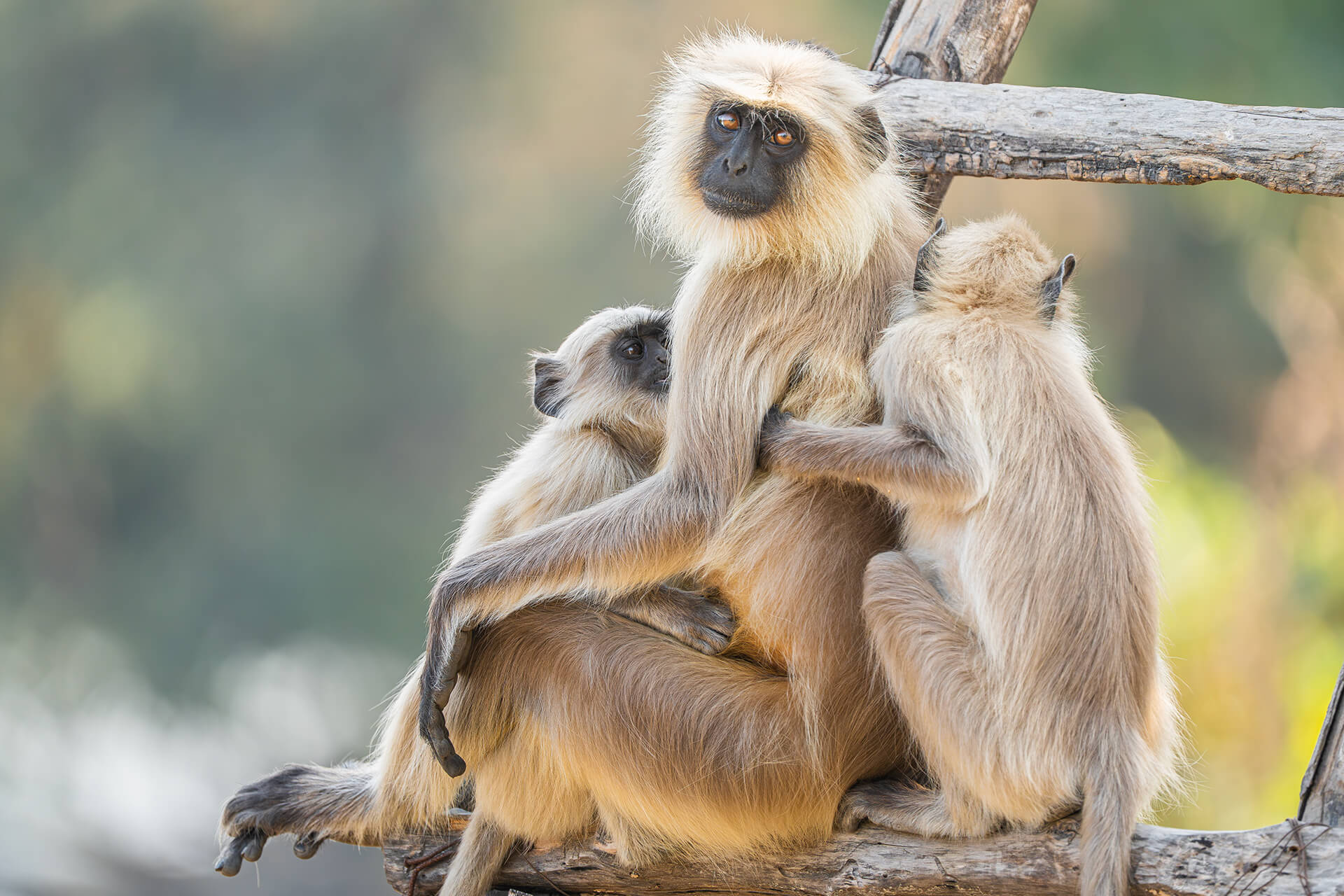
The Waingunga river valley — the forest Kipling's wolf pack called home
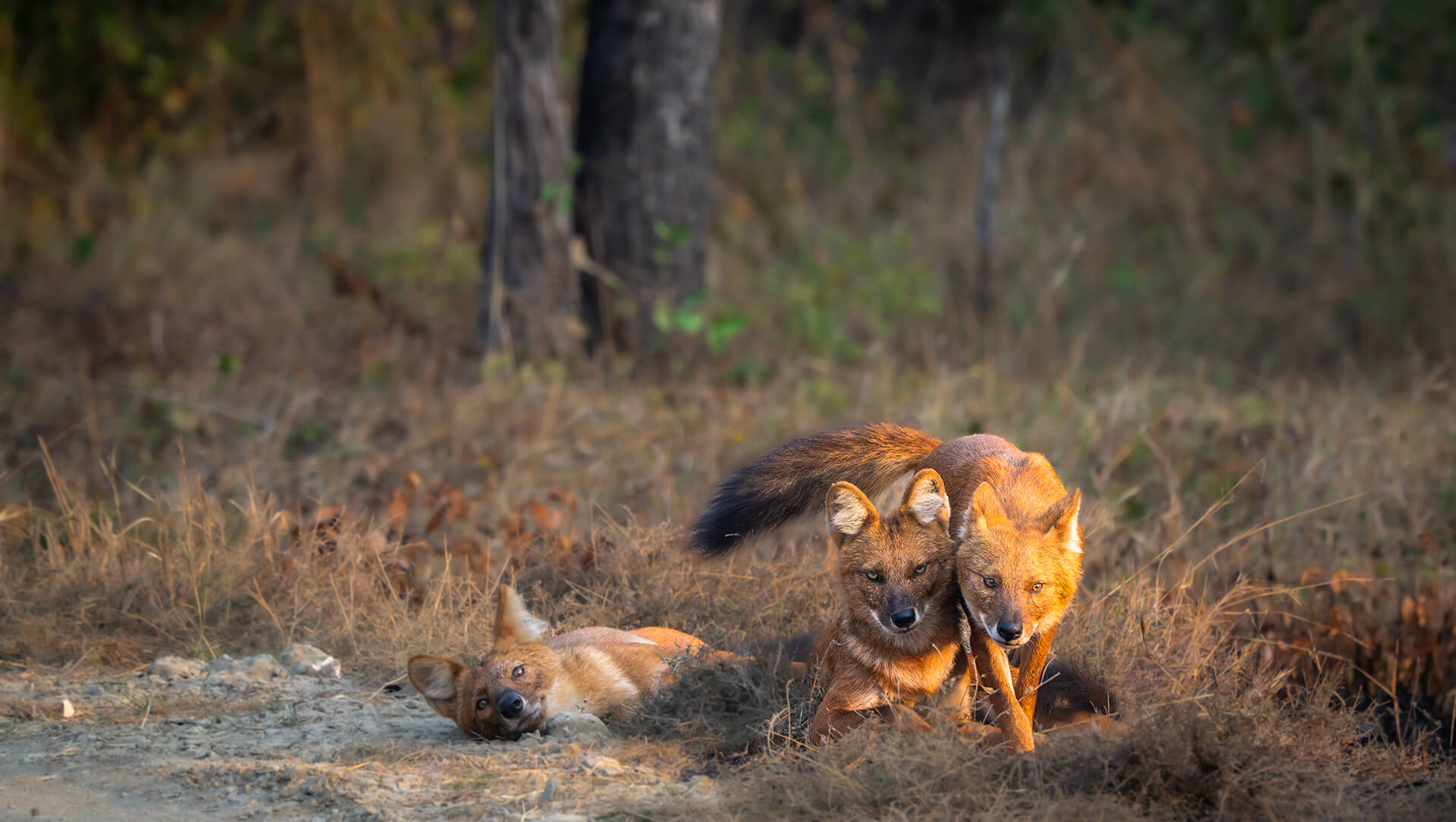
"Indian wolves are still present in the buffer zone. The dhole — the wild dog that Kipling called the Dholes of the Dekkan — has one of its strongest Central Indian populations in Pench. The forest Kipling described is not a reconstruction. It is a continuation."
The Literary
Forest, Alive
Pench records 39 mammal species, 325 bird species, 30 reptile species, and 45 butterfly species — a diversity reflecting the reserve's transitional position between the wetter forests of Central India and the drier teak ecosystems of the Deccan plateau.
Bengal Tiger
Panthera tigris tigris
A healthy, steadily growing population with decades of regulated safari tourism producing well-habituated tigers. Sightings vary dramatically by zone — from open river valley encounters in Turia to teak forest crossings near Totladoh.
Dhole
Cuon alpinus
Pench is one of the best tiger reserves in India for observing coordinated wild dog pack behaviour. High-energy hunting activity across open teak clearings produces some of the most dramatic encounters in Central India.
Indian Leopard
Panthera pardus fusca
Strong population in the denser eastern forest sections and along the Pench River corridor. Dawn drives through Karmajhiri zone frequently reward patient travellers with leopard sightings.
Gaur
Bos gaurus
Impressive numbers grazing at forest edges during early morning and evening drives. Among the most visually striking of Pench's large mammals against the backdrop of open teak clearings.
Sloth Bear
Melursus ursinus
Particularly rewarding during the Mahua flowering season in March and April. Forest clearings near fruiting trees produce extended, behaviour-rich encounters at close range.
Indian Wolf
Canis lupus pallipes
Still present in the Seoni buffer zone — the same wolf territory Kipling used as the basis for the Seeonee pack. A sighting here carries a quality of literary and ecological resonance unavailable anywhere else.
Four-horned Antelope
Tetracerus quadricornis
Rare encounters within dry mixed forests reward attentive guiding. Among the most sought-after specialist sightings in the Central Indian circuit for naturalists who have already accumulated the headline species.
Indian Skimmer
Rynchops albicollis
One of the most photographically striking water birds in India. Present on the Pench river in the dry season, skimming the surface at speed. The Totladoh reservoir in winter holds exceptional waterbird assemblages.
Five zones, five meaningfully different experiences
Pench's zones differ substantially in habitat character, wildlife emphasis, and vehicle density. The government-set carrying capacity table is one of the most transparent in any Indian tiger reserve — and provides an honest guide to what each zone offers.
Turia Zone
The reserve's most productive all-round zone
The Pench river runs through or adjacent to much of the Turia zone, providing the permanent water that concentrates wildlife from February onwards. The forest-river interface produces the most varied single-drive wildlife observations in the reserve — the broadest habitat and wildlife range of any Pench zone. Vehicle carrying capacity of 74 per day is the highest — private vehicle booking with an exclusive permit changes the experience entirely.
Karmajhiri Zone
16 vehicles per day — Pench's most intimate zone
The daily vehicle cap of just 16 makes Karmajhiri Pench's most intimate and least crowded zone. The forest here is denser — the habitat transitions to a more complex, higher-canopy woodland near the Maharashtra boundary. Leopard encounter probability is higher here than in any other Pench zone. For a second or third Pench visit, or for the experienced traveller who values vehicle-to-wildlife encounter ratio above all else, Karmajhiri is the intelligent recommendation.
Jamtara Zone
9 vehicles per day — essentially private
Accessed from Chhindwara district with the lowest vehicle cap in the entire reserve — a figure that, with private vehicle booking, essentially guarantees an exclusive experience. The feeling of having the forest to yourself is as close as any Indian tiger reserve permits during safari season.
Rukhad Zone
Open teak forest — Pench's photographic signature
The open teak forest character creates excellent sightlines and the teak-framed animal portrait is Pench's photographic signature — tigers framed by the vertical columns of mature teak trunks in a way that produces distinctive, memorable imagery unavailable in the dense sal corridors of other Central Indian reserves. 30-vehicle daily cap. Can be combined with a cycling circuit to Rukhad village.
The forest where literary legend and ecological reality converge
Pench is the only place on earth where the wildlife, the landscape, the river, and the literary tradition that made the jungle famous all exist simultaneously — and in the same condition Kipling's sources described.
The Jungle Book Origin
In 1831, a report from the Seoni district described the arrest of a child raised by wolves in a village near the Pench reserve boundary. Kipling absorbed this material alongside the natural history writing of forest officers who knew the Seoni forests in detail — Sterndale, Forsyth, Brander — and constructed Mowgli's world from the combination of documented wildlife ecology and documented human presence that these specific forests represented. Pench is not a reserve that borrowed a literary association for marketing purposes. It is the place where the association originated.
The BBC Attenborough Documentary
Tiger: Spy in the Jungle (2008), narrated by Sir David Attenborough, was filmed specifically in Pench because the reserve's relatively open forest and accessible river valley provided camera access that no other Indian reserve could match for sustained intimate tiger observation. The documentary remains the most widely distributed footage of wild tiger behaviour ever filmed. It was made here, in the Turia zone, over a three-year production period.
The Totladoh Reservoir
The Pench river's Totladoh reservoir at the southern end creates a permanent water body of significant size — the gathering point for all wildlife across the dry season. By April, the Totladoh shoreline provides the most reliable wildlife observation in Central India: large predators, prey, and waterbird assemblages using the same resource simultaneously. A boating experience on the reservoir adds a water safari component absent in Kanha or Bandhavgarh.
The optimal window
Pench's seasonal rhythm follows the broader Central Indian pattern, with the Totladoh reservoir adding a distinctive dry-season dynamic as wildlife concentrates progressively toward the water.
The reserve reopens around October 15 after the monsoon closure (July 1–October 14). Lush green forests, flowing river systems, and dramatically refreshed landscapes. Migratory birds begin arriving around Totladoh Reservoir; the forest carries an extraordinary sense of post-monsoon vitality. Tiger sightings begin immediately. Tall green grass can slightly reduce visibility, but the atmosphere is exceptional.
Pench's prime safari season. Cool mornings (1–25°C), clear light conditions, fully open forests, highly active tiger and leopard movement, strong dhole pack activity, and peak migratory bird diversity around Totladoh Reservoir. January is especially sought after by serious wildlife photographers for the combination of cold-morning predator activity and outstanding waterbird concentrations. Book 6–9 months in advance.
Pench's late-season wildlife peak. Rising temperatures (22–40°C) concentrate animals around shrinking water sources and dramatically improve visibility across the dry teak landscape. The Mahua flowering season attracts sloth bear to forest clearings. The receding Totladoh Reservoir concentrates tigers, gaur, sambar, crocodiles, and waterbirds in densities rarely seen during winter. Best months for extended animal observation.
Temperatures rise sharply above 40°C and the reserve gradually enters pre-closure conditions before the annual monsoon closure. Late May can produce exceptional wildlife concentrations for experienced travellers comfortable with challenging conditions. The reserve closes July 1.
Annual monsoon closure (July 1–October 14). The ecosystem regenerates as rivers flood and the forest recovers. The ideal planning window for securing the following season's preferred zone permits and lodge availability — particularly Karmajhiri, which books quickly.
We know Pench.
The question is when.
We do not run group itineraries to Pench. Every Safari Acacia guest receives zone selection intelligence, a private vehicle programme, and an expert guide who understands the literary and ecological context that makes Pench genuinely distinct.