Chitwan National Park
Nepal's First and Finest Wildlife Sanctuary
952 square kilometres of Terai lowland where a rhino population of under 100 individuals in 1968 has recovered to over 750 today, alongside gharial, tiger and the living culture of the Tharu who share the forest edge.
Begin Your Chitwan SafariNational Park
Population
Sauraha Zone
Bird Species
Heritage Site
The standard narrative of South Asian wildlife travel is organised entirely around India, and Nepal is treated as an afterthought, a trekking destination that happens to have a national park attached. This is a significant misreading. Chitwan is one of the most biodiverse protected areas in Asia, and its one horned rhinoceros recovery is among the most complete conservation stories in the world.
What Chitwan Is
Nepal's first national park, and one of Asia's richest
Chitwan National Park covers 952.63 square kilometres of subtropical Terai lowland across four districts, Chitwan, Nawalparasi, Parsa and Makwanpur, sitting at the base of the Himalayan foothills between 100 and 815 metres elevation. Nine entry gates access the park from different directions. The Sauraha gate is the primary visitor entry point for the eastern tourist hub, while the western Amaltari and Kujauli gates lead into the quieter sections where several of the park's most celebrated luxury lodges are positioned.
The park was established in 1973 by King Mahendra as Nepal's first national park, a direct response to a rhino population that had collapsed to under 100 individuals through habitat loss and poaching. UNESCO World Heritage designation followed in 1984, and the Beeshazari Tal wetland system in the buffer zone holds a further Ramsar Site listing, reflecting Chitwan's importance for river systems and migratory bird flyways as much as for its megafauna.
The Great Rhino Recovery
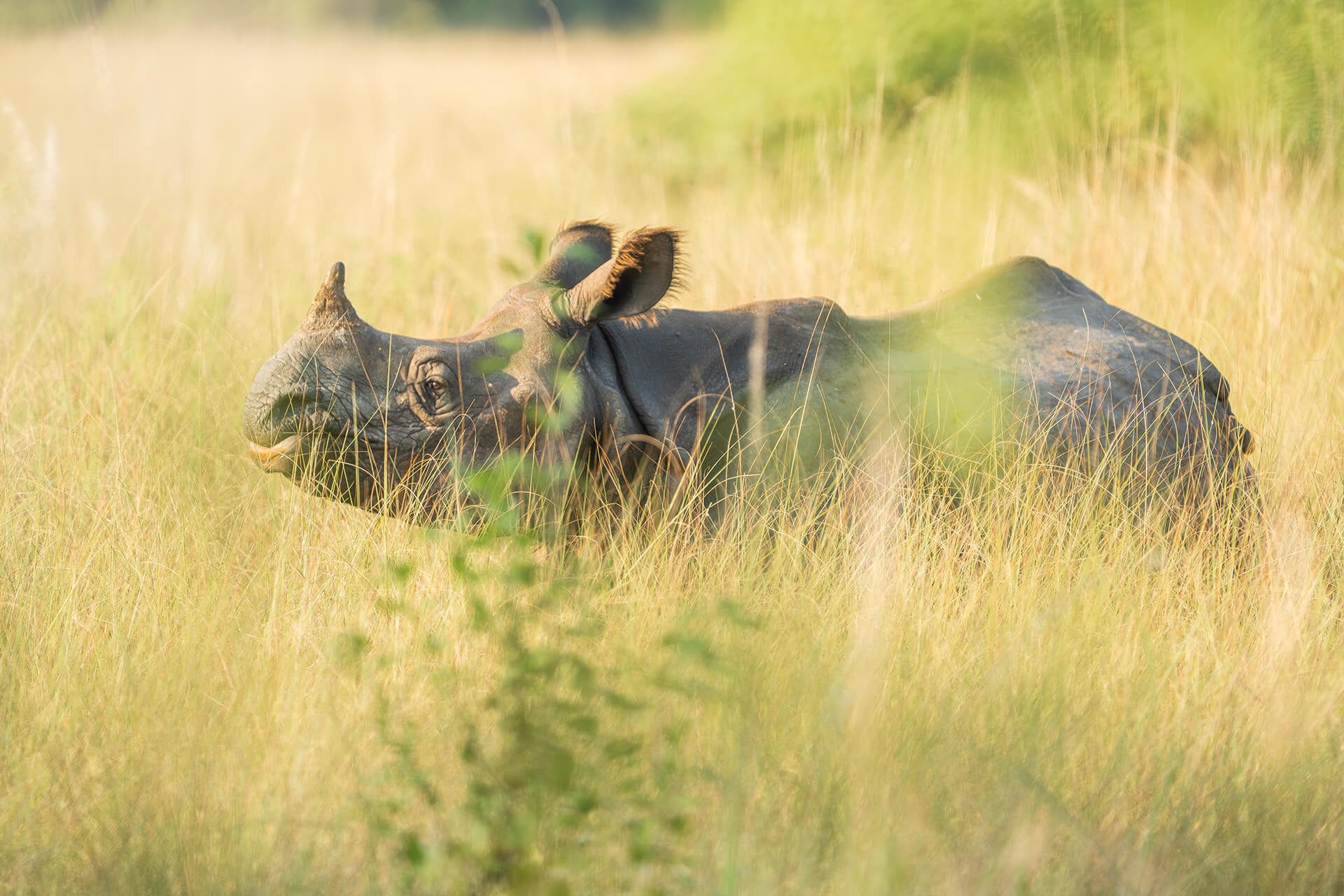
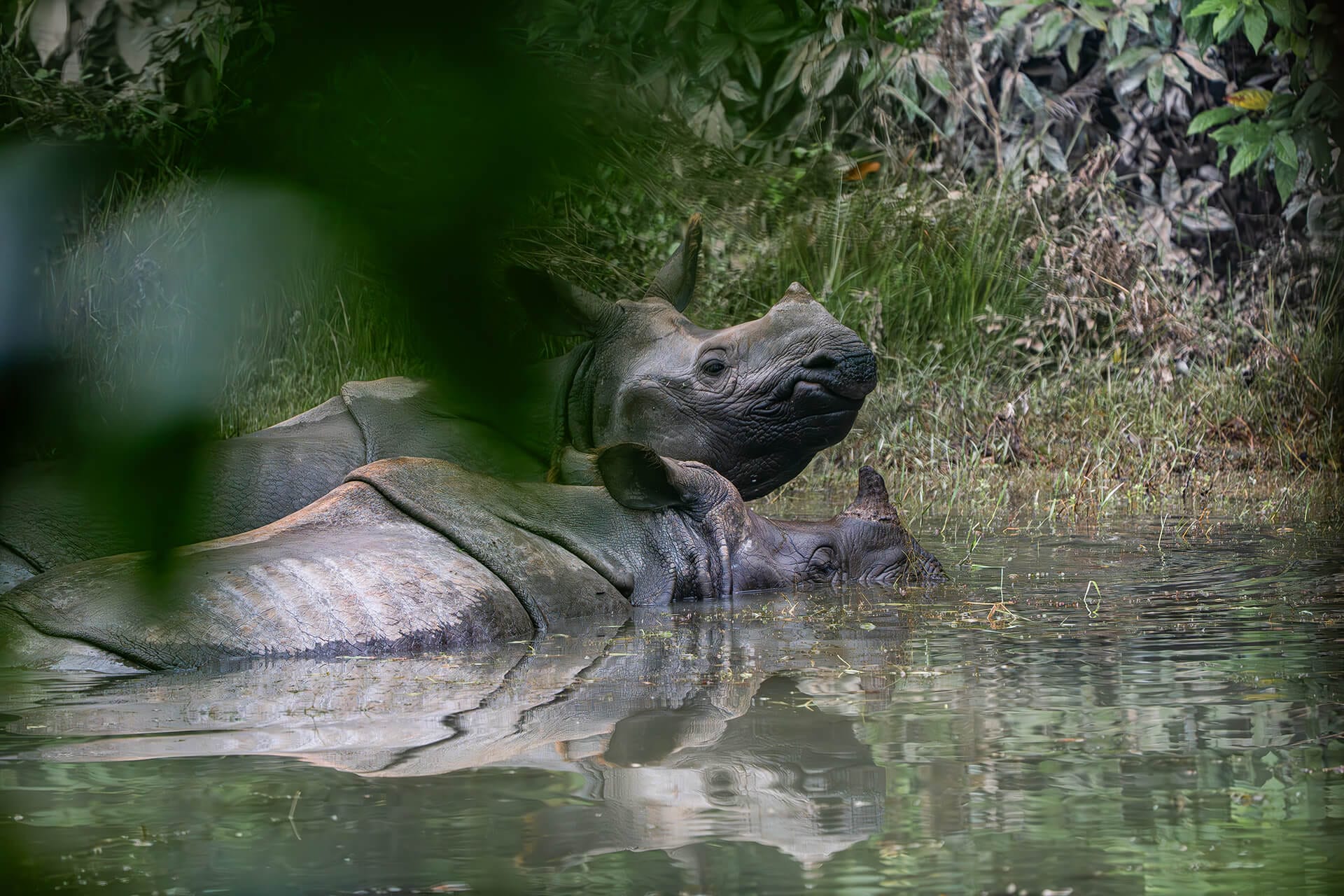
In 1968, a census found fewer than 100 one horned rhinoceros remaining in Nepal, a population collapse driven by habitat loss and systematic poaching for the illegal horn trade. Chitwan's establishment in 1973 was, in significant part, a direct response to this crisis. Anti poaching operations supported by the Nepal Army, deployed here since the park's founding, reduced poaching to near zero for sustained periods, while habitat management and a monitoring programme combining camera traps and radio collars tracked the population's recovery year by year.
Today Chitwan's rhino population exceeds 750 individuals, more than seven times its 1968 low, in a landscape that has not significantly expanded since. A jeep safari in the Sauraha zone carries a documented 90 percent probability of a close rhino encounter, a figure that exceeds tiger encounter probability at even the best Central Indian reserves. This is not a distant silhouette in elephant grass. It is, in many cases, a two tonne animal at close range in open terrain.
The rhino here is not a distant silhouette in elephant grass. It is, in many cases, a two tonne prehistoric seeming animal at close range, raising its head to assess the vehicle in a way that makes a face to face encounter feel genuinely charged.
Living Culture
The Tharu, and why Chitwan's culture is inseparable from its wildlife
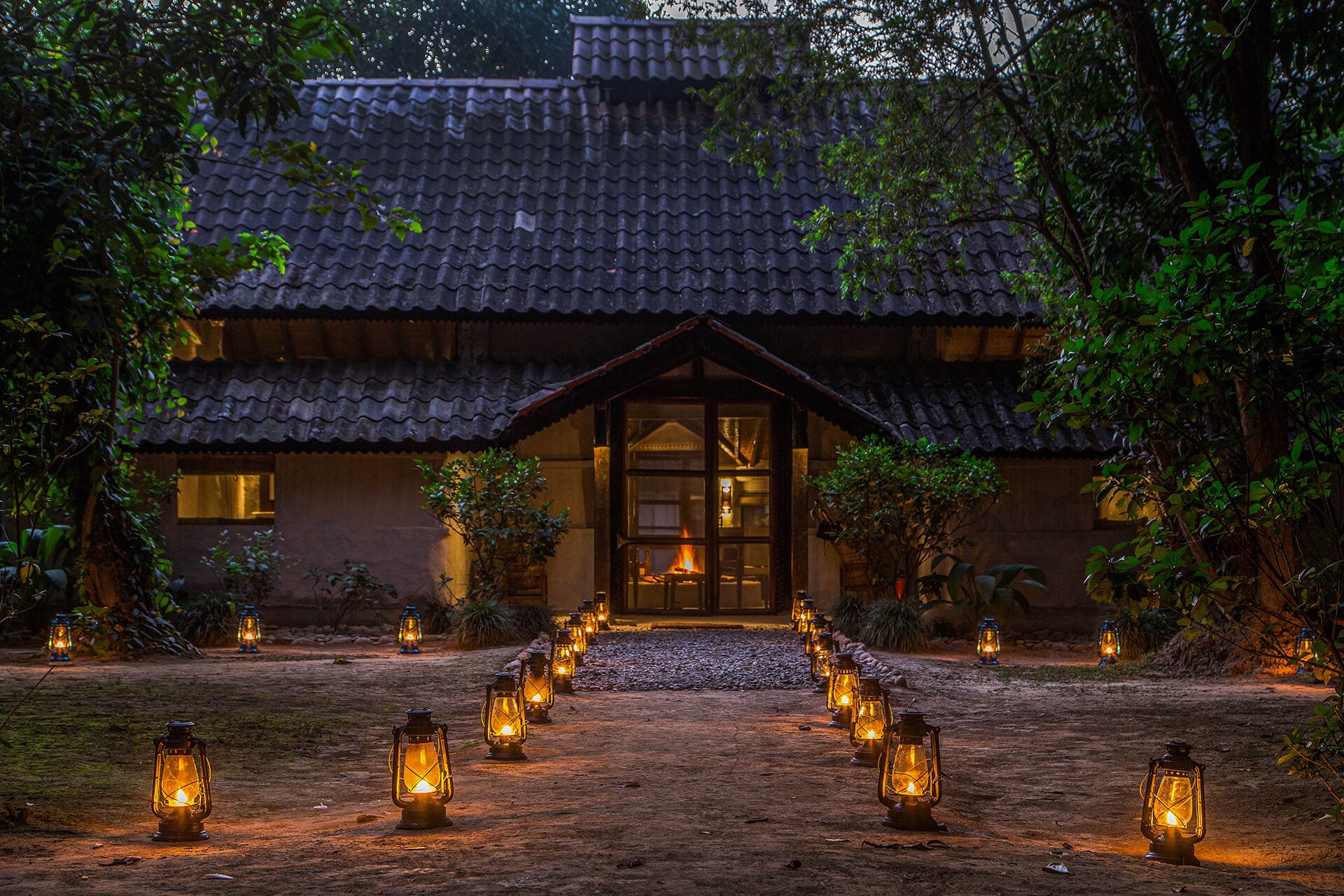
The Tharu are the indigenous people of the Terai, and have inhabited the Chitwan valley for centuries, developing an architectural tradition of longhouse compounds built from mud, bamboo and thatch, with a central courtyard as the household's social heart. Tiger Tops Tharu Lodge, the original and most celebrated lodge on the western park boundary, was built directly in this tradition, using locally sourced materials and Tharu building techniques rather than a generic luxury vernacular.
Guided village walks, Tharu dance performances, the Danda Nach stick dance, the Ago Nach fire dance and the Mayur Nach peacock dance, and interactions with craftspeople working in the Mithila painting tradition, are offered by Chitwan's best lodges as an integrated part of the wildlife programme, not entertainment appended to it. A Chitwan visit that does not include time with the Tharu community is an incomplete Chitwan visit.
Ask About Tharu Cultural Programming →The Wildlife of Chitwan
68 mammal species, 544 birds, and one of the most complete Terai ecosystems remaining in Asia.
Bengal Tiger
Over 100 individuals within the core zone, though the dense sal forest makes sightings less frequent per drive than at Bandhavgarh or Tadoba.
Greater One Horned Rhinoceros
Recovered from under 100 individuals in 1968 to over 750 today, with a 90 percent encounter rate in the Sauraha zone.
Gharial
A critically endangered, long snouted fish eater reliably observed from canoe on the Narayani river.
Mugger Crocodile
Frequently seen basking along the sandy banks of the Rapti and Narayani rivers.
Asian Elephant
Wild herds move through the Amaltari grasslands at dawn, alongside the resident ethical elephant programme herd at Tiger Tops.
Gangetic River Dolphin
Critically endangered and rarely seen, a brief surfacing on a canoe safari ranks among the reserve's most extraordinary sightings.
Sloth Bear
Seen regularly along forest edges during early morning and evening safari drives.
Bengal Florican
One of Asia's rarest bustards, found in Chitwan's grasslands and a specific draw for serious birders.
Chitwan pairs Nepal's greatest rhino recovery story with a living Tharu culture at the forest edge.
Signature Chitwan Experiences
Four activities, each revealing a different layer of the Terai, best combined across a three to four day stay.
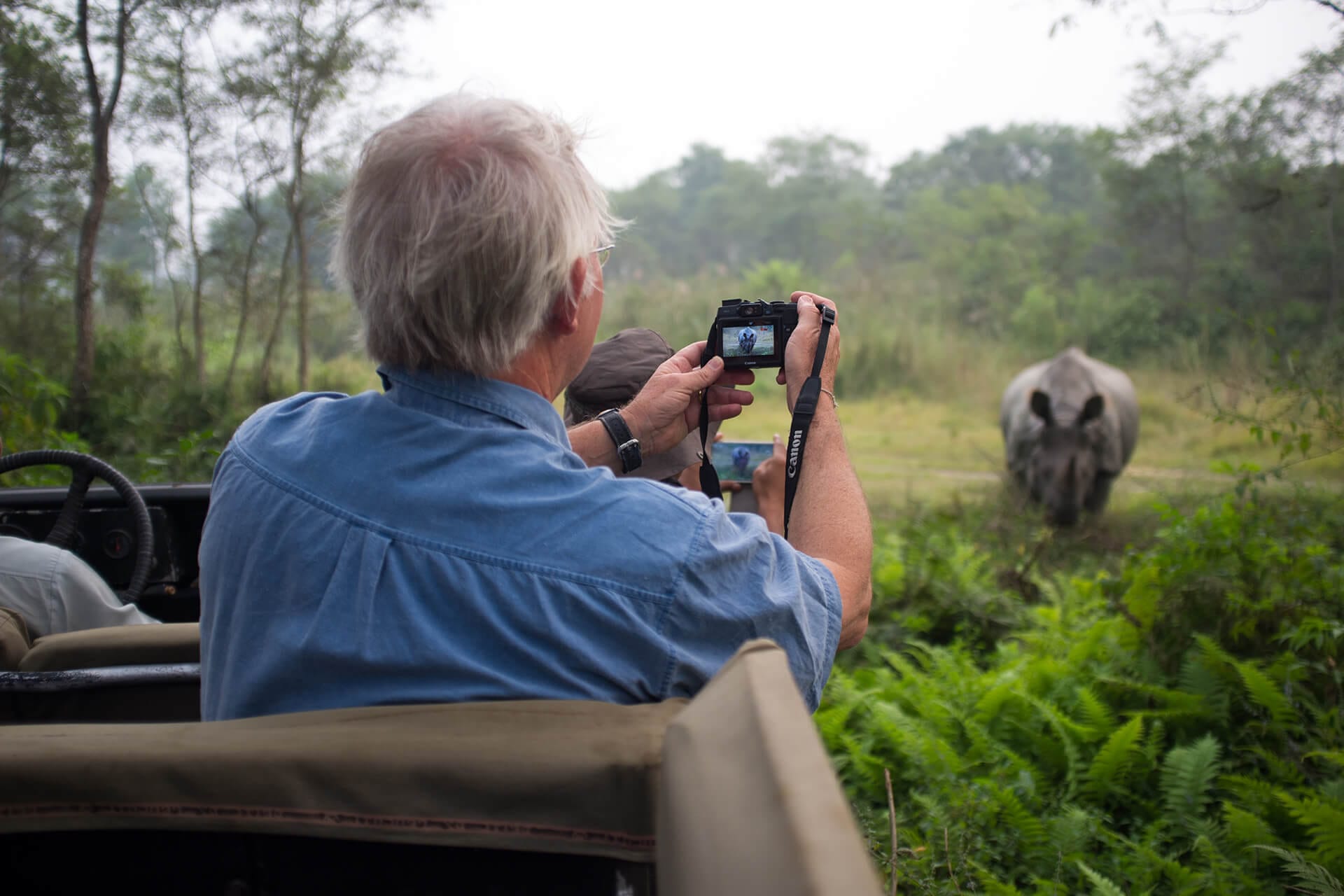
Jeep Safari
Half DayOpen top jeep drives into the sal forest, elephant grass and floodplain meadows. Rhino is the headline encounter here. Tiger, when it appears, is the exceptional gift.
Enquire About This Experience →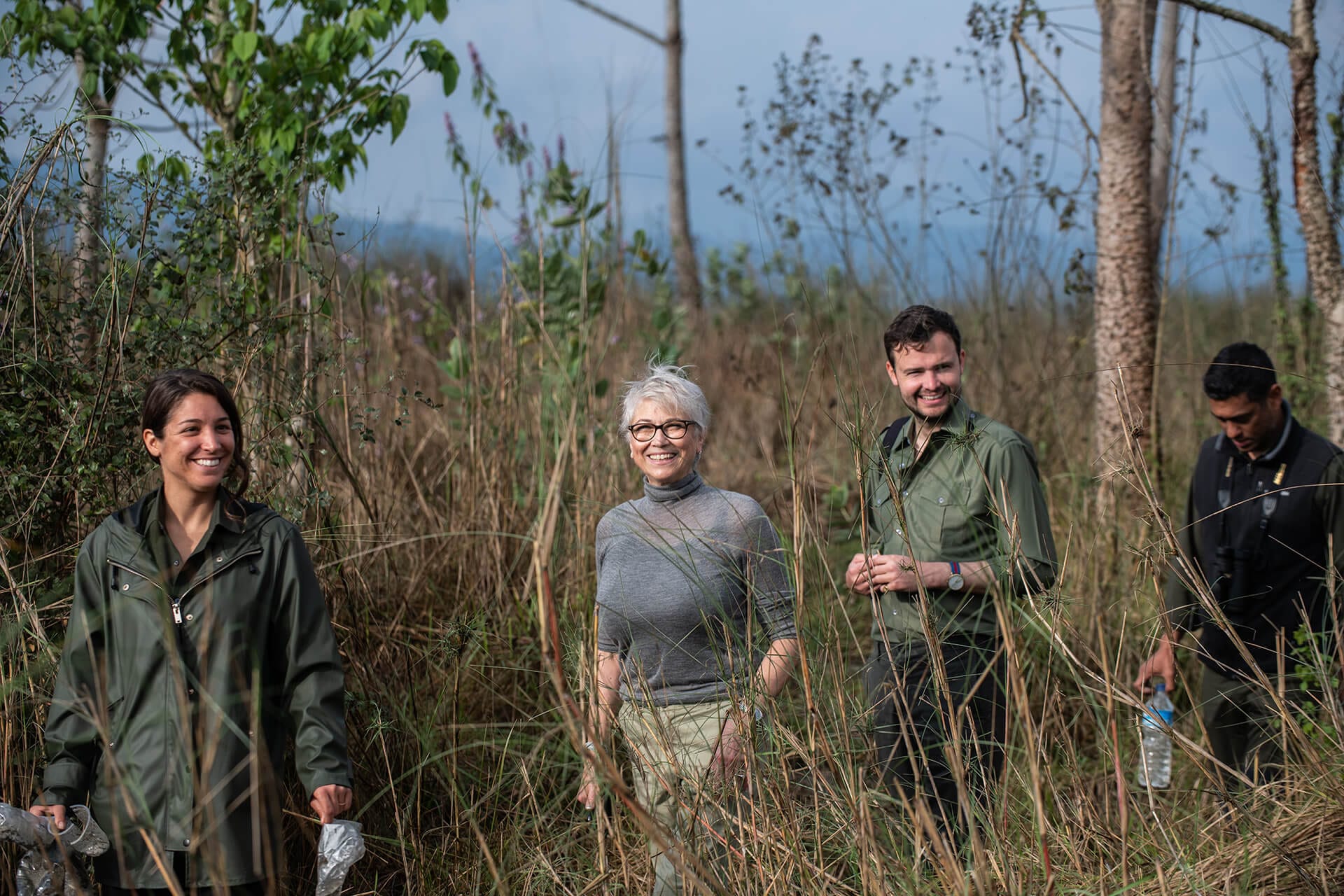
Walking Safari
3-4 HoursNepal is one of the few countries in Asia where walking safaris inside a national park are legally permitted. Conducted with an armed forest guide and a maximum group of six, an early morning walk moves at an observation pace no vehicle format can replicate.
Enquire About This Experience →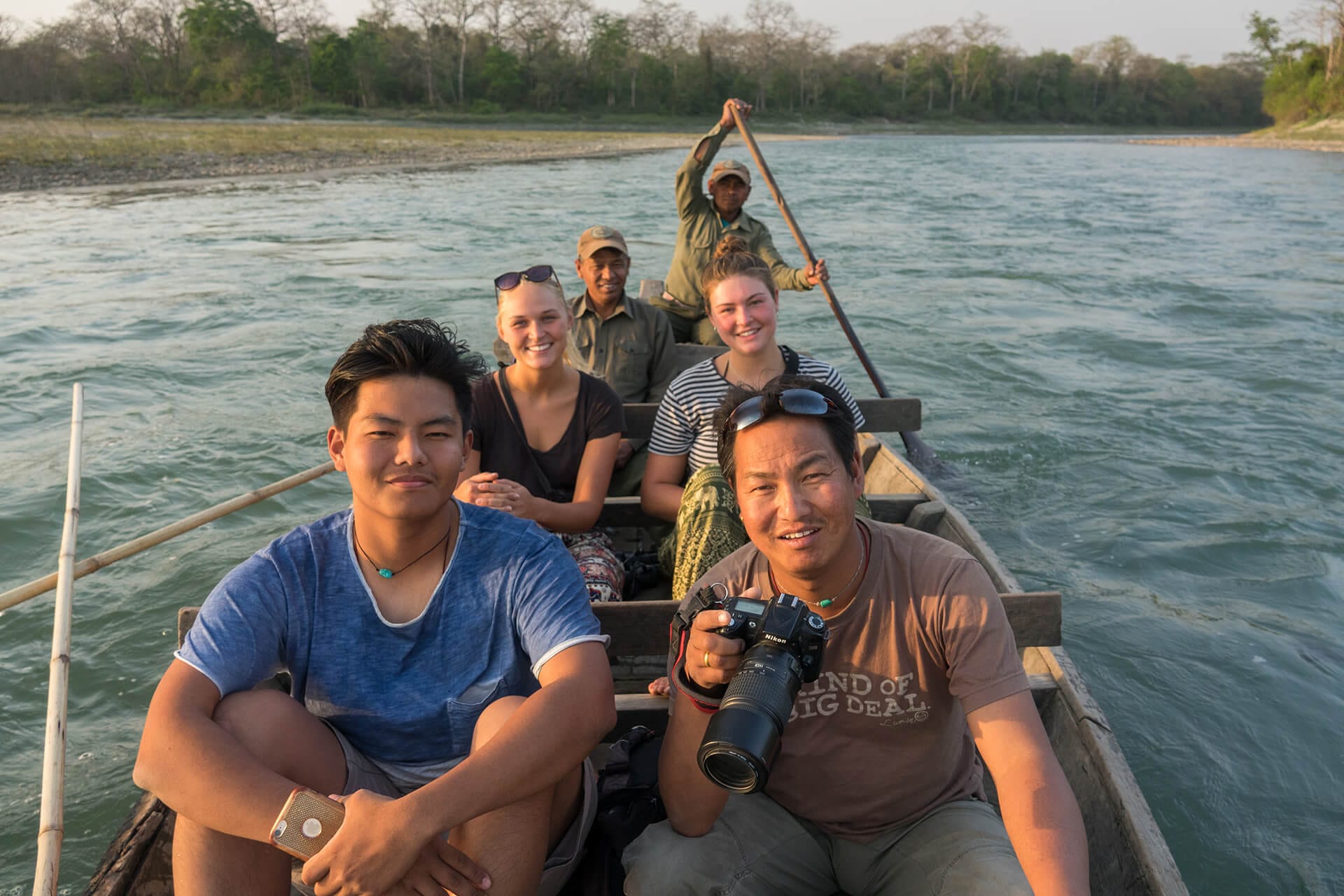
Canoe Safari on the Rapti
Half DayA traditional dugout canoe drifting silently with the current, approaching sandy banks where gharial and mugger crocodile bask, with the best waterbird observation in the park along the way. At dusk, the Annapurna range is occasionally visible above the tree line.
Enquire About This Experience →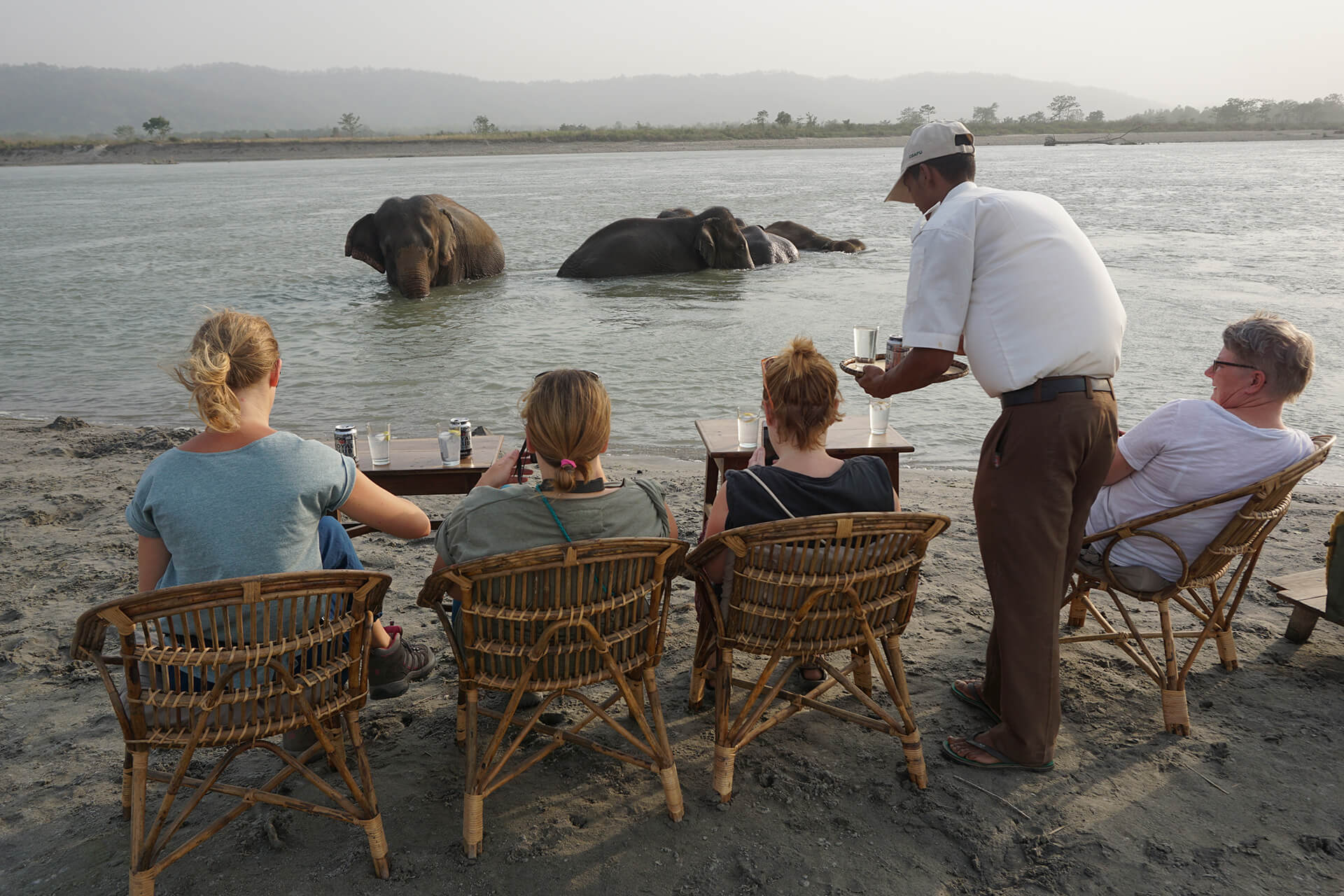
Ethical Elephant Experience
Half DayTraditional elephant back safaris have been phased out at Chitwan's best lodges. What replaced them is richer, guests accompany mahouts and their herd through forest feeding and river bathing without riding, an encounter made possible precisely by refusing the riding format.
Enquire About This Experience →Chitwan versus India's tiger reserves
Chitwan does not exist on the same experiential axis as the classic Central India safari circuit. It is not a substitute for Bandhavgarh's tiger density or Kanha's ecological completeness. What it offers instead is a fundamentally different combination, one of the best accessible rhino populations in South Asia, river based encounters with gharial and Gangetic dolphin that only Panna's Ken River comes close to matching, legally permitted walking safaris comparable only to Satpura, and a living Tharu culture integrated into the visitor experience in a way few Indian circuits sustain.
The most useful way to think about Chitwan is as a highly complementary chapter rather than a competing one. It pairs naturally with Bardia to the west for a full Nepal wildlife circuit, or with Kaziranga, Bandhavgarh, Kanha, Satpura or Panna within a broader South Asia journey. A short flight from Kathmandu also allows Chitwan to combine with Himalayan trekking or Buddhist heritage circuits in ways no Indian wildlife destination can replicate.
Best Time to Visit Chitwan
Each season transforms the Terai landscape, the rivers and the safari atmosphere in a different way.
Getting to Chitwan
A short flight or road transfer once you land in Kathmandu, timed around the rest of your Nepal itinerary.
The standard route
Fly into Kathmandu, then a 20 minute domestic flight to Bharatpur or an approximately 150 kilometre road transfer, followed by a short drive to the quieter parts.
Combining with Bardia
Chitwan pairs naturally with Bardia National Park to the west, reachable by a further domestic flight or road transfer via a night stay at Lumbini, for guests who want both the classic rhino experience and Nepal's wildest tiger forest.
How long to stay
Three to four days is our standard recommendation, enough time for jeep safari, walking safari, canoe safari and genuine Tharu cultural programming.
Tiger Tops Tharu Lodge
Chitwan's original wildlife lodge, on the western park boundary, built directly in the Tharu architectural tradition.
Tiger Tops Tharu Lodge
Operating since the early 1980s on the site of a 1964 hunting camp, Tiger Tops Tharu Lodge was built in genuine Tharu longhouse style, mud, bamboo and thatch, rather than a generic luxury vernacular. It has been Nepal's most prominent advocate for ethical elephant practice, with a resident herd of 12 Asiatic elephants living in an 18-acre enclosure within the lodge grounds.
- Tharu longhouse architecture, built from local materials
- Resident herd of 12 Asiatic elephants, no riding
- Guided jeep, walking, canoe and cultural programming included
Chitwan Intelligence
Questions we are asked first
Answered with the specificity a generic travel site rarely offers.
Planning & Access
How do I get to Chitwan?
Fly into Kathmandu, then take a 20 minute domestic flight to Bharatpur or a road transfer of approximately 150 kilometres, followed by a short drive to your lodge. We arrange all transfers as part of your itinerary.
What is the best time to visit Chitwan?
November through February is prime winter safari season, with the most balanced wildlife experience overall. October to November and February to April are excellent alternatives with fewer crowds. July to September is monsoon season and not recommended for a first visit.
Can Chitwan be combined with Bardia or India?
Yes, and we recommend it. Chitwan pairs naturally with Bardia National Park to the west for a complete Nepal circuit, or with Bandhavgarh, Kanha, Satpura, Panna or Kaziranga within a broader South Asia wildlife journey.
Is a private guide worth the extra cost?
We think so, without exception. A private guide sets the pace around your own interests on jeep, walking and canoe safari, and can be requested with a specific focus, birding or photography among them.
Wildlife & Activities
Will I see a tiger at Chitwan?
Possibly, but the rhino is the headline encounter here, with a documented 90 percent probability on a jeep safari. Tiger sightings occur but are less frequent per drive than at Bandhavgarh or Tadoba, and are best treated as an exceptional bonus rather than the primary goal.
Is the walking safari safe?
Yes. Walking safaris are conducted with an armed forest guide and a naturalist, a maximum group size of six, in designated buffer zone sections and certain core zone areas, typically lasting three to four hours in the early morning.
Is elephant riding offered at Chitwan?
Not at the lodges we work with. We phased out riding in favour of an ethical elephant experience in which guests accompany mahouts and their herd through forest feeding and river bathing without riding.
Is Chitwan good for birdwatching?
Exceptionally. Chitwan records 544 bird species, more than any other protected area in Nepal, including the endangered Bengal florican and the globally vulnerable Indian skimmer. Serious birders should plan a standalone birding morning with a specialist guide.
Nepal's rhino recovery is not a museum piece.
It is happening in front of you.
Every Safari Acacia Chitwan programme is privately built, pairing jeep, walking and canoe safari with genuine Tharu cultural immersion.