Bardia National Park
Nepal's Largest, Wildest, Least Visited Park
968 square kilometres of untouched Terai wilderness holding Nepal's second largest tiger population, guided by fewer people who know more about specific individual animals than almost anywhere else in the country.
Begin Your Bardia SafariNational Park
Population in Nepal
Faunal Species
Bird Species
Rhino Population
Bardia is everything Chitwan has, except the crowds, the infrastructure density and the sense that the wildlife exists within a managed tourism system rather than a functioning, self determined wilderness. It holds Nepal's second largest tiger population, and according to the guides who work both parks, the highest tiger encounter probability of any park in the country.
What Bardia Is
Nepal's largest and most undisturbed wilderness
Bardia National Park covers 968 square kilometres along the eastern bank of the Karnali River in western Nepal, protected in stages from 1969 onward before receiving full national park status in 1988. The park headquarters at Thakurdwara village is the primary visitor hub. Approximately 70 percent of the park is covered in sal forest, with the remaining 30 percent comprising grassland, savannah and the critically important riverine forest along the Karnali-Geruwa and Babai corridors, across eight distinct recorded ecosystem types.
The region carries an unusually layered history. Lost to the East India Company through the Sugauli Treaty of 1815, it was returned to Nepal in 1860 in recognition of Nepal's role in suppressing the 1857 Indian independence movement, and is still called Naya Muluk, New Country, by locals today. British administration, Rana era hunting grounds and post independence conservation designation give Bardia a political and cultural biography as complex as its ecology.
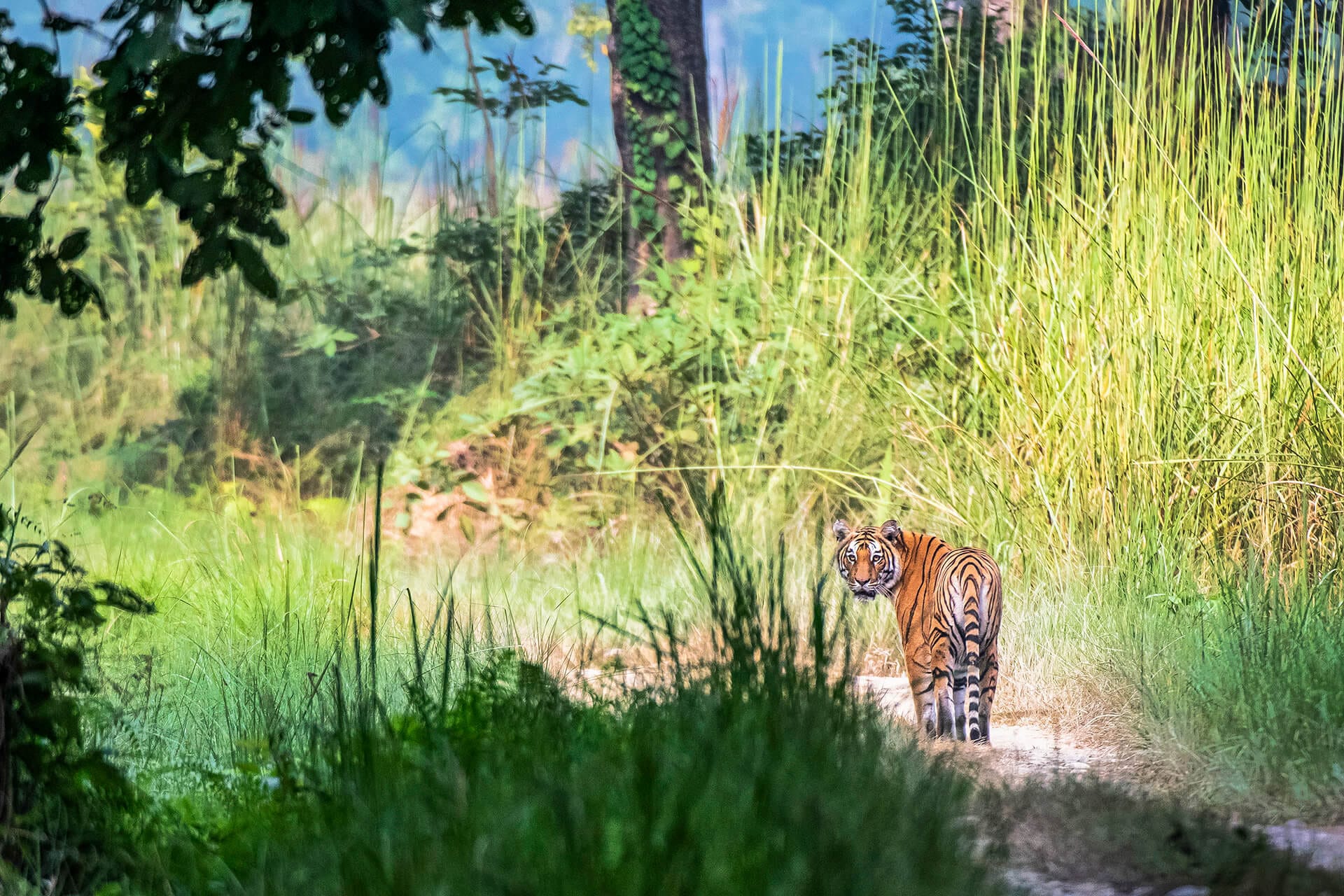
Why Bardia Gives You Nepal's Best Tiger Encounter
Bardia's tiger population, Nepal's second largest after Chitwan, inhabits a forest of 968 square kilometres that receives a fraction of Chitwan's annual visitor numbers. The guides who work Bardia's core zone have built relationships with specific individual tigers across years of low pressure observation. The animals here tolerate vehicles at appropriate distances without having adapted to the tourist convoy dynamic that softens the wild edge of more visited reserves.
The grassland forest mosaic along the Karnali floodplain, the interface between tall elephant grass and sal forest interior, is the most productive tiger habitat in the park. A drive here, with an experienced guide, produces a quality of positioned encounter that higher volume operations rarely replicate.
A tiger encounter at Bardia is a cleaner subject, an animal doing what tigers do, without the slight behavioural modification that comes from years of being at the centre of a jeep concentration.
Conservation at Bardia
A rhino population rebuilt one translocation at a time
Bardia's rhino population was reintroduced from Chitwan beginning in 1986, one of Nepal's most important conservation translocation programmes. Despite severe poaching losses in the early 2000s, enhanced anti poaching protection and habitat management helped the population recover strongly, with more than 100 rhinos now distributed across the Karnali floodplain and Babai Valley ecosystems.
The park's elephant population traces back to founding bulls including Raja Gaj, a mammoth like individual whose genetics helped establish Bardia's now substantial wild herd. The Babai Valley itself, resettled and left to regenerate since 1984, has become what ecologists describe as prime wildlife habitat, a rewilded floodplain returning to something approaching its pre settlement character.
Ask About the Bardia Conservation Story →The Wildlife of Bardia
642 recorded faunal species, including 19 of Nepal's 39 legally protected animals, in the country's least pressured major reserve.
Bengal Tiger
Nepal's second largest tiger population, with many individuals recognised across multi year observation histories by expert local guides.
Greater One Horned Rhinoceros
Reintroduced from Chitwan since 1986, with more than 100 individuals across the Karnali floodplain and Babai Valley.
Asian Elephant
Wild herds descended from founding bulls including Raja Gaj move through the floodplain at dawn and dusk.
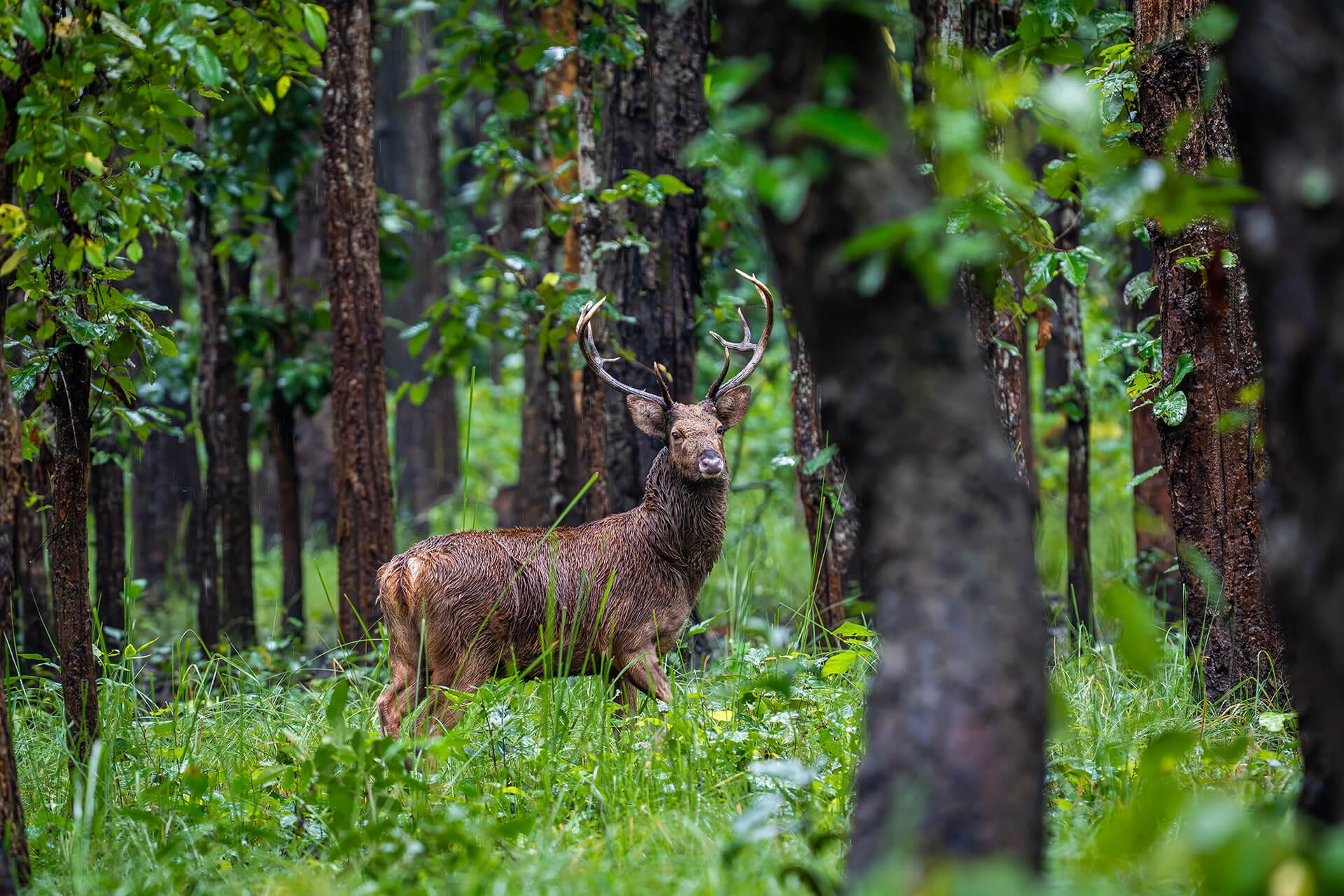
Barasingha
Mature stags display full antler growth across the Karnali grasslands each winter, comparable to the swamp deer story at Kanha.
Gharial
Documented in the Karnali-Geruwa river system, framed by the Siwalik Hills on a dawn river safari.
Gangetic River Dolphin
One of the rarest freshwater cetaceans on earth, present in both the Karnali and Geruwa rivers.
Bengal Florican
Bardia's grasslands are among Nepal's most important remaining habitats for this critically endangered bustard.
Rusty Spotted Cat
One of the world's smallest wild cats, documented here since its first confirmed park record in 2012.
Bardia rewards the traveller who has already done Chitwan, and wants Nepal without the tourism overlay.
Signature Bardia Experiences
The most complete activity range of any Nepal wildlife destination, at a vehicle density unmatched anywhere else in the country.
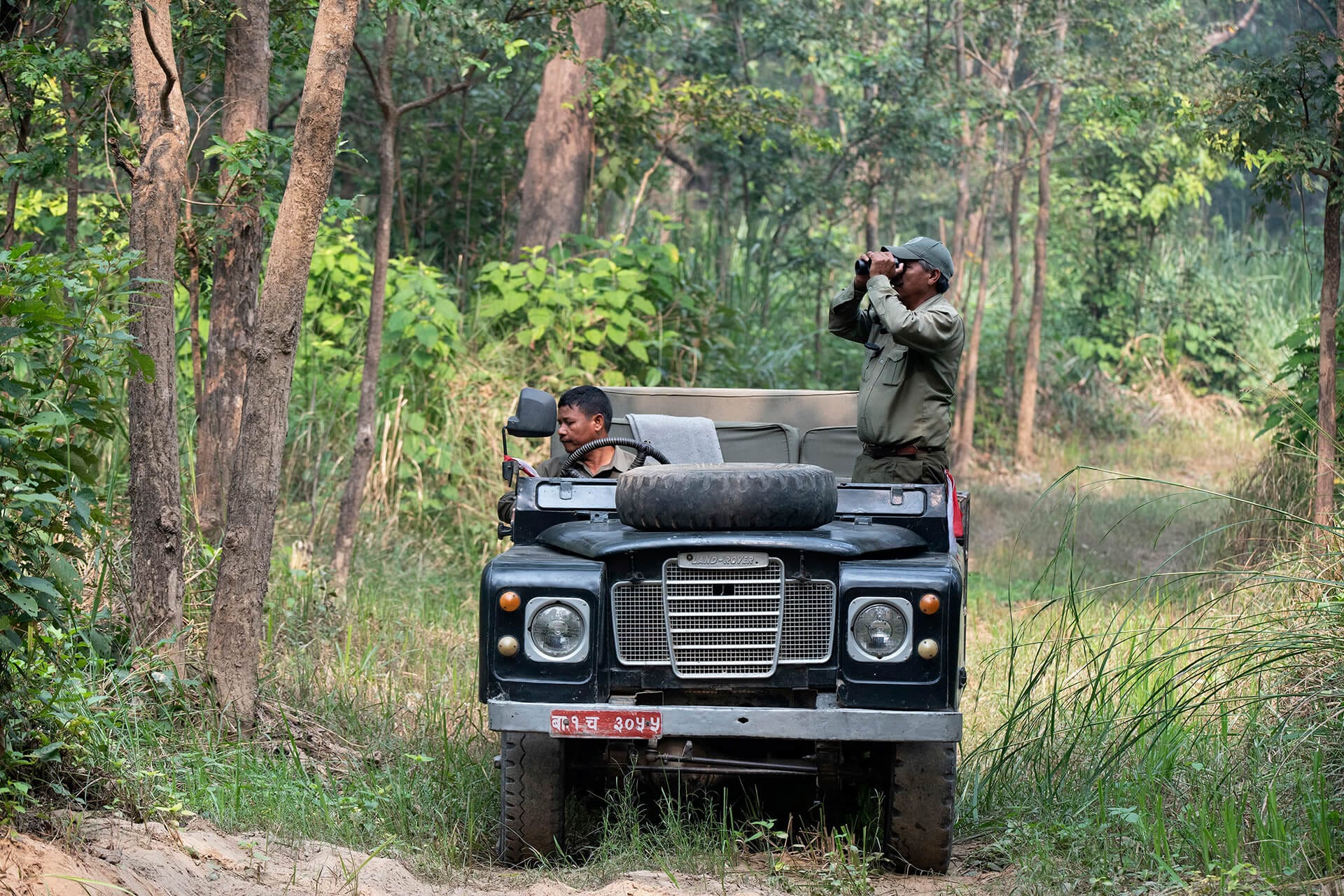
Jeep Safari
Half DayDrives through tall elephant grass, open riverine grassland and sal forest edge produce the highest tiger and rhino encounter probability in the park. Early morning drives are the most productive for tigers, late afternoon for elephant herds at the river.
Enquire About This Experience →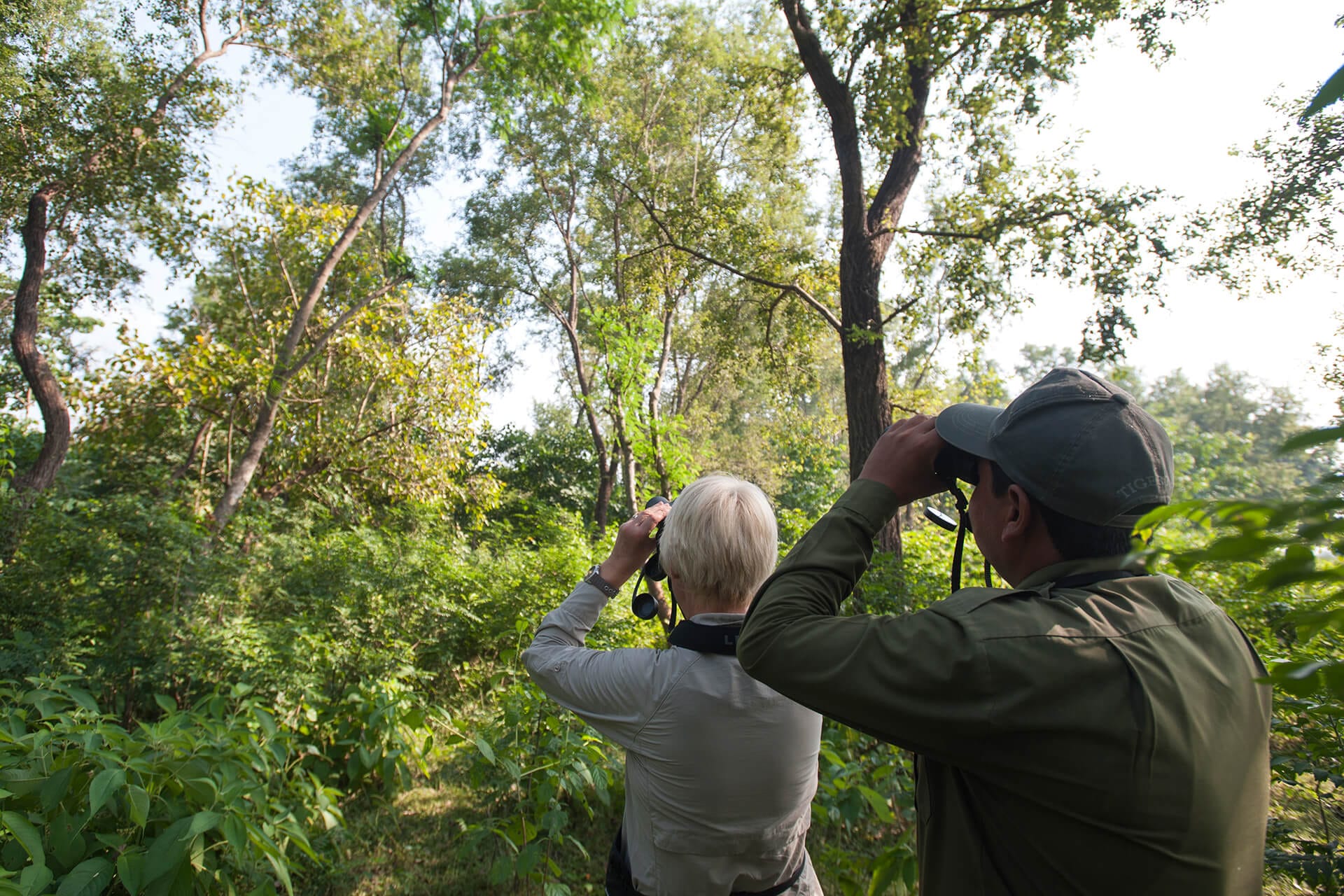
Walking Safari
3-4 HoursGuided walks in the sal forest and river margin, with an armed forest guard and a maximum group of six, read pugmarks in the river sand and alarm calls across the grassland at a pace no vehicle can match.
Enquire About This Experience →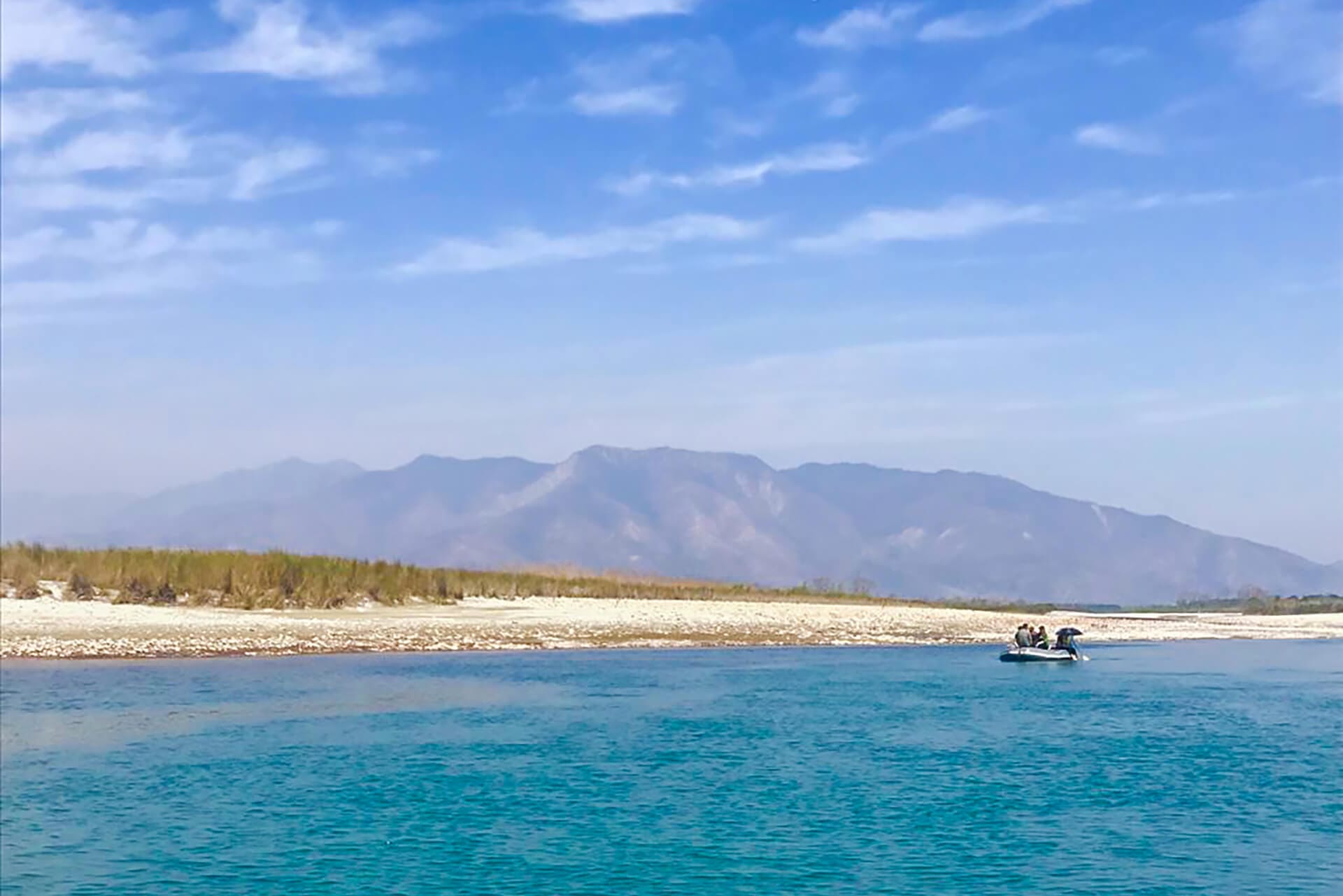
Karnali River Safari
Half DayA dawn boat session drifting past sandbanks where gharial bask, with the Siwalik Hills above and the Gangetic dolphin surfacing occasionally in the current. Wider and more dramatic than the Rapti at Chitwan.
Enquire About This Experience →Best Time to Visit Bardia
Each season transforms the Karnali floodplain, sal forest and grasslands into a distinctly different safari environment.
Getting to Bardia
Bardia's remoteness is precisely what protects it. Getting there takes a little more planning than Chitwan.
The standard route
From Kathmandu, fly domestically to Nepalgunj followed by a road transfer to Thakurdwara, or arrange a longer overland transfer. An approach from India's Uttar Pradesh border is also possible for guests already travelling through northern India.
Combining with Chitwan
Most guests visit Bardia after Chitwan, using the contrast between the two parks to understand the full range of what Nepal's wildlife travel can offer, from managed rhino encounters to genuinely undisturbed tiger habitat.
How long to stay
Three to four days is our standard recommendation, allowing time for jeep, walking and Karnali river safari across the varying conditions of dawn and dusk drives.
Tiger Tops Karnali Lodge
The forest edge property that pioneered ethical wildlife walking in Nepal, positioned for the closest private access to Bardia's core zone.
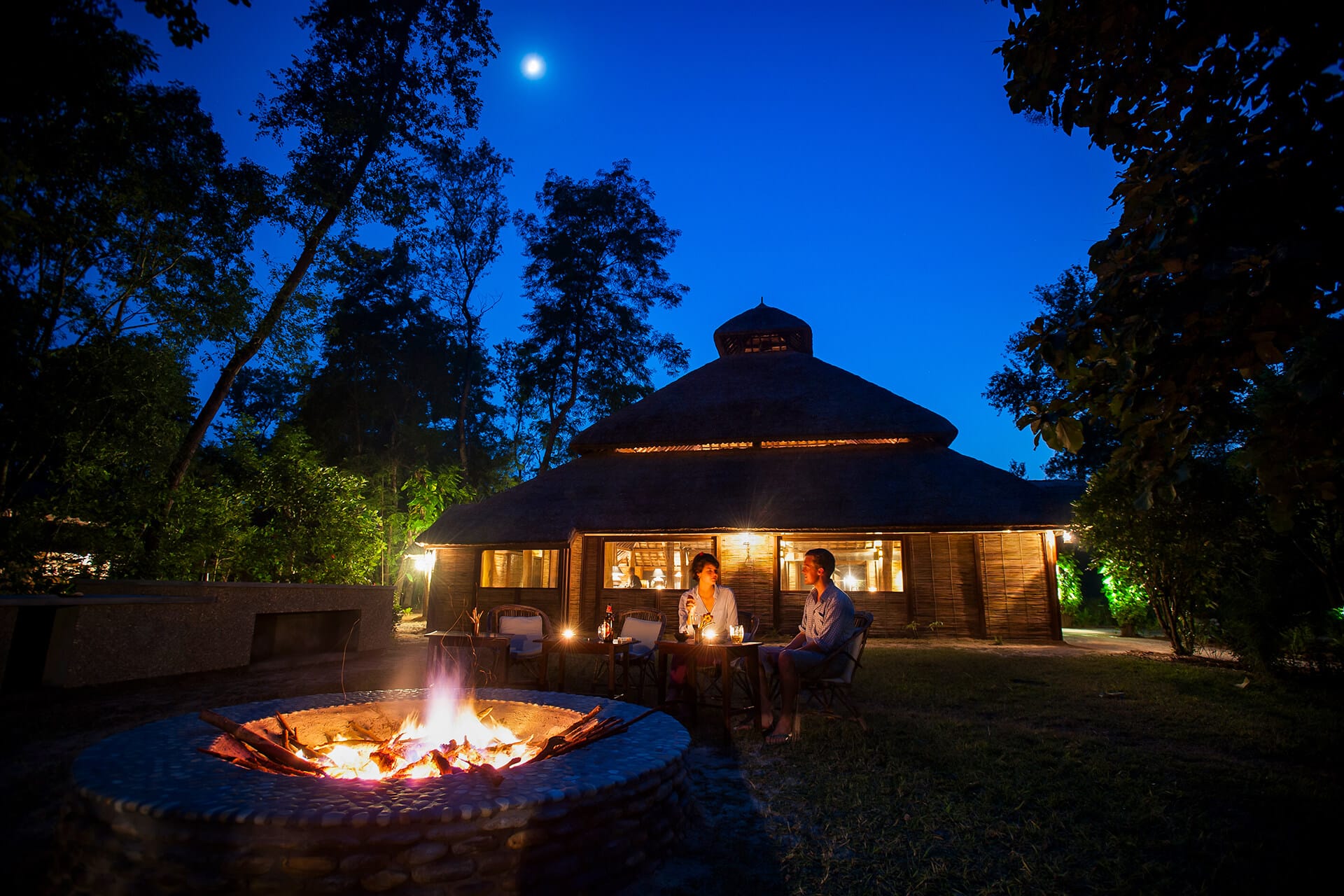
Tiger Tops Karnali Lodge
Operated by the same organisation that pioneered ethical wildlife walking at Chitwan, Tiger Tops Karnali Lodge offers the most structured and safest format for guests on their first Nepal walking safari, alongside private vehicle bookings that essentially guarantee an unshared encounter when it comes.
- Private vehicle bookings available for exclusive drives
- Guided walking safaris with multi-year trained naturalists
- Karnali river safari and jeep programme included
Bardia Intelligence
Questions we are asked first
Answered with the specificity a generic travel site rarely offers.
Planning & Access
How do I get to Bardia?
Fly from Kathmandu to Nepalgunj, then transfer by road to Thakurdwara, or arrange a longer overland journey. An approach from India's Uttar Pradesh border is also possible for guests already travelling through northern India. We arrange all transfers as part of your itinerary.
Is Bardia worth the extra travel over Chitwan?
For travellers who have already done Chitwan, or who specifically want a lower density, more genuinely wild encounter, yes. Bardia's guides report the highest tiger encounter probability of any Nepal park, achieved with a fraction of Chitwan's visitor volume.
What is the best time to visit Bardia?
November through February is prime winter safari season. October to November and February to April are excellent, quieter alternatives, the latter also coinciding with the Bengal florican's breeding display. July to September is monsoon season and not recommended.
How far in advance should I book?
Four to six months ahead for peak winter dates is advisable, particularly for the best naturalist guides and private vehicle arrangements, since Bardia's exclusive positioning means capacity is deliberately limited.
Wildlife & Activities
Will I definitely see a tiger at Bardia?
No sighting is ever guaranteed, but guides report the highest tiger encounter quality of any Nepal park here, aided by low vehicle density and guides who track specific individual animals across multiple years.
Is the walking safari different from Chitwan's?
The permission and format are the same, an armed forest guard, a maximum group of six, and a trained naturalist, but Bardia's lower overall visitor pressure gives the walking experience a different quality of wildness.
Can I see rhinos at Bardia?
Yes, though encounters are less predictable than Chitwan's 90 percent rate. More than 100 rhinos, reintroduced from Chitwan since 1986, are distributed across the Karnali floodplain and Babai Valley, and sightings remain regular.
Is Bardia good for birdwatching?
Yes, with 407 recorded species including the critically endangered Bengal florican, the white rumped vulture, and the bar headed goose, one of the few birds that crosses the Himalayas at extreme altitude on its winter migration.
Nepal's wildest tiger forest is not
on the standard circuit. That is the point.
Every Safari Acacia Bardia programme is privately built, from Karnali river safari to walking safari with guides who know these tigers by name.