Bandhavgarh
India's Tiger Capital
The highest known density of Bengal tigers of any protected area on earth. In a core zone of 716 square kilometres, an encounter here is not a question of luck — it is a question of how you organise your time.
"There is a number that stops every serious wildlife traveller in their tracks. Bandhavgarh holds the highest known density of Bengal tigers of any protected area on earth."
& Tourism Area
Extent
Recorded
Zones
Open Window
Two thousand years of forest, fort and tiger
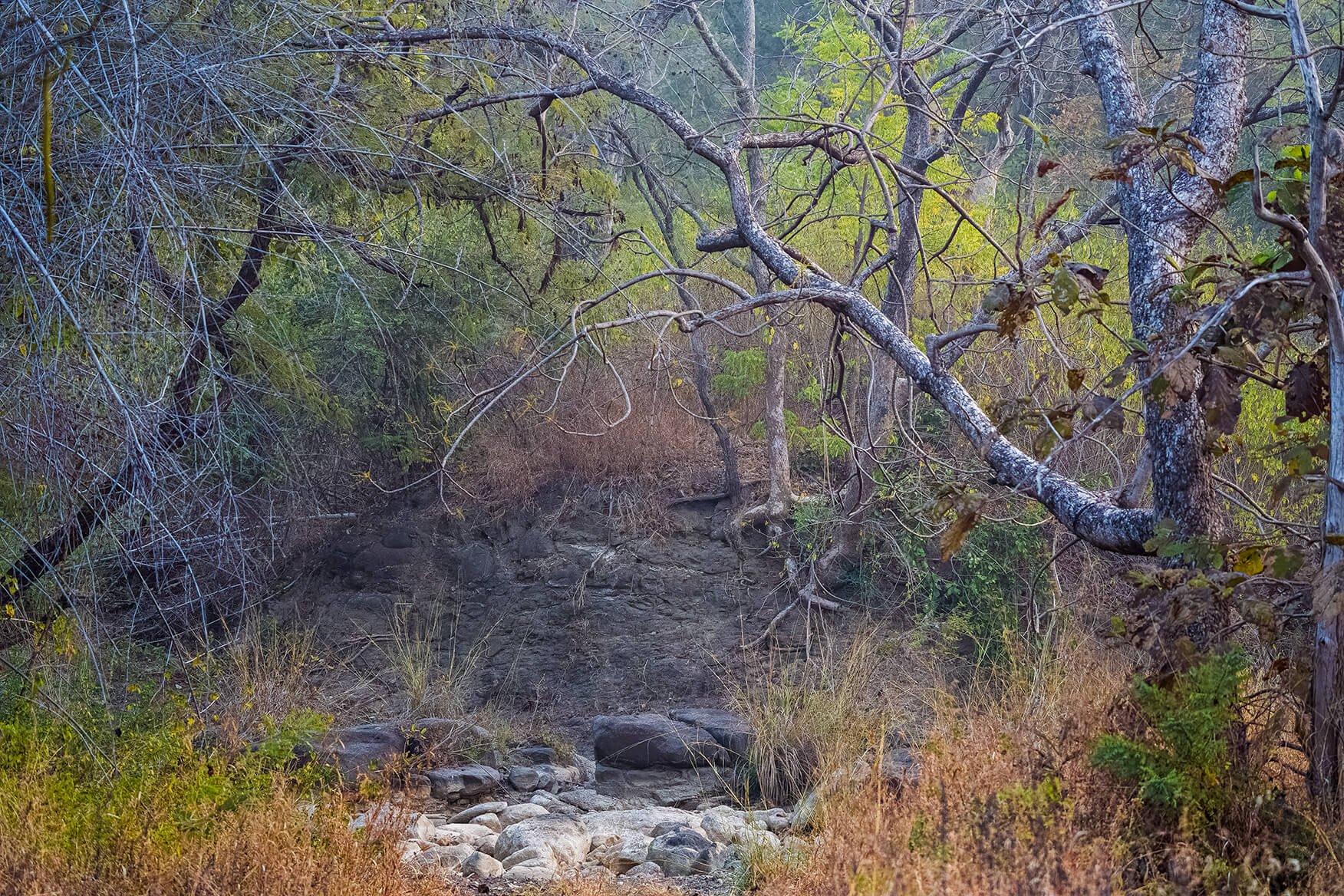
Bandhavgarh was notified as a National Park in 1968 and designated a Tiger Reserve under Project Tiger in 1993. It sits in the Umaria district of Madhya Pradesh, within the Vindhya hill range — a landscape of steep rocky ridges, densely forested valleys, open grassy maidans, and seasonal streams sustaining an extraordinary prey base.
The name carries a history that stretches far beyond its conservation designation. Bandhav means brother, Garh means fort. The ancient fortress standing on a hill rising 807 metres inside the park was, according to local tradition, built by Lord Rama and gifted to his brother Lakshman.
The Maharajas of Rewa used these forests as a private hunting preserve for generations — a historical irony that ultimately served conservation well. The same forests that sheltered the world's original white tigers now sustain a Bengal tiger population that has become the global gold standard for density and habituation.
The ancient fort trail winds through active tiger territory
"The difference between a good safari and an extraordinary one is almost entirely a function of preparation — which zone, which lodge, how many nights, which guide."
Beyond
the Tiger
Bandhavgarh's reputation as India's premier tiger reserve can obscure the fact that it is one of the most biodiverse ecosystems in Central India — a landscape alive with possibility on every drive, across every hour of the morning.
Bengal Tiger
Panthera tigris tigris
The highest density of any protected area on earth. An encounter here is a question of preparation, not fortune.
Indian Leopard
Panthera pardus fusca
Moves along the rocky Vindhya ridges at dawn. Khitauli zone provides exceptional habitat in terrain distinct from the tiger maidans.
Sloth Bear
Melursus ursinus
Regularly seen along forest edges in Magadhi zone. The rocky margin provides ideal denning habitat with prolonged, unhurried encounters.
Dhole
Cuon alpinus
India's endangered wild dog delivers some of the most dramatic encounters — especially during rare hunting sequences across open grasslands.
Gaur
Bos gaurus
India's largest wild bovine, often seen grazing at sunrise across the open maidans. An imposing presence that commands any clearing it enters.
Sambar Deer
Rusa unicolor
The alarm call is the most reliable indicator of nearby predators. Learn to listen before you look — the essential Bandhavgarh insight.
Indian Wolf
Canis lupus pallipes
Rare sightings in buffer zones add exclusivity available only to guests who venture beyond the core zone's well-mapped tiger territories.
250+ Bird Species
Including 6 kingfisher species
Crested serpent eagle, Indian rock eagle-owl in rocky Vindhya terrain, and remarkable winter waterfowl concentrations.
The most consequential planning decision
Zone selection matters more than accommodation choice, season, or budget. The zones are not equal in tiger density, permit quality, or experience character. Understanding this distinction separates operators who know Bandhavgarh from those who merely list it.
Tala Zone
Heartland of tiger encounters
Accessed through Tala village, this zone covers the central maidans and the historic fort trail. Bandhavgarh's most documented tigers hold their territories here. The open meadows create long sightlines — a tiger in clear morning light, unhurried, for long enough that the photographer can work the animal properly.
Magadhi Zone
The serious wildlife photographer's choice
Fewer visitors than Tala, comparable tiger density, but greater habitat variety. The valley forest is denser, maidans more numerous and better distributed. Photographers who have done Tala and want different light conditions and less predictable animal behaviour consistently prefer Magadhi on return visits.
Khitauli Zone
The Vindhya hills experience
Topographically distinct — rocky ridges, teak forest, cliff grassland that looks and feels unlike the sal-and-maidan landscape elsewhere. Tiger density is lower, but the landscape rewards those looking beyond the headline species. Where Bandhavgarh's raptor diversity is most visible.
Panpatha Buffer
Immersion over guarantee
Vehicle density is a fraction of the core zones, the forest is less managed, and the wildlife — including the reserve's wolf population and wild dog packs — behaves differently without vehicle pressure. The zone for the guest who has accumulated core encounters and wants to understand the reserve at a deeper level.
Two millennia beneath the canopy
The treatment of Bandhavgarh's historical dimension as an afterthought is a significant misrepresentation. These forests contain archaeological evidence of human civilisation extending back at least two millennia.
Bandhavgarh Fort
The ancient fort stands on a hill rising 807 metres inside the Tala zone, accessible via a hiking trail through deep sal forest. It contains temples, cave inscriptions dating to the first and second centuries CE, and a commanding panorama across the reserve canopy. The trail passes through active tiger territory — which gives the walk a quality of attention that no paved hiking path anywhere can match.
Sheesh Shaiya
A 60-foot carved stone figure of Lord Vishnu reclining on the seven-headed Shesh Nag serpent, set beside the Charanganga river source, dating to the fourth or fifth century CE. Ancient stone deity, forest canopy, the possibility of a tiger in the trees behind you — India makes available encounters that almost nowhere else can match.
Badi Gufa
The cave complex — Badi Gufa and Three Cave Point, visible from Ganesh Hillock Road — contains carved chambers that the Maharajas of Rewa used as forest barracks. The caves now provide shelter for leopards and sloth bears, adding a quality of live electricity to an archaeological visit that a protected heritage site simply cannot offer.
The optimal window
Choosing when to visit Bandhavgarh is a critical planning decision. Each season delivers a distinct experience — distinct light, distinct wildlife behaviour, distinct forest character. Understanding the differences is what allows us to place you in precisely the right moment.
The park reopens after monsoon, revealing lush green landscapes and ideal conditions for wildlife photography. Tiger territories are active immediately, though taller grass in the first weeks can slightly reduce maidan visibility. The forest is at its most atmospheric — dense, freshly washed canopy with morning mist.
Peak season. Cool temperatures, open vegetation, and the highest tiger sighting probability in India. The most sought-after window for a private tiger safari. Crisp morning light, active wildlife across all zones, optimal photography conditions. Requires booking 6–9 months in advance.
Rising temperatures concentrate wildlife around water sources, creating exceptional opportunities for longer, more dramatic encounters. The Mahua flowering in March draws remarkable wildlife concentrations. Compelling for serious photographers wanting extended sightings in dramatic dry-season light.
Intense heat and limited zone access reduce overall experience quality. A deliberate choice for experienced travellers comfortable with challenging conditions who want extreme wildlife concentration near diminishing water sources. Not recommended for first-time visitors.
The park closes during monsoon while the ecosystem regenerates. This is the ideal period to plan and secure your visit — best lodge availability and exclusive permits are typically booked during these months for the season ahead.
We know Bandhavgarh.
The question is when.
We do not run group itineraries to Bandhavgarh. Every Safari Acacia guest receives a bespoke programme — private vehicle, selected zone, expert guide, and field intelligence before you take your seat on the first morning.